

The idea of visiting Medina first crossed my mind somewhere high above the desert, on a short flight from Riyadh to Jeddah. The cabin grew quiet as we began with a communal prayer, while the seat-back screens displayed the prayer times. Around me, men dressed in simple white ihram — the garments worn for Hajj and Umrah — added to the sense that this wasn’t just any trip.
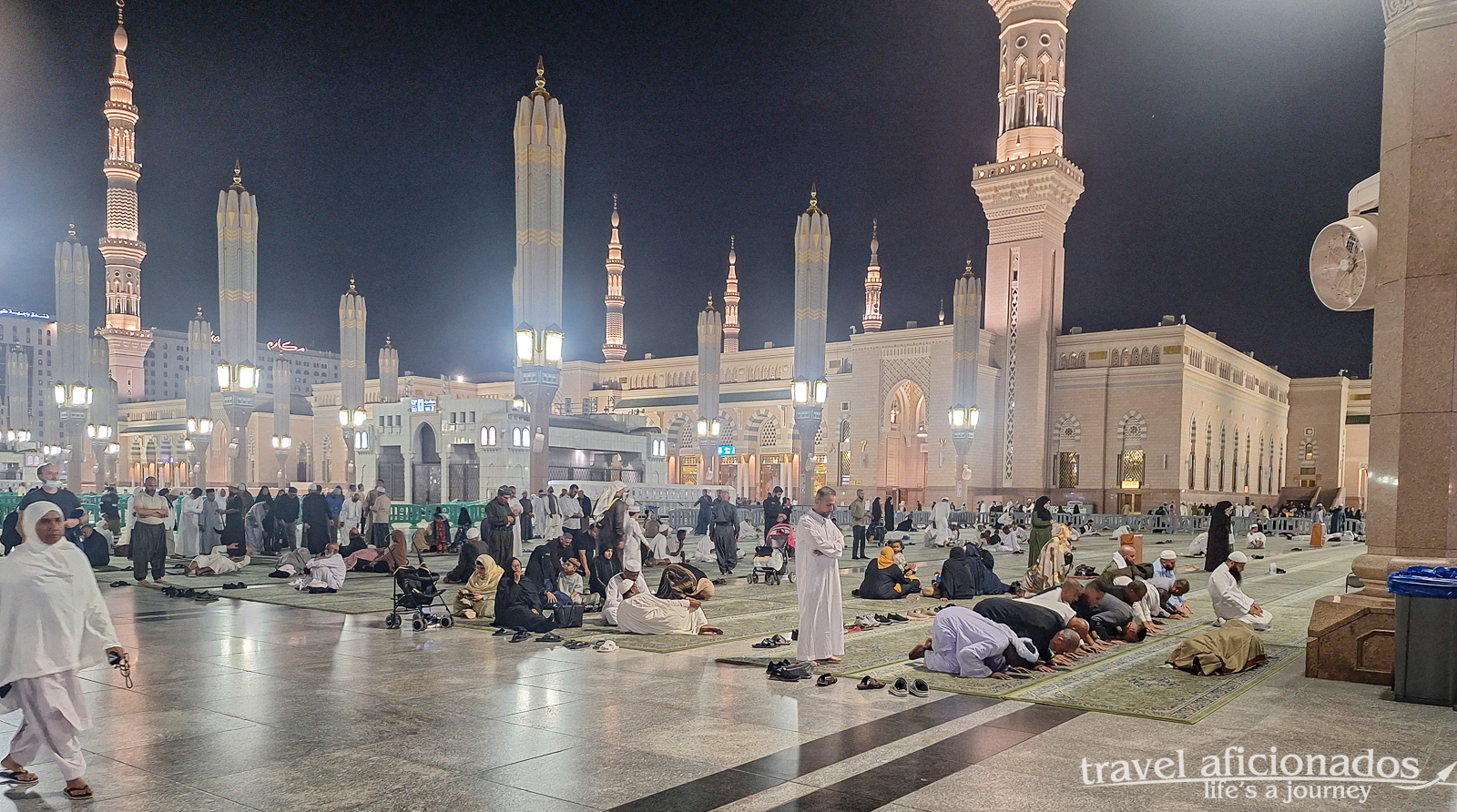
Medina -Al-Nabawi Mosque
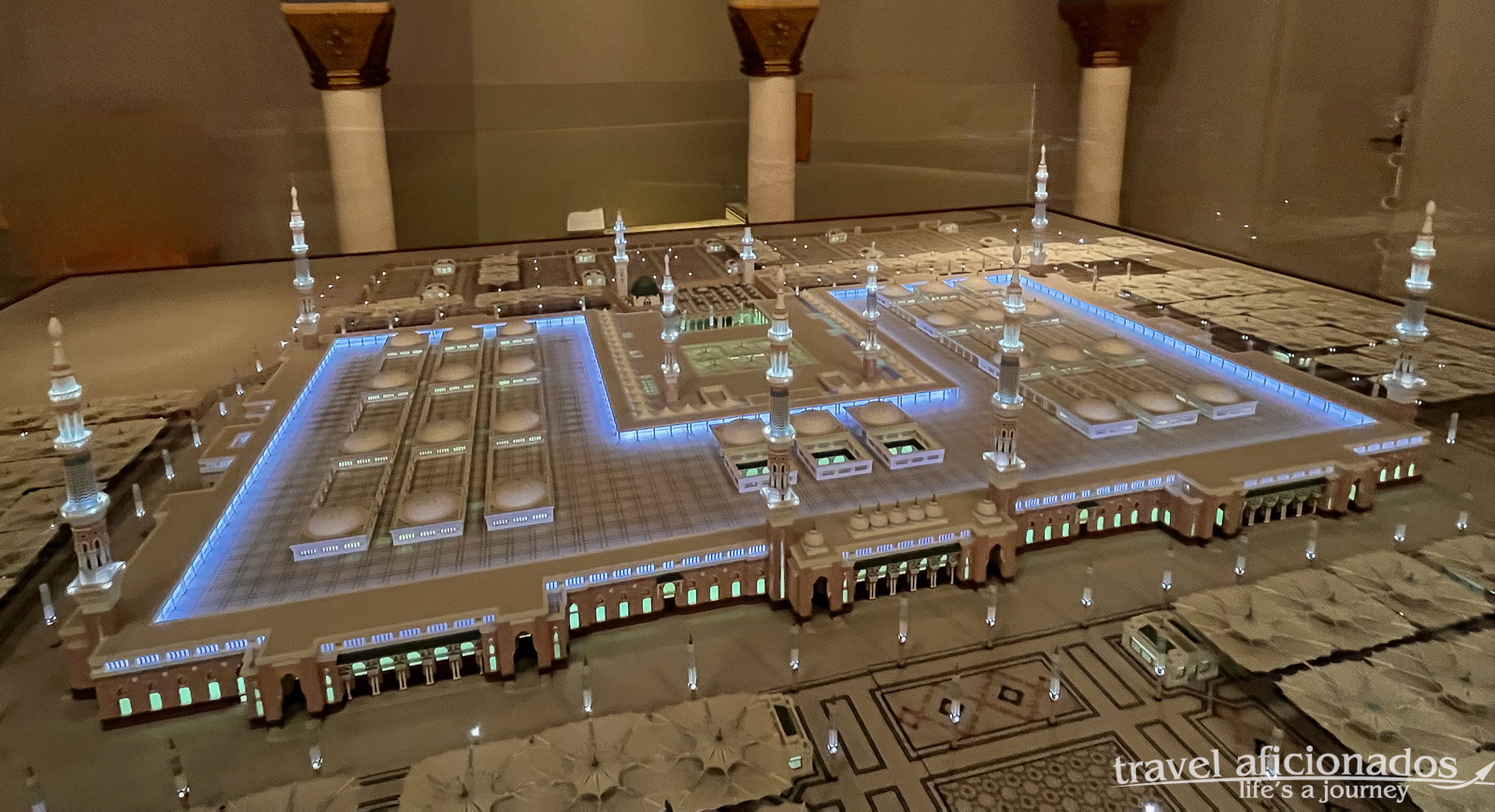
Modell of Al-Nabawi Mosque in National Museum n Rijadh
What really sealed the decision, though, was the promise of the high-speed train cutting through the desert at nearly 300 km/h. The thought of gliding across endless sand in just a few hours sounded irresistible. Technically, Medina makes for an easy day trip — and that’s exactly what I did — but if you can, stay the night.
When the Prophet’s Mosque lights up after sunset, the entire city seems to glow. Standing there, watching the domes shimmer against the night sky, I realized the journey was worth far more than the miles it took to get there.

Medina-Al-Nabawi Mosque
Ihram is worn primarily during the rituals of the Hajj and Umrah pilgrimages, which center on Mecca. It consists of two simple white cloths; men don’t wear underwear, and while sandals are allowed, the head must remain uncovered.

men dressed in simple white Ihram — the garments worn for Hajj and Umrah
The people in my hotel – mostly from Indonesia – seemed to be there mostly for Umrah; I heard the word again and again. One evening I noticed something I had never seen before — a woman dressed in white like the pilgrims. It’s unusual, and she looked striking: a tall, dark-skinned African woman wrapped entirely in white. I couldn’t stop watching — it was beautiful and quietly powerful.

woman wrapped in Ihram
Like so often I was really lucky. I had not planned this trip at all and happened to be there on a Friday, when thousands of worshippers streamed into the mosque.
Of course, I also stepped into the mosque, not entirely sure whether non-Muslims were allowed. A young woman noticed me right away and kindly showed me around. She spoke excellent English and seemed eager to present this sacred place in the best possible light to Western visitors. She pointed out the large vats of zamzam — holy water brought from Mecca — and explained that visitors can even take bottles of it home.
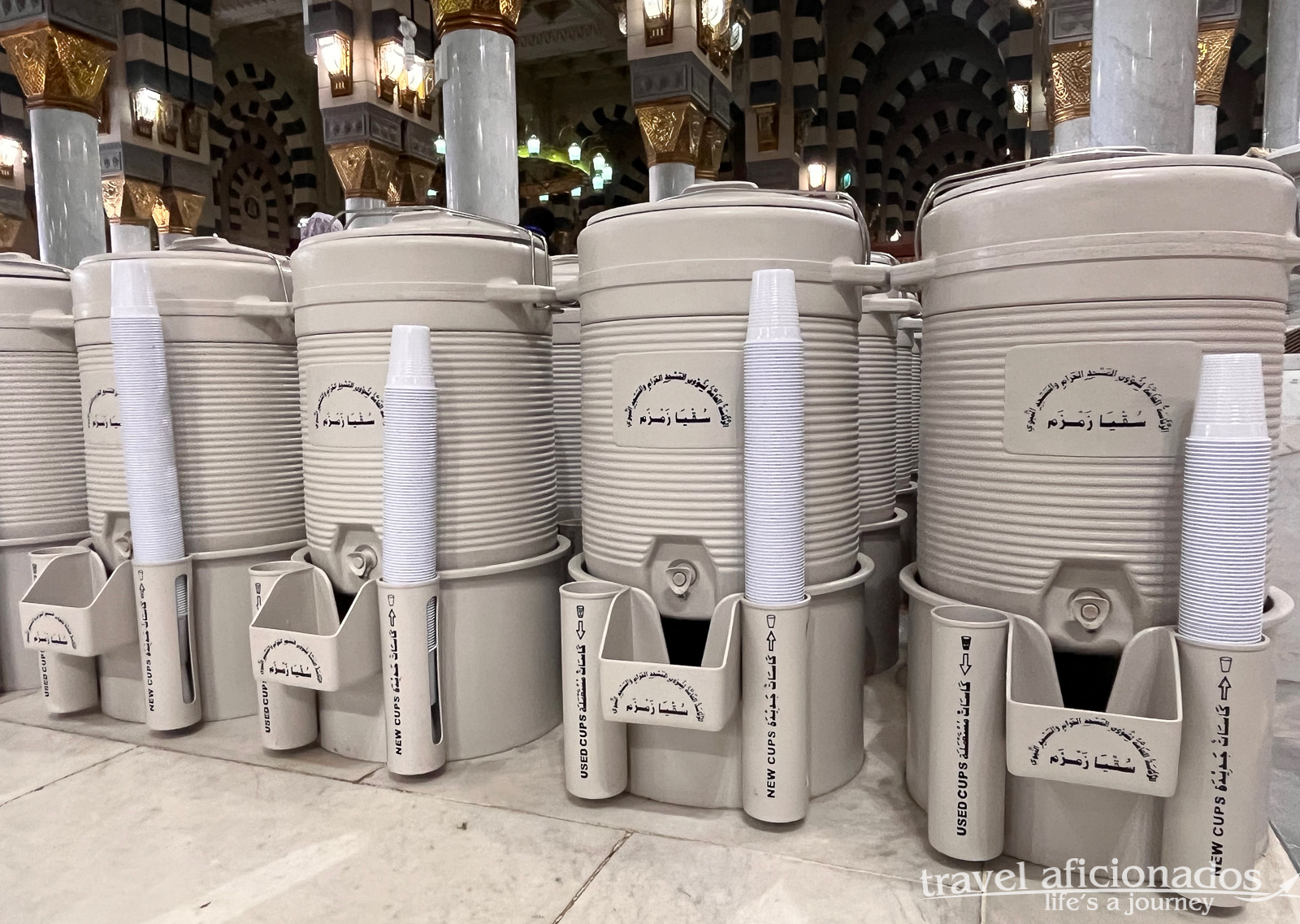
Zamzam – Holy water from Mecca
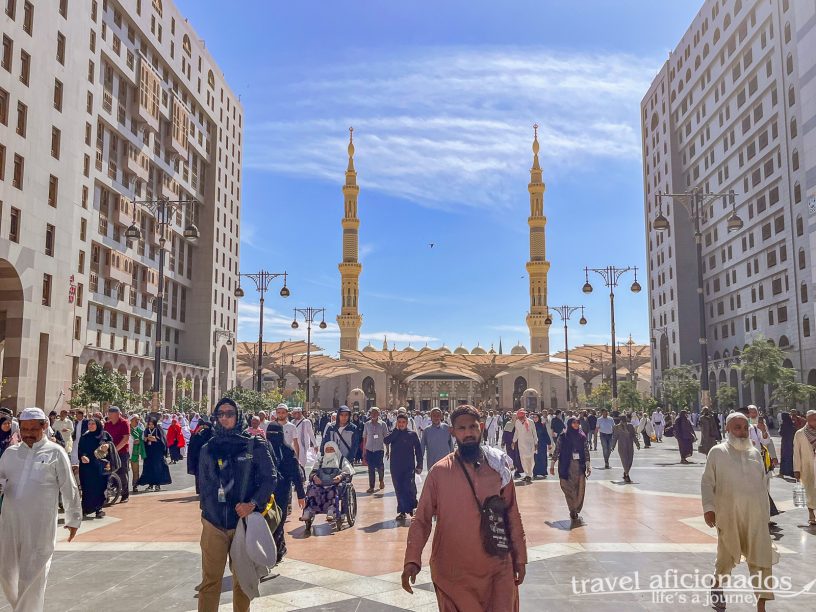
But soon, a rather stern woman in official attire approached and asked about my religion. My young companion tried in vain to explain that visitors should be allowed to experience this place of worship and learn about Islam. There was no mercy — I was escorted out, feeling sorry for the young woman who had tried so hard to challenge the clichés. After being kicken out of the mosque I wandered around the vast outside of the area, people watching. An incredible number of people from all corners of the world.
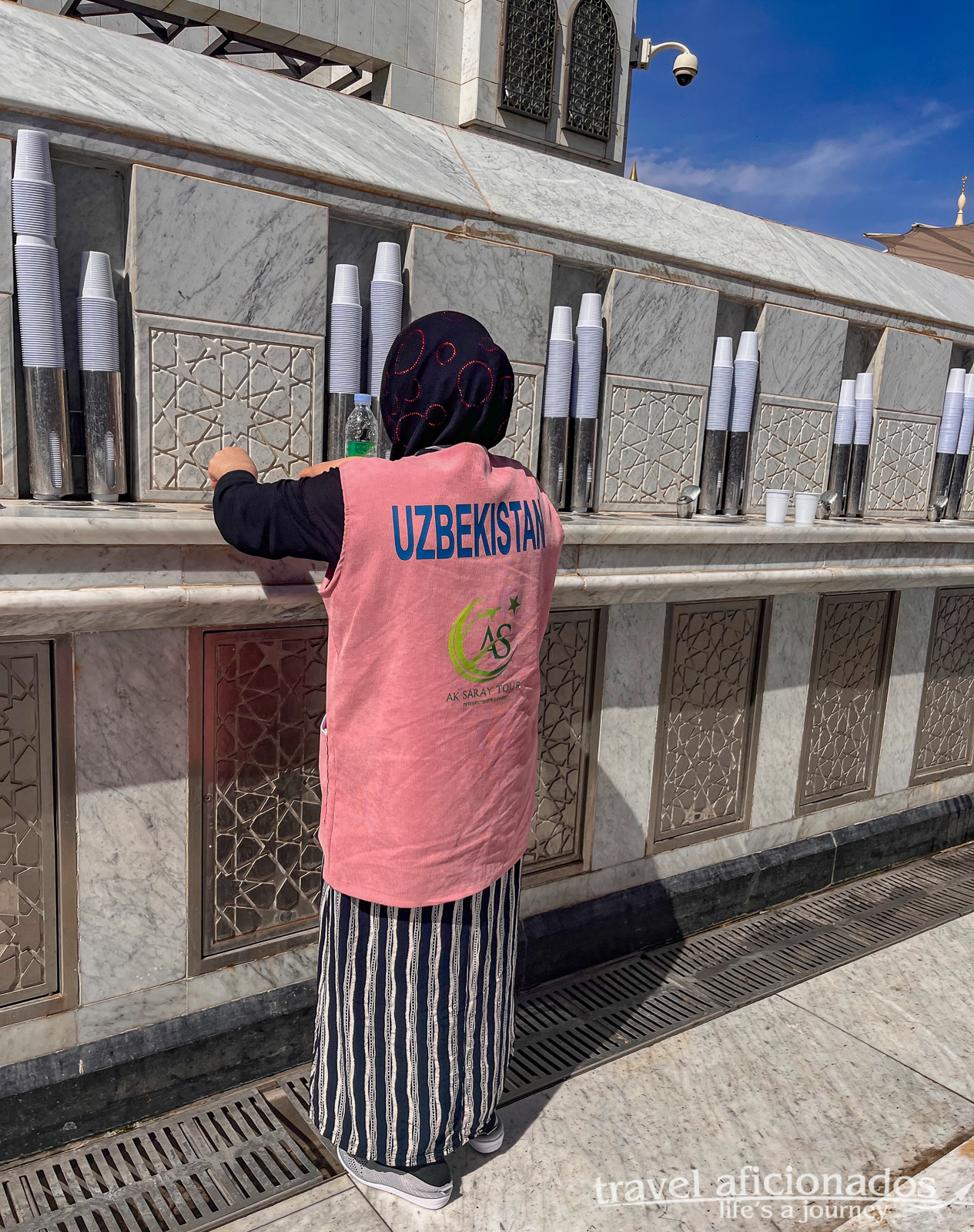
Muslims from all corners of the world visit Medina
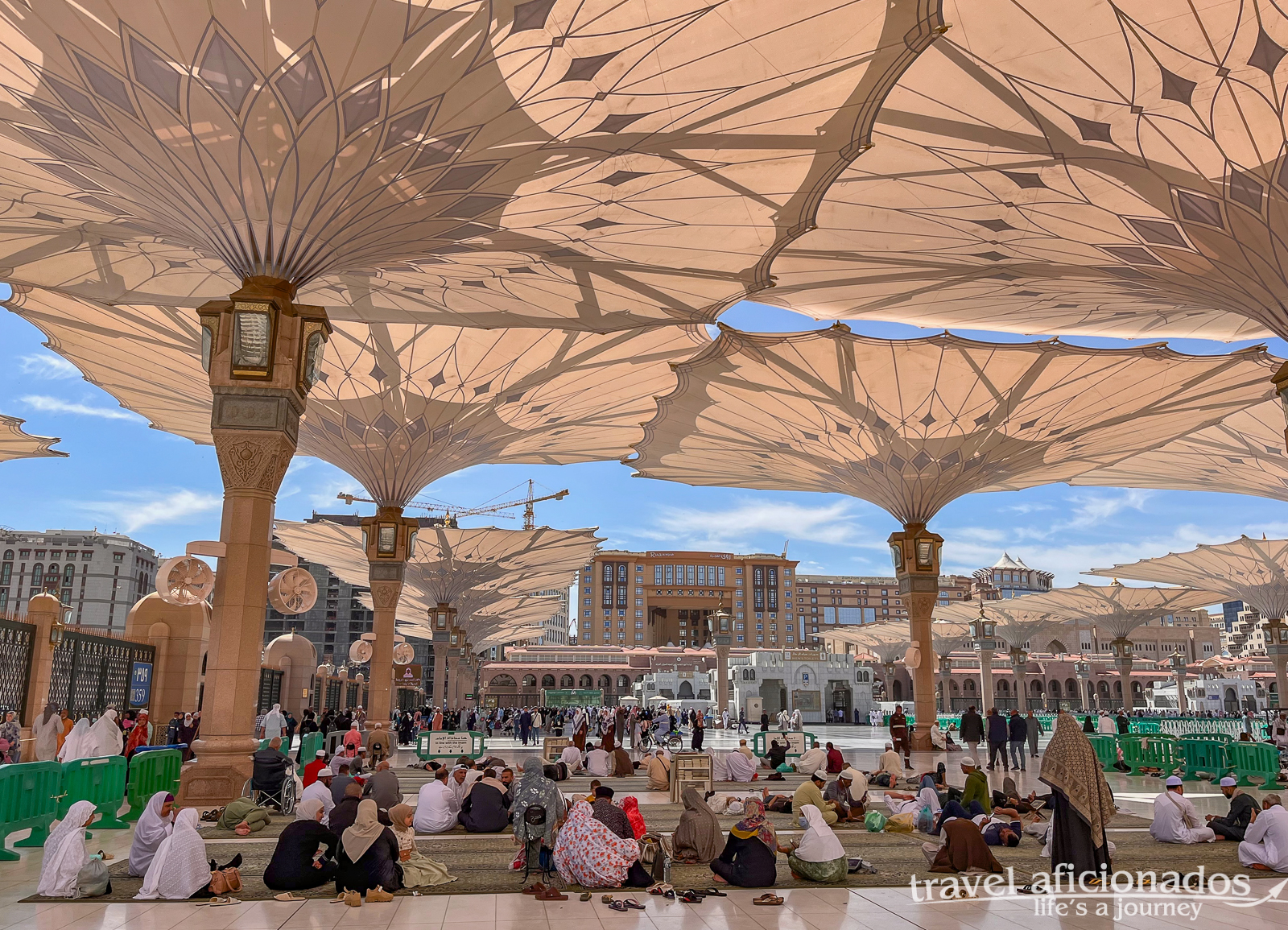
Medina-Al-Nabawi Mosque
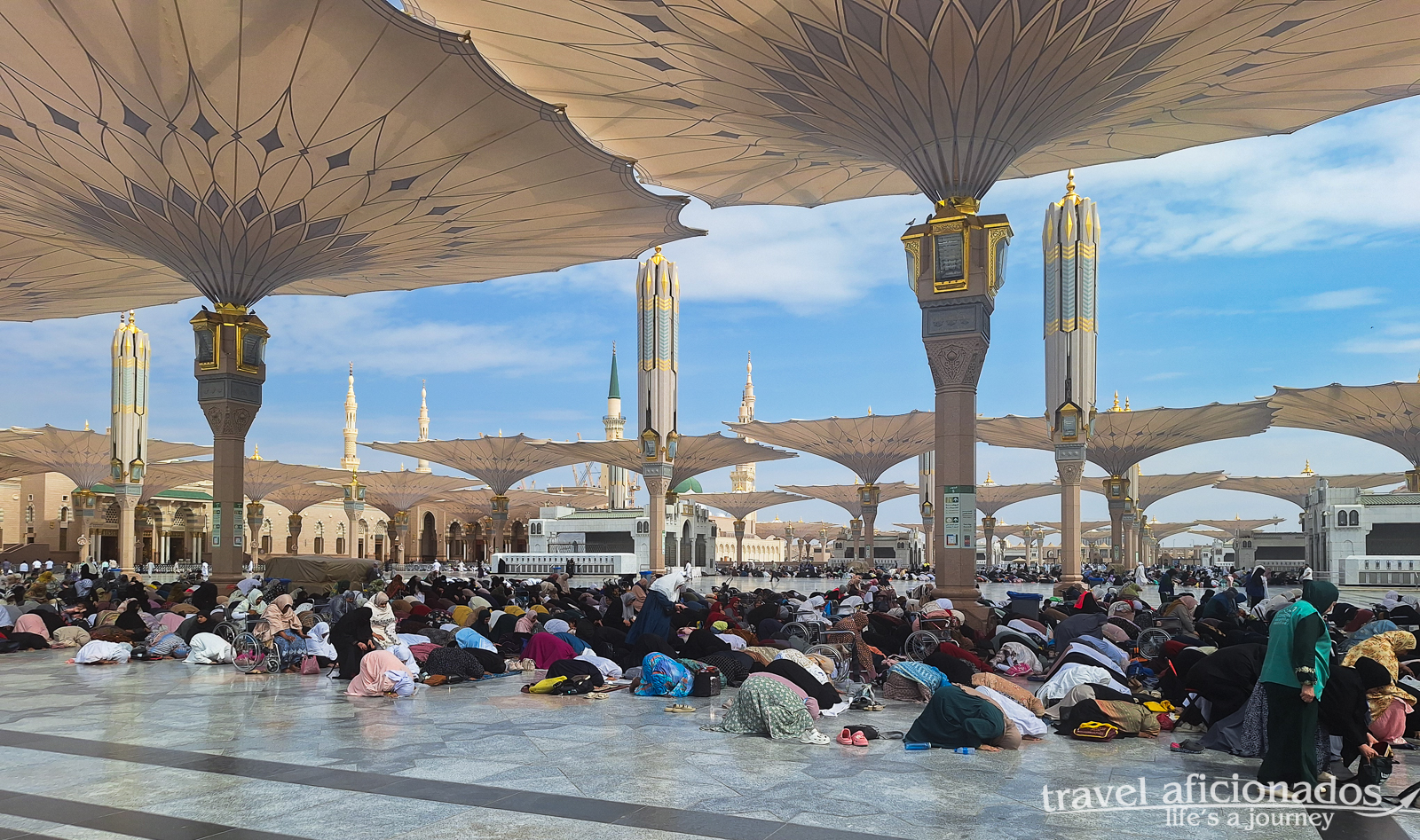
Medina-Al-Nabawi Mosque
The area around the religous ground is full of souvenir shops, eateries and hotels. A place where everybody stops is a huge frame with the towering minaretts of the mosque in the background. No matter how often I watched this scene- women completely covered – have a photo/selfie taken in front of a sights.
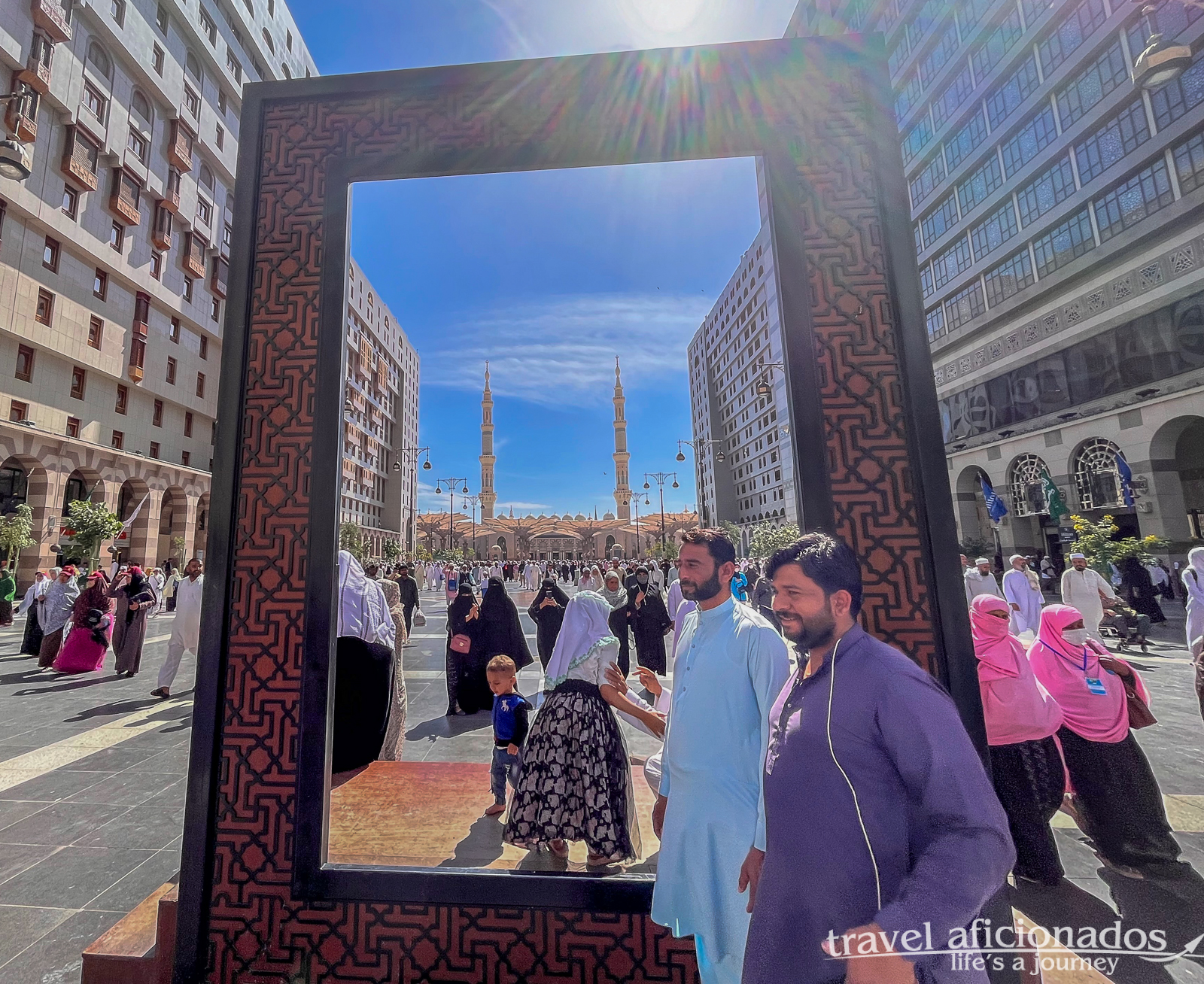
Favorite photo op
The other highlight of visiting Medina is the ride on the Haramain high-speed train — the perfect place for people-watching. Groups of women, groups of men, whole families: it seems an Umrah is rarely done alone. Of course, there is praying on the train; some quietly move their beads, others follow prayers over the intercom, all while the desert rushes by outside the windows.
The train itself is an attraction, but the stations are no less impressive. When the train pulls into Jeddah, it feels like stepping into a different universe.
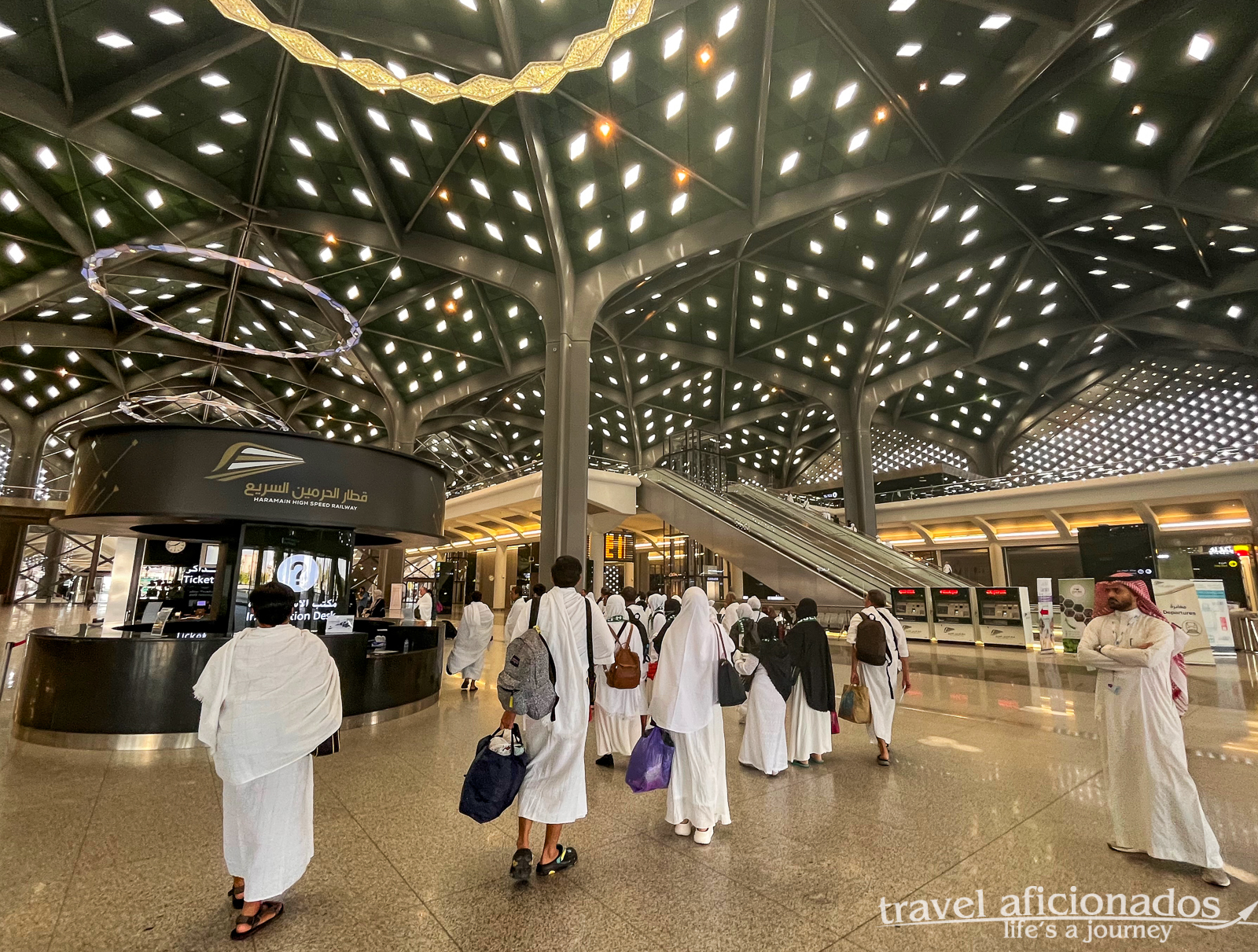
Haramain high speed train station
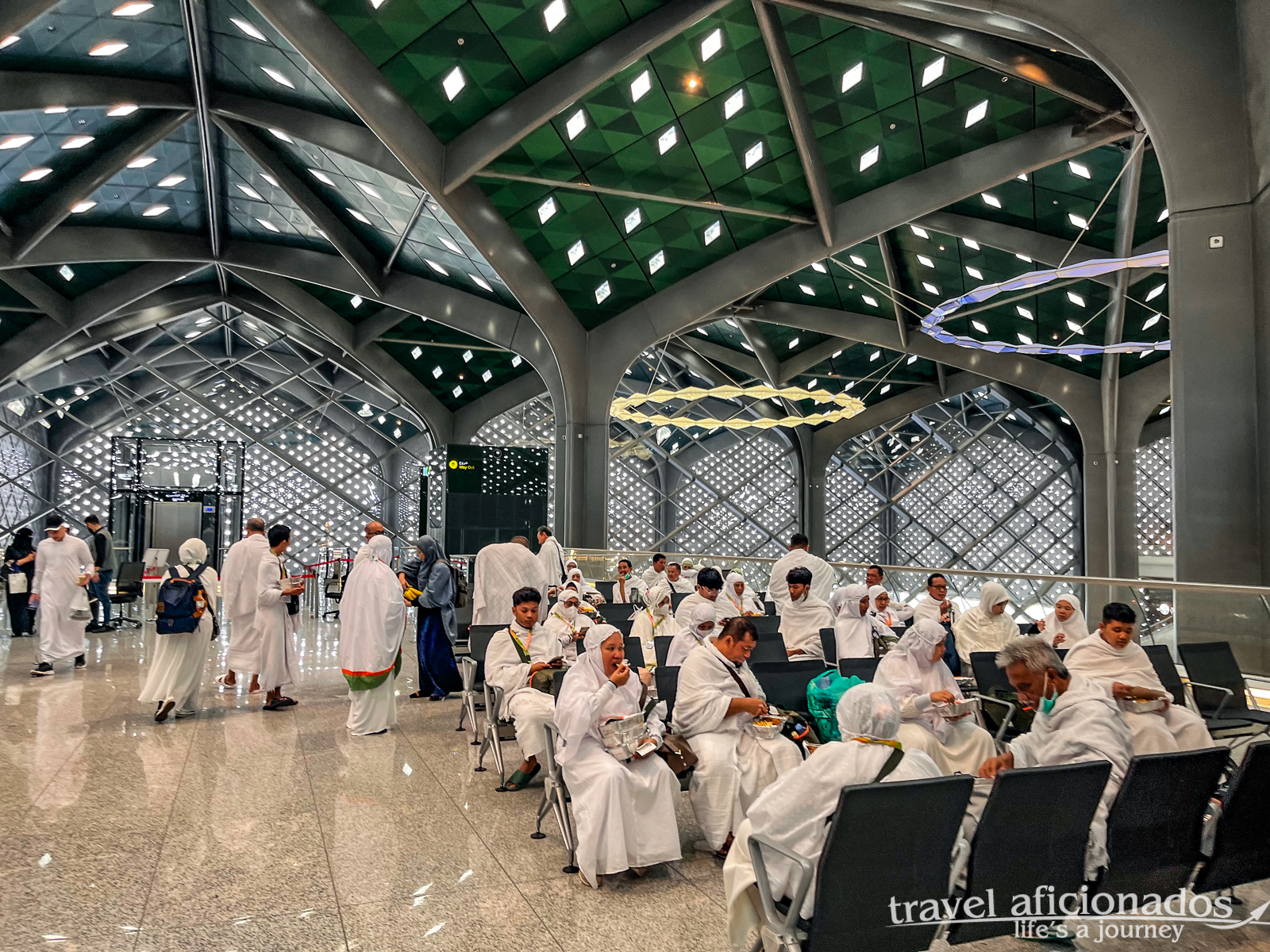
Haramain high speed train station in all its glory





Leave a Reply