

A few things struck me immediately when I arrived in Aleppo in March 2025. The contrast with my previous visits in 2019 and 2023 was overwhelming.
The city was clogged with loud, foul-smelling cars. Hungry people, including children, searched through garbage bins for food and recyclable plastic.
Another change was impossible to miss. Many more women wore full-face veils than I remembered from previous visits. Niqabs had become a far more common sight, with only the eyes visible and, in some cases, even those hidden behind dark glasses.
There were no uniformed police officers or soldiers. Instead, young masked men carrying Kalashnikov rifles represented the new order. They patrolled the streets, check-point and even cafés.
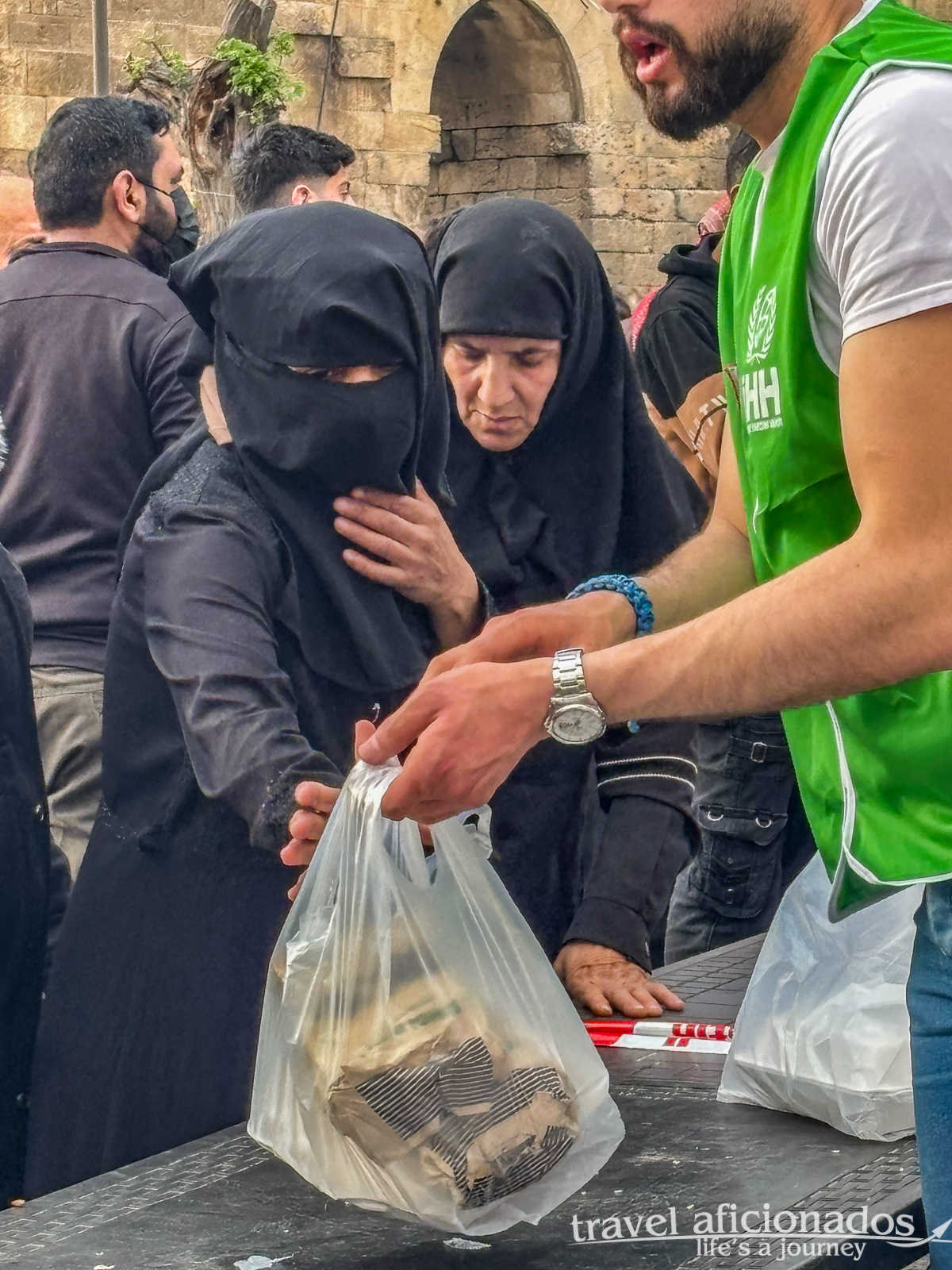
Women grabbing food distributed by Turkish charity
March 2025 – A Different Syria
The changes had already begun at the Masnaa border crossing from Lebanon. The giant portraits of Bashar al-Assad had disappeared. I cannot remember a shop, hotel, square ins Syria where you were not reminded of who ruled Syria.

Syrian border 2025

Syrian border 2019
Inside the immigration office, passport control appeared improvised. One official wore a bright pink T-shirt with a humorous slogan. The office was in not even equipped with to collect the visa fee, saving me sixty US dollars.
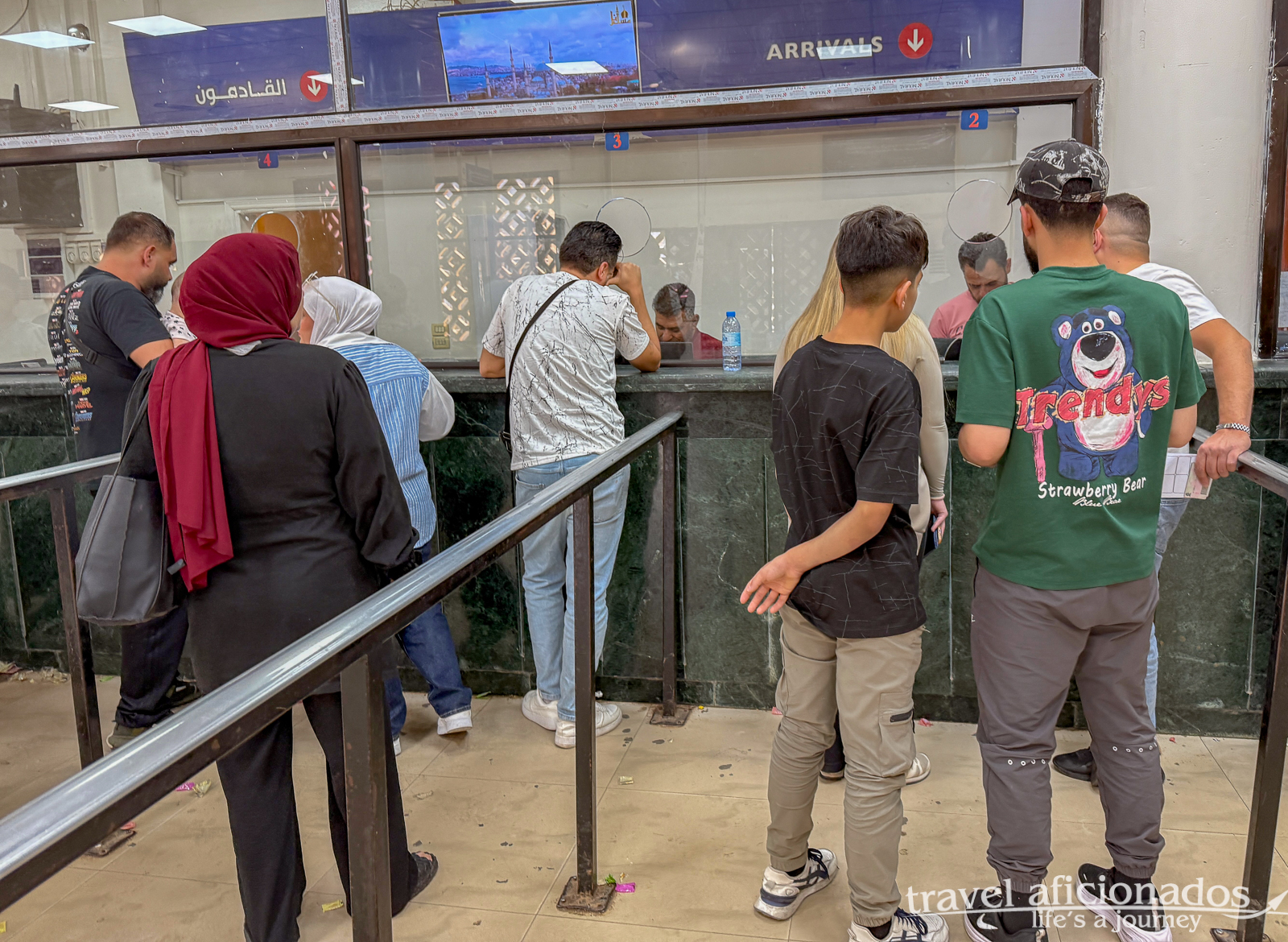
Immigration office Lebanese/Syrian border
Outside, two bearded men welcomed arriving travellers by handing out sweets. They smiled proudly when I asked if I could photograph them.
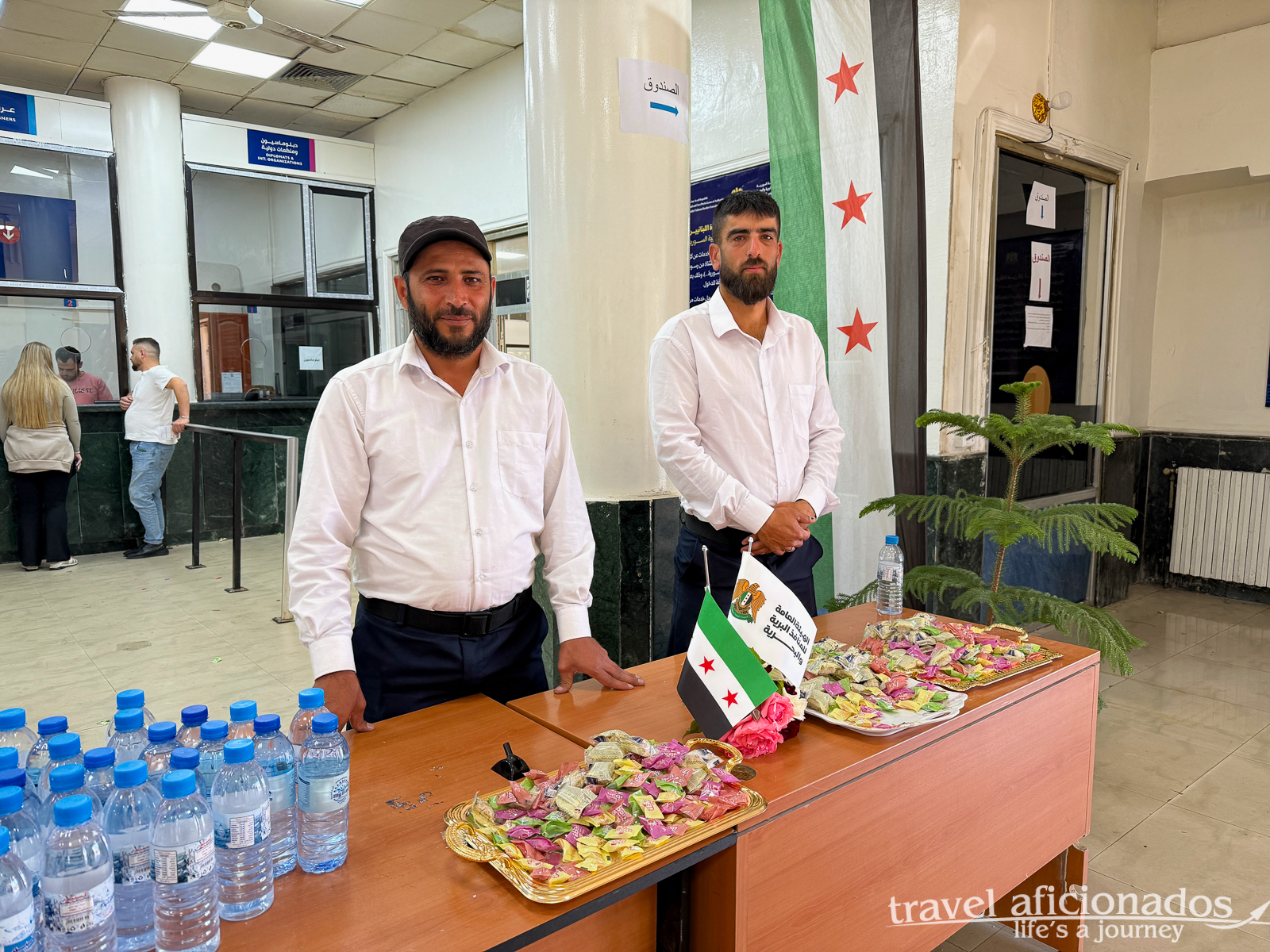
Welcome commitee at the border
One afternoon I was sitting in a café in Aleppo with a female Syrian friend, when one of the masked militia man walked in, Kalaschnikov in front of this breast. He stopped beside our table, stared silently at me for several seconds before continuing on.
It was a brief moment, but it left a lasting impression. My only thought was, if he shot me, nobody will ever find out who did it. During all my previous journeys through Syria, including the years of civil war, I had never truly felt afraid.
In that café in Aleppo, for the first time, I did.
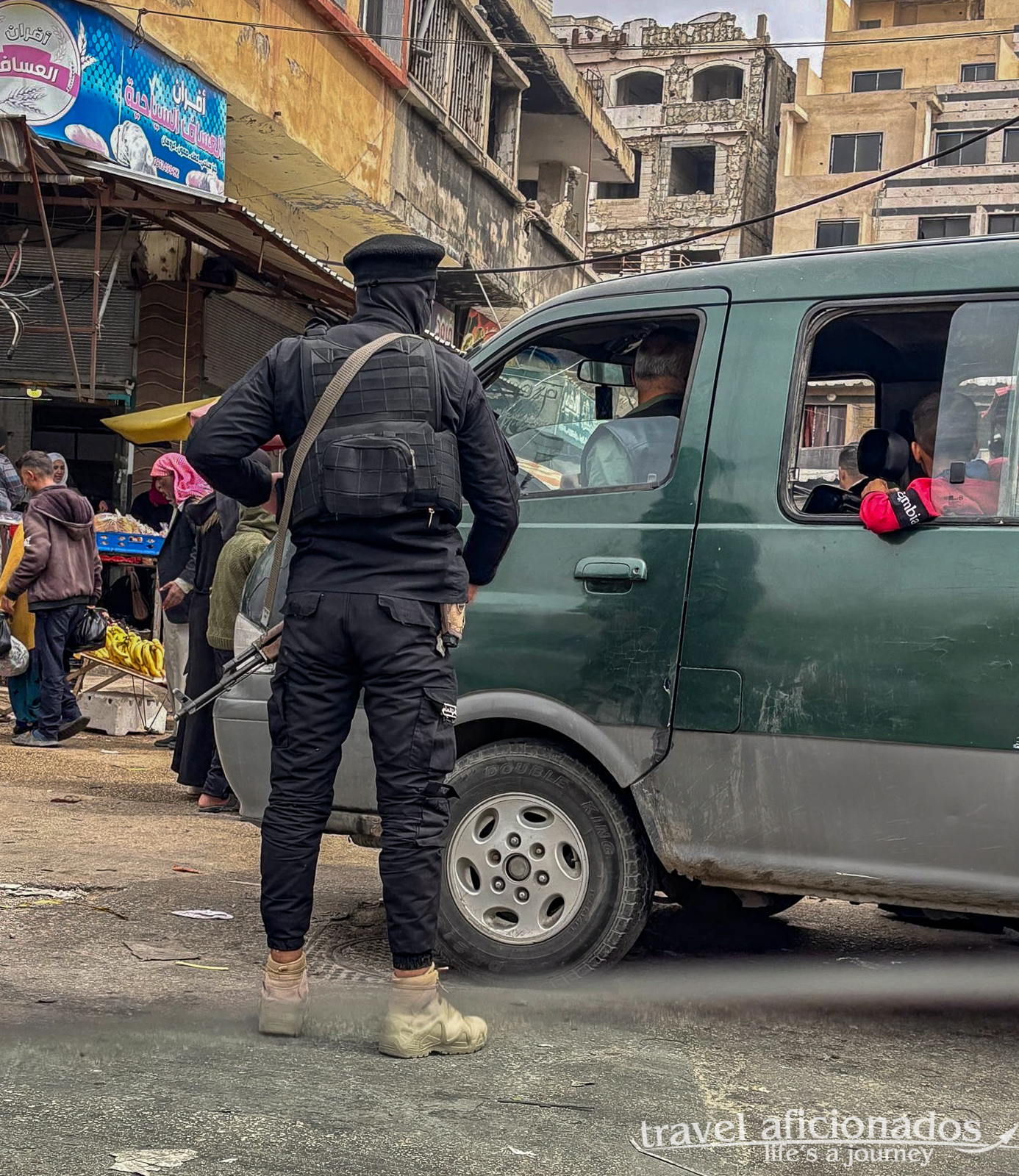
Masked young men from Idlib were the new authoritites in Syria in March 2025
I had already sensed that Syria had changed while driving from Damascus to Aleppo along the M5 motorway. Passing through the city of Homs took nearly an hour because of the traffic. Six years earlier the roads had been almost empty.
Cheap Cars and Bad Fuel
Traffic in Aleppo was so unbearable. We had watched the traffic light far ahead of us go green for times, but nothing moved. So I got out of my taxi and told the driver to continue to my hotel with my luggage, while I walked the remaining distance. It was faster on foot. I began asking around why there were suddenly so many cars.
Several locals told me that the many cars had arrived from nearby Idlib with the arrival of HTS fighters in Aleppo. Some added that the cars originally came from Dubai after failing technical inspections there, and were then imported second-hand through Turkey.
The result was chaos.
Cars parked on sidewalks and in traffic lanes. Drivers squeezed through impossibly narrow streets already crowded with pedestrians, pushcarts, minibuses, mopeds and motorcycles.

Aleppo June 2026
Also under Assad, owning a car had been very expensive, because of taxes and import restrictions. The new authorities relaxed those rules, making cars much more affordable.
Also 2025 gasoline was more easily available. And it smelled horrible. Several Syrians complained to me about the poor quality of the gasoline, even using a local nickname for it, Maghshoosh which translates into kind of “fake” gasoline.
During my journey in April 2025 I saw convoys of trucks transporting fuel from northeastern Syria towards Damascus. That was even before Rojava, the autonomous northeast was conquered by the new regime.
in 2019, when people had to line up for days trying to get some gasoline at the few gas stations that were open. Gasoline was actually rationed, as a consequence it was smuggled on a large scale from Lebanon and sold for twice the price in plastic bottles along the road. There was also a name for this smuggled gasoline, Binzeen Muharrab.

Smuggeled gasoline is sold along the road
Some people got very rich that way, some mansion in Anjar, right on the Lebanese/Syrian border are.
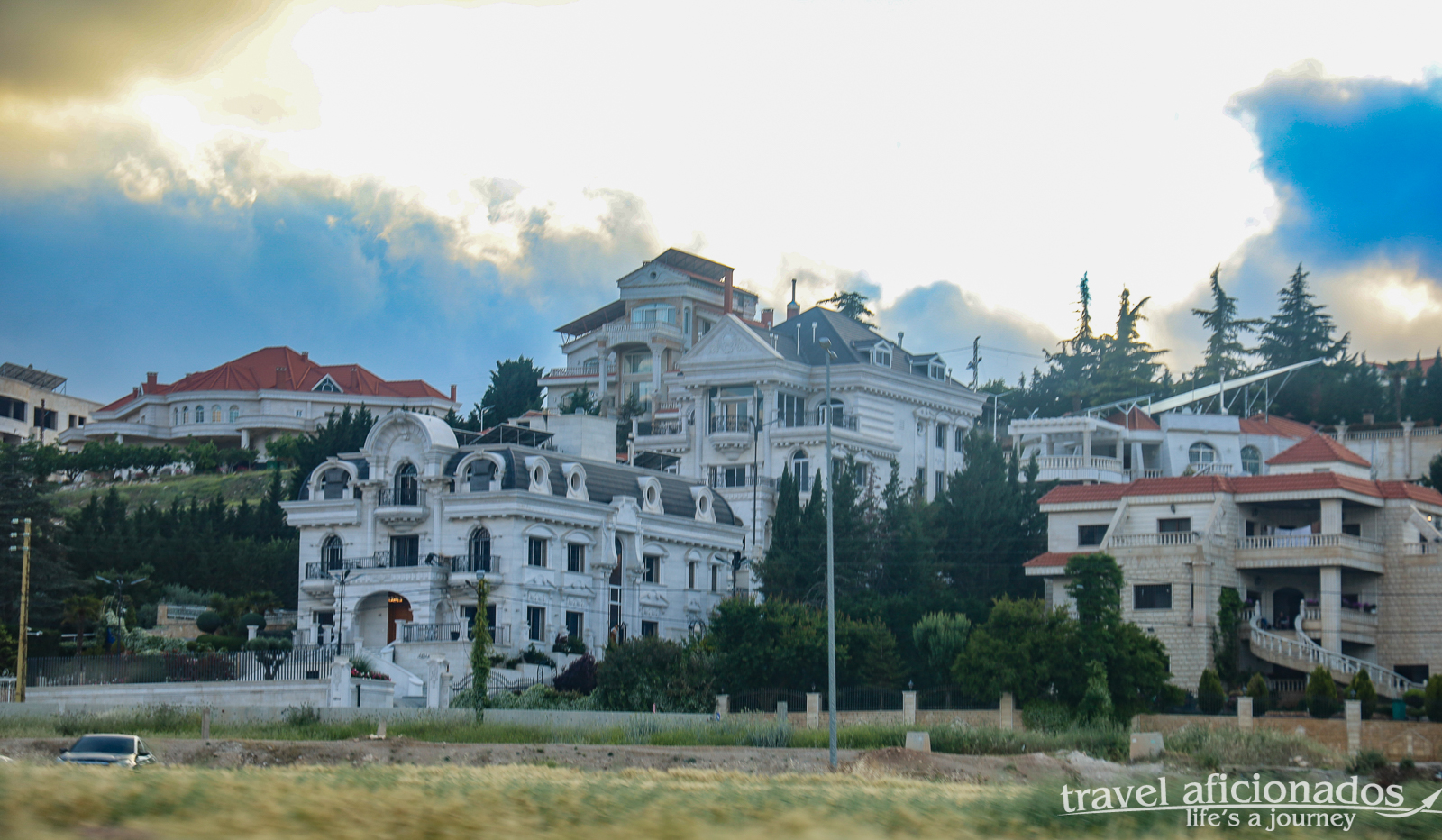
March 2025, Mansions in Anjar, Lebanese/Syrian border – paid with smuggled gasoline
Hungery people below Aleppo’s proud the Citadel – used for Turkish propaganda
Bascially most people who had worked for the former government had been dismissed almost overnight, many without pay, former police officers, soldiers, teachers, anybody. Syrians I spoke to described how entire families suddenly lost their income. The poverty this created was visible everywhere.
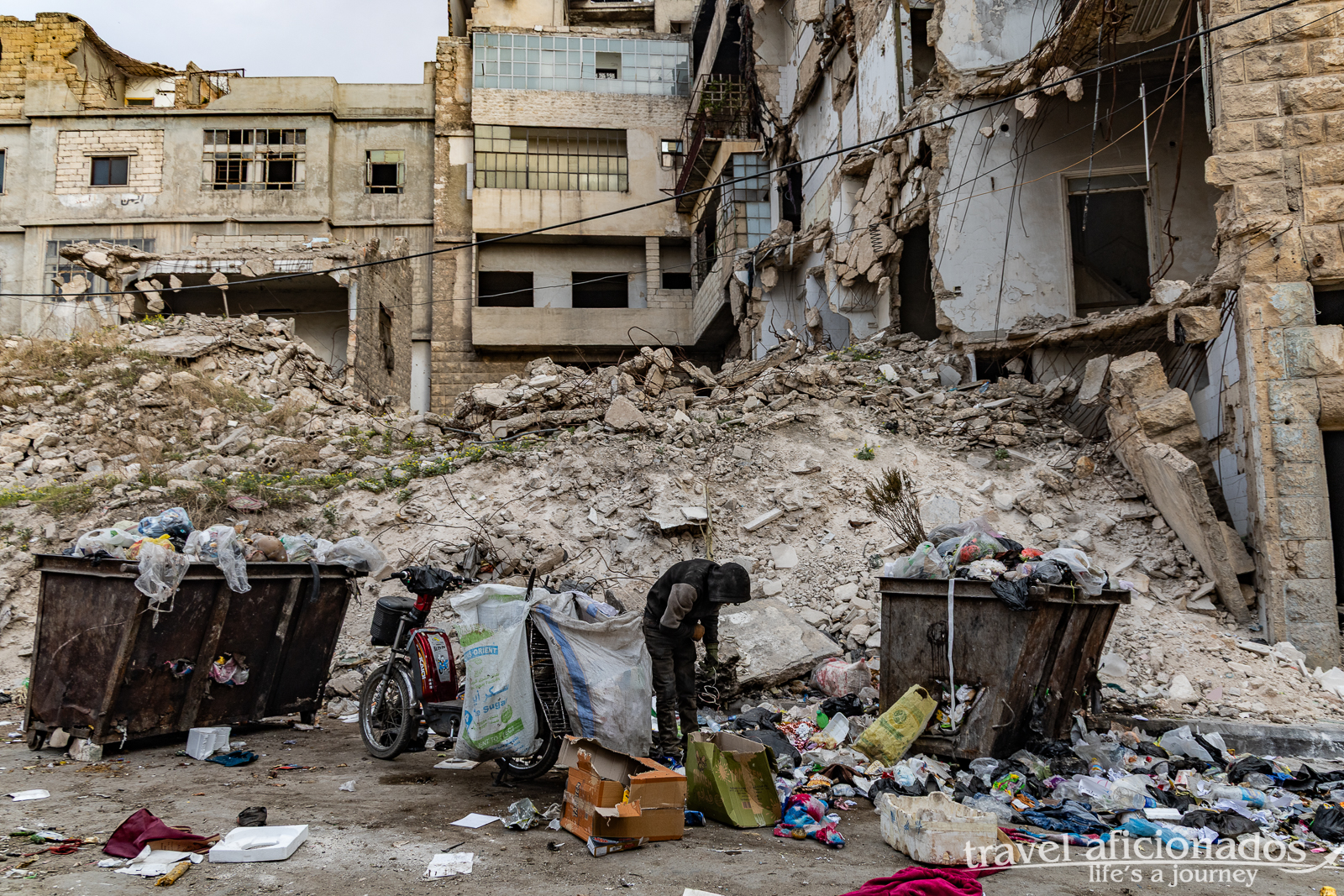
Aleppo – people going through garbage
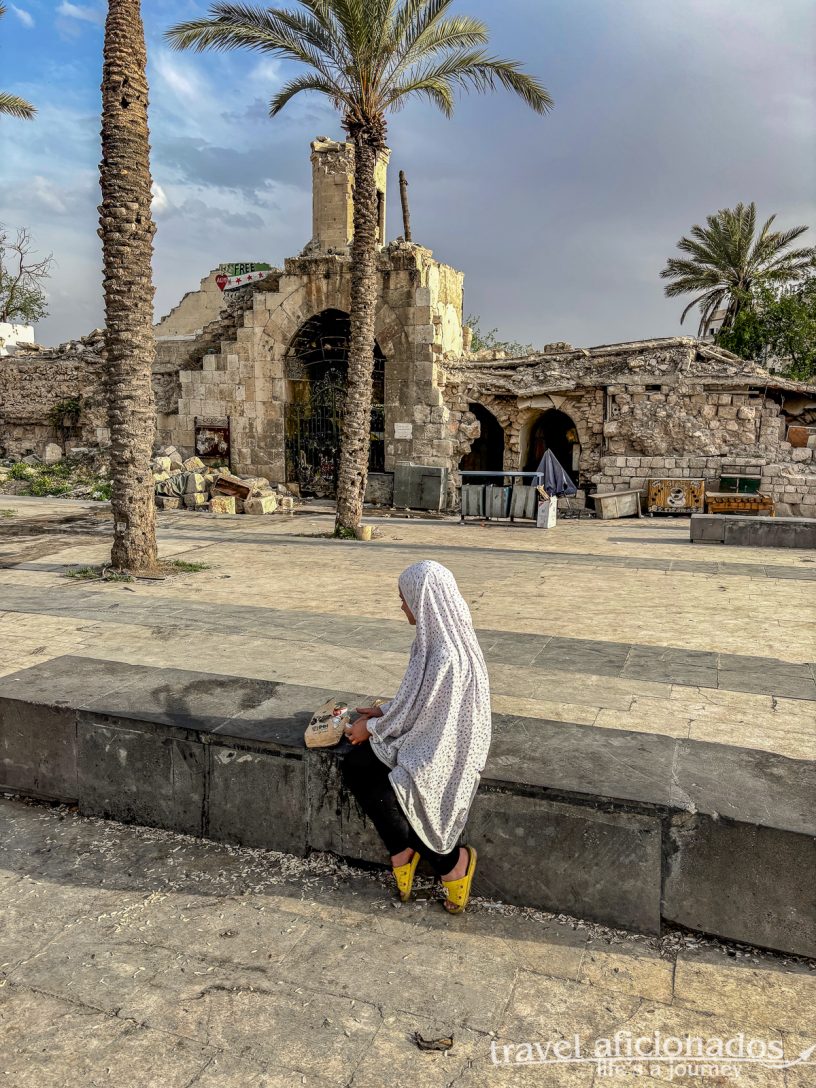
On my first afternoon in Aleppo I walked to the square below the Citadel, where a large Turkish aid truck had parked beside the ruins.
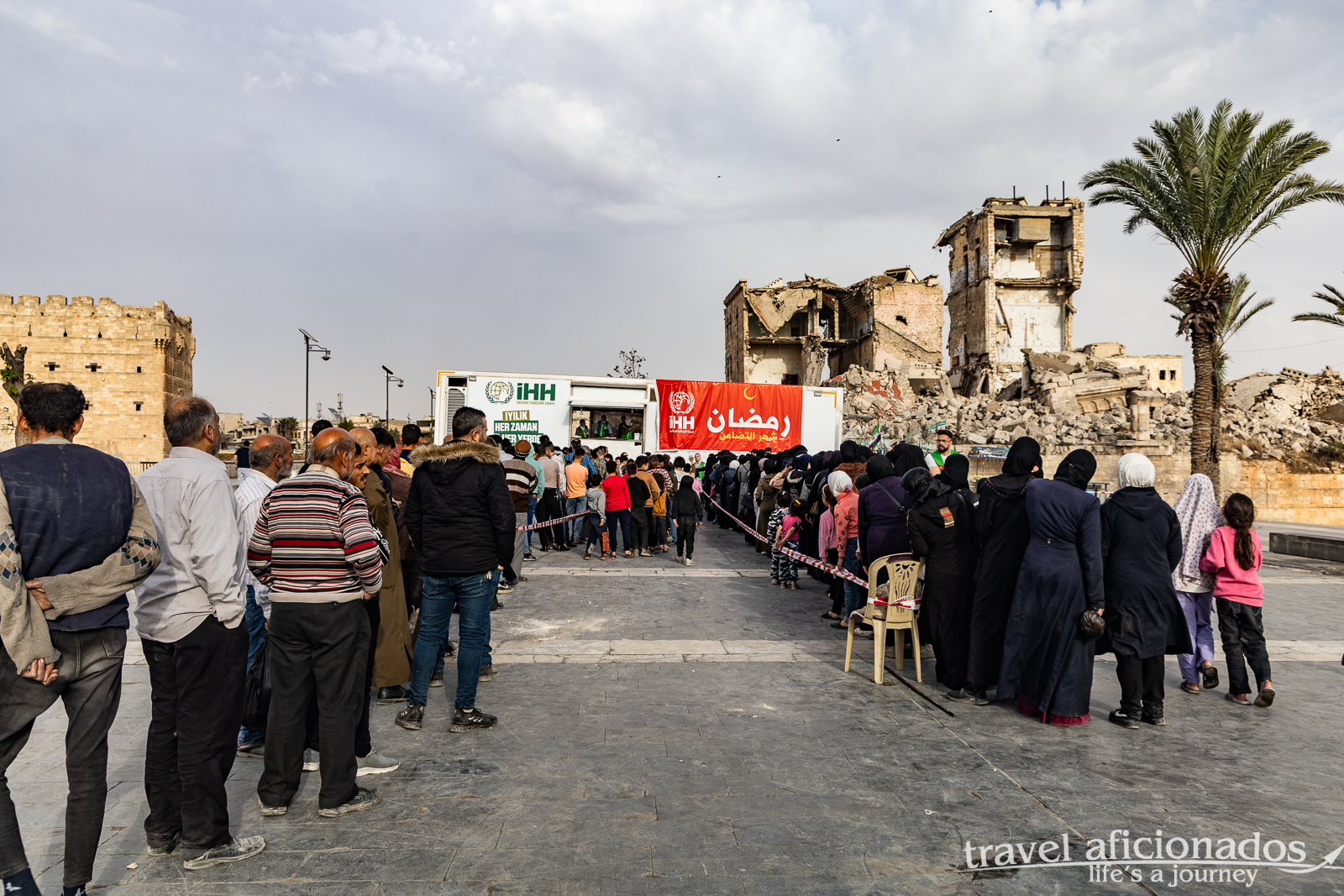
men / women stricly seperated according to sharia law waiting for food
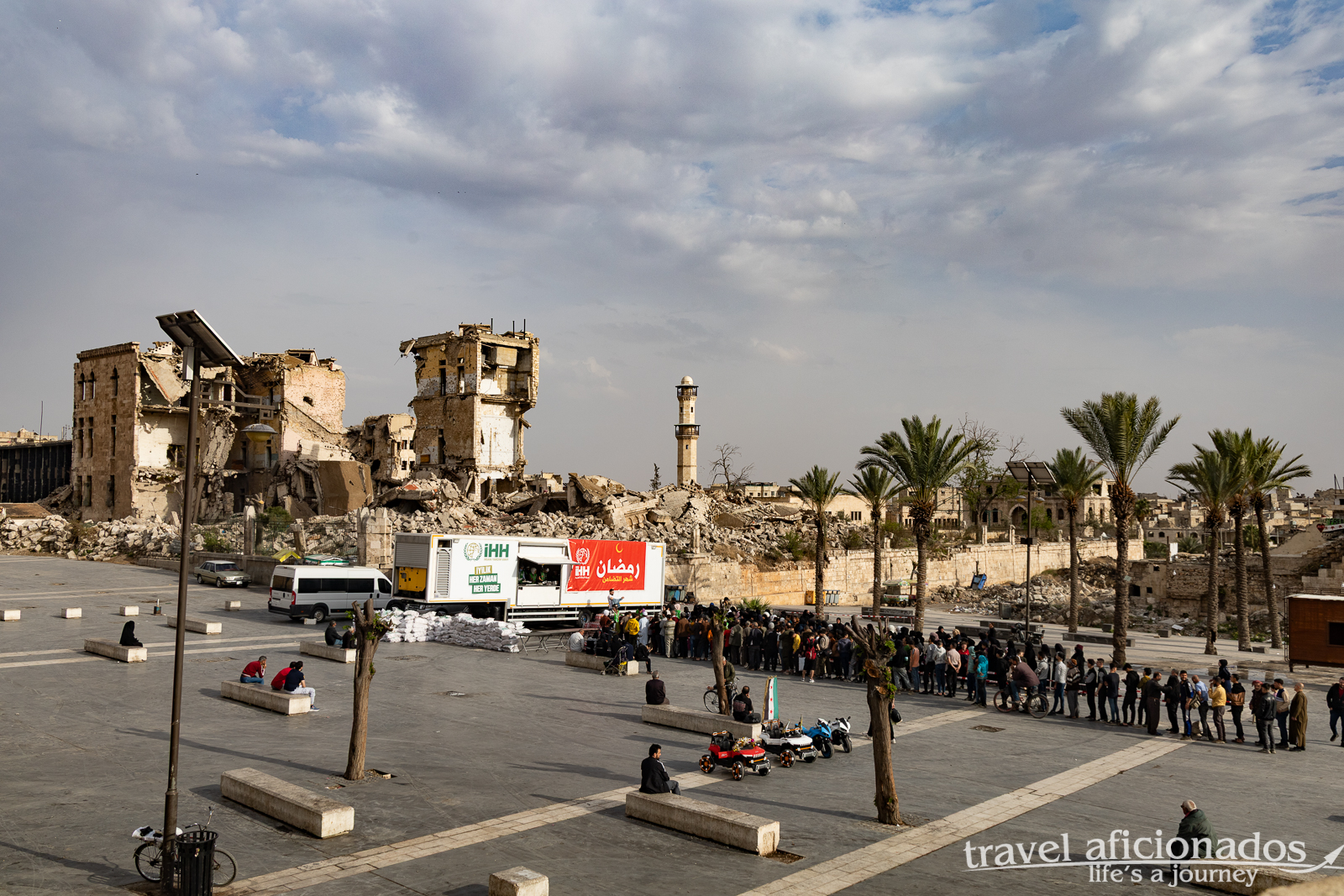
People lining up for food distributed by Turkish charity with great fanfare
Volunteers prepared to distribute food packed in white styrofoam containers. A long queue had already formed. The line kept growing, yet no food was handed out.
Eventually the children received plastic bags filled with food. I watched a little boy, perhaps five years old, carefully unpack his bag. Everything inside was individually wrapped in plastic. Nothing resembled a healthy meal.
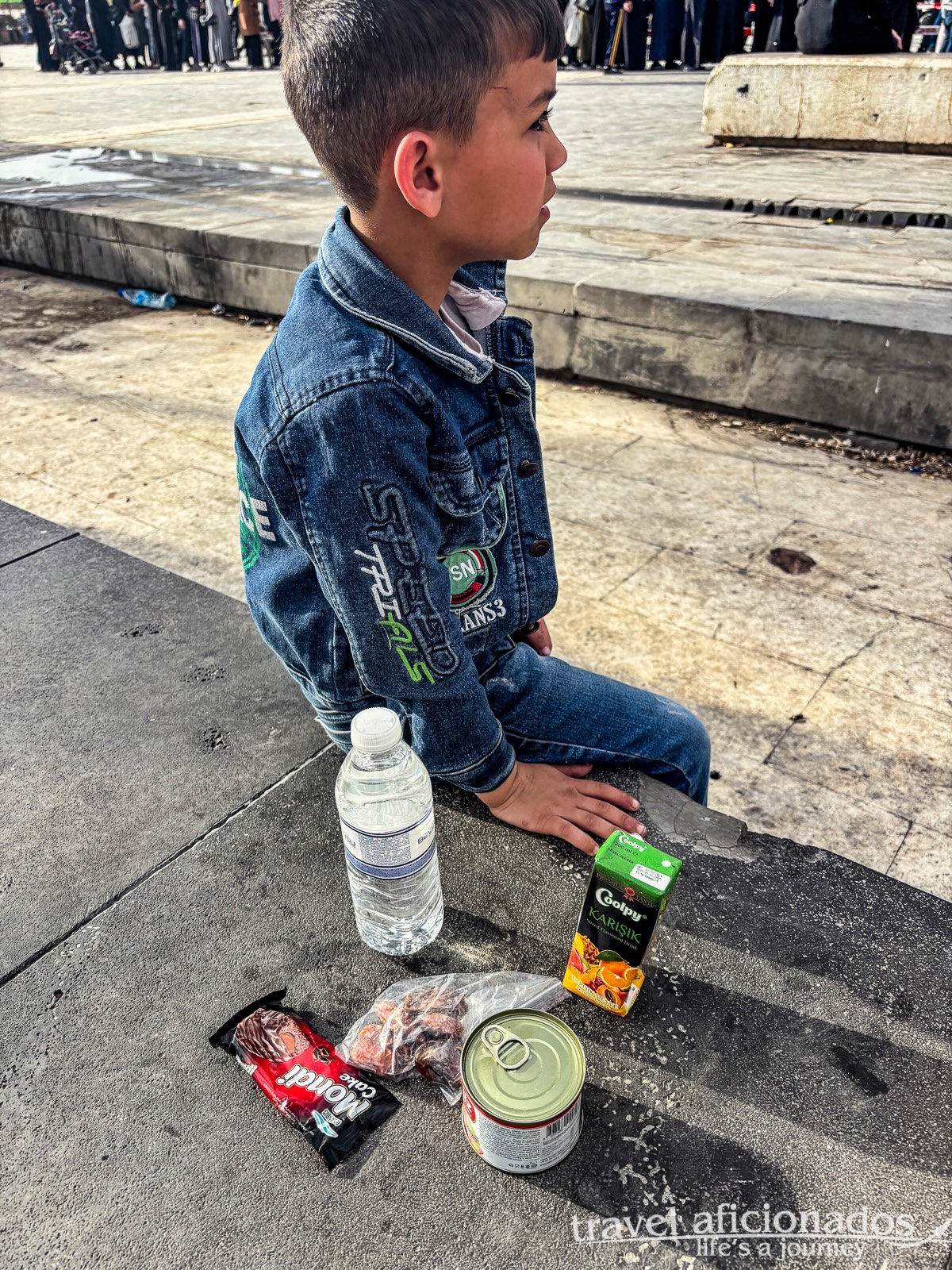
food packages given away by Turkish charity
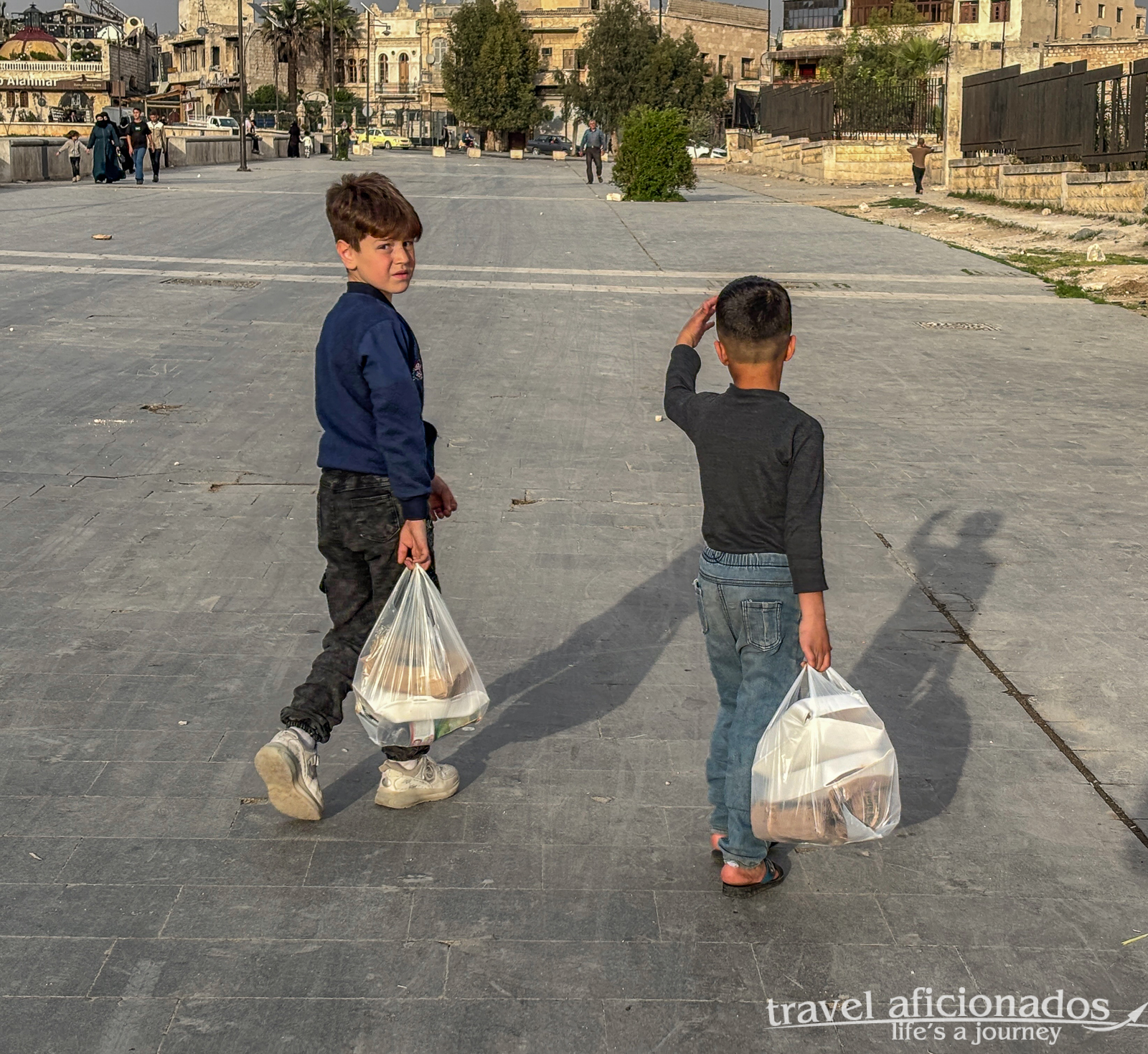
Children walking home with the food the collected from the charity
Especially the women grew increasingly impatient. They started complaining and pushing.
Only then did I understand why the volunteers had delayed the distribution. It was Ramadan, and they had apparently been instructed not to hand out the meals until Iftar.
Watching hungry people wait while food sat ready only a few metres away was deeply disturbing. When the muezzin finally called for the Maghrib prayer, the distribution began. It was slow and disorganized.
What disturbed me even more was seeing a photographer documenting the event. Some volunteers encouraged the crowd to smile and cheer for the cameras, but most people simply ignored them. They looked exhausted and hungry.
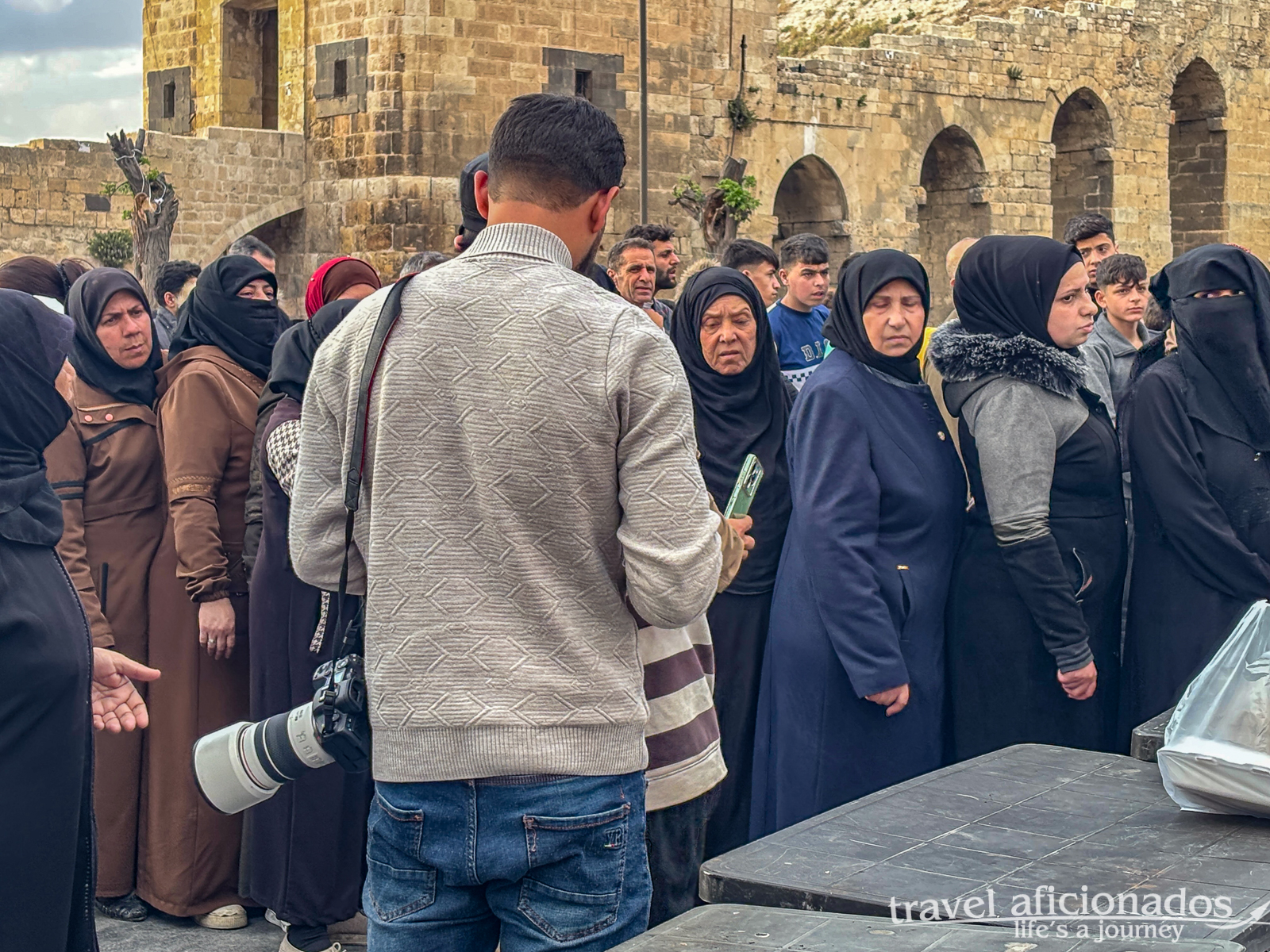
Turkish photographer making sure this reaches Turkish TV.
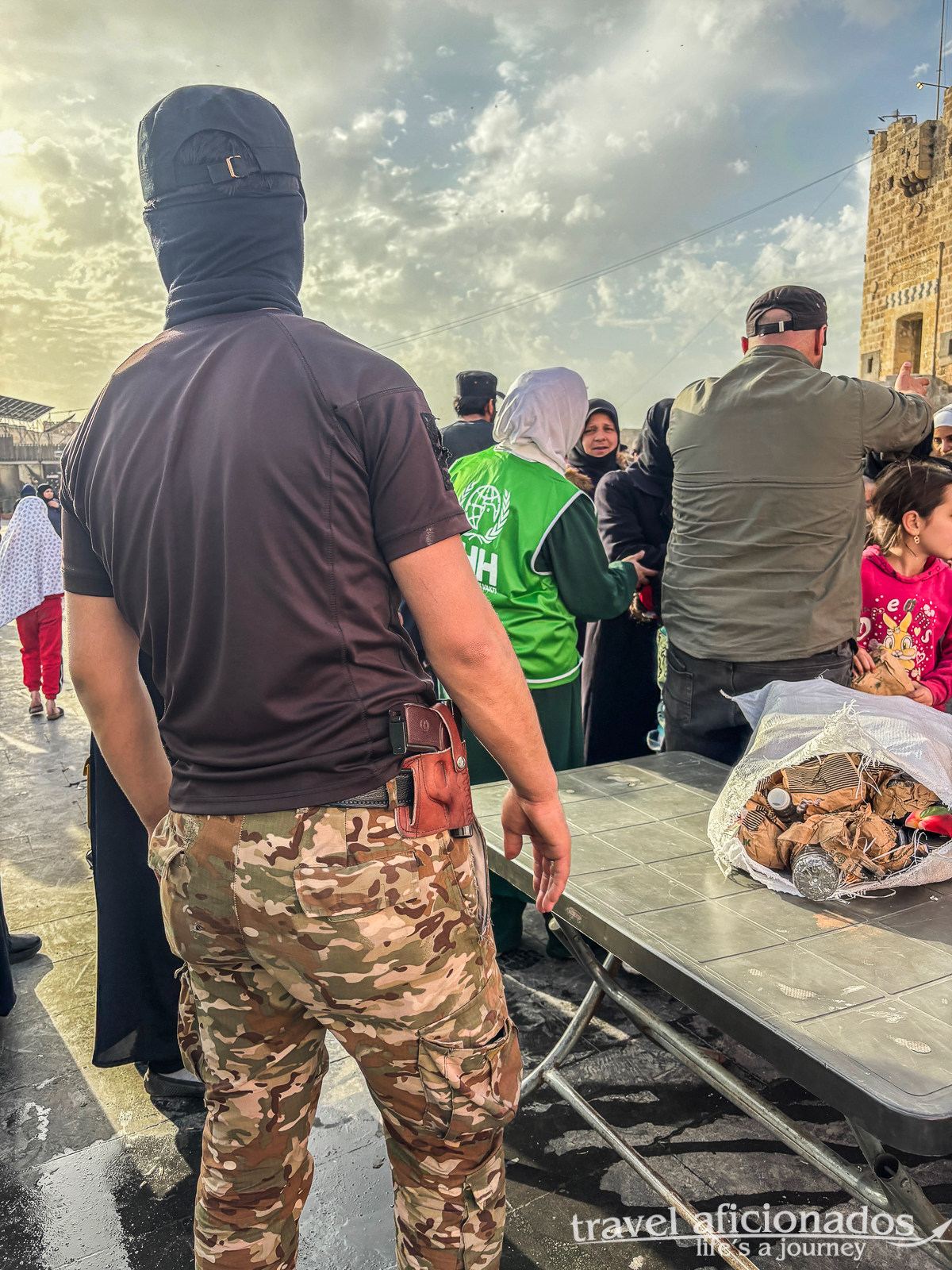
Masked young men carrying guns moved through the crowd, trying to maintain order by pushing people back.
The entire scene felt more humiliating than celebratory.
Only weeks earlier, in January 2025, four people had died and several others were injured in a crowd crush outside the Umayyad Mosque in Damascus during the distribution of free meals. Several Syrians later told me the same heartbreaking sentence:
“People now die for a plate of rice.”
https://www.aljazeera.com/video/newsfeed/2025/1/12/crowd-crush-at-free-lunch-event-at-damascus-mosque-kills-four-people
When I mentioned that I had never seen children searching through garbage during my earlier visits, friends in Aleppo told me that it had become increasingly common around 2018, although mostly in poorer suburbs. Now it was visible in central districts as well.
The children searched not only for food but also for plastic that could be sold. Garbage often remained scattered around overflowing dumpsters, with the wind carrying it through the streets.
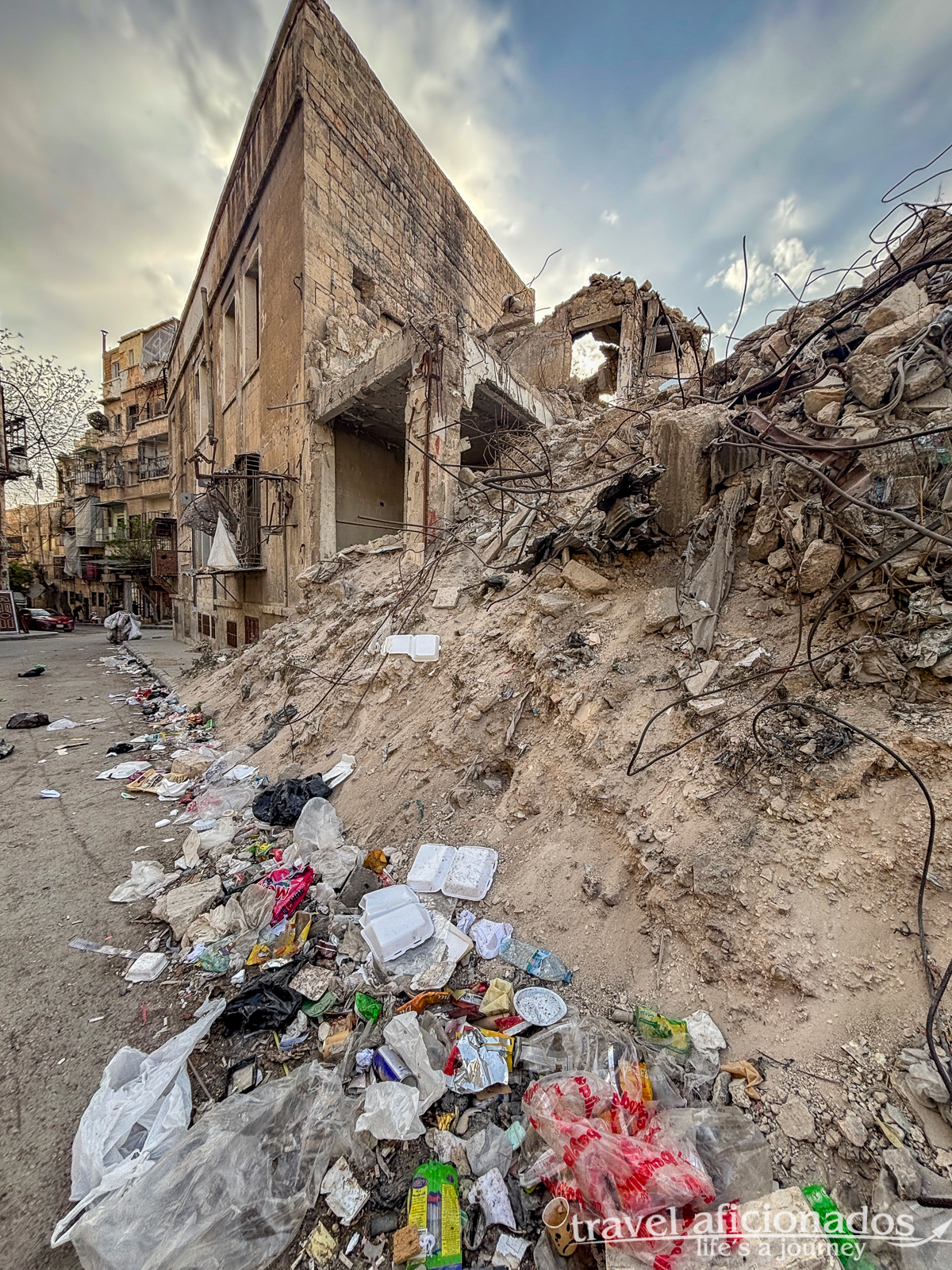
Packing from the food given away Liters the street
A City Still in Ruins
What had not changed was the destruction.
Driving through Homs in 2025 felt almost identical to my journey in 2019, except the many cars. We passed street after street of bombed-out buildings, many still standing as empty shells after years of war. Reconstruction had barely begun.

Homs 2019 – empty streets

Empty streets 2019

Homs 2019
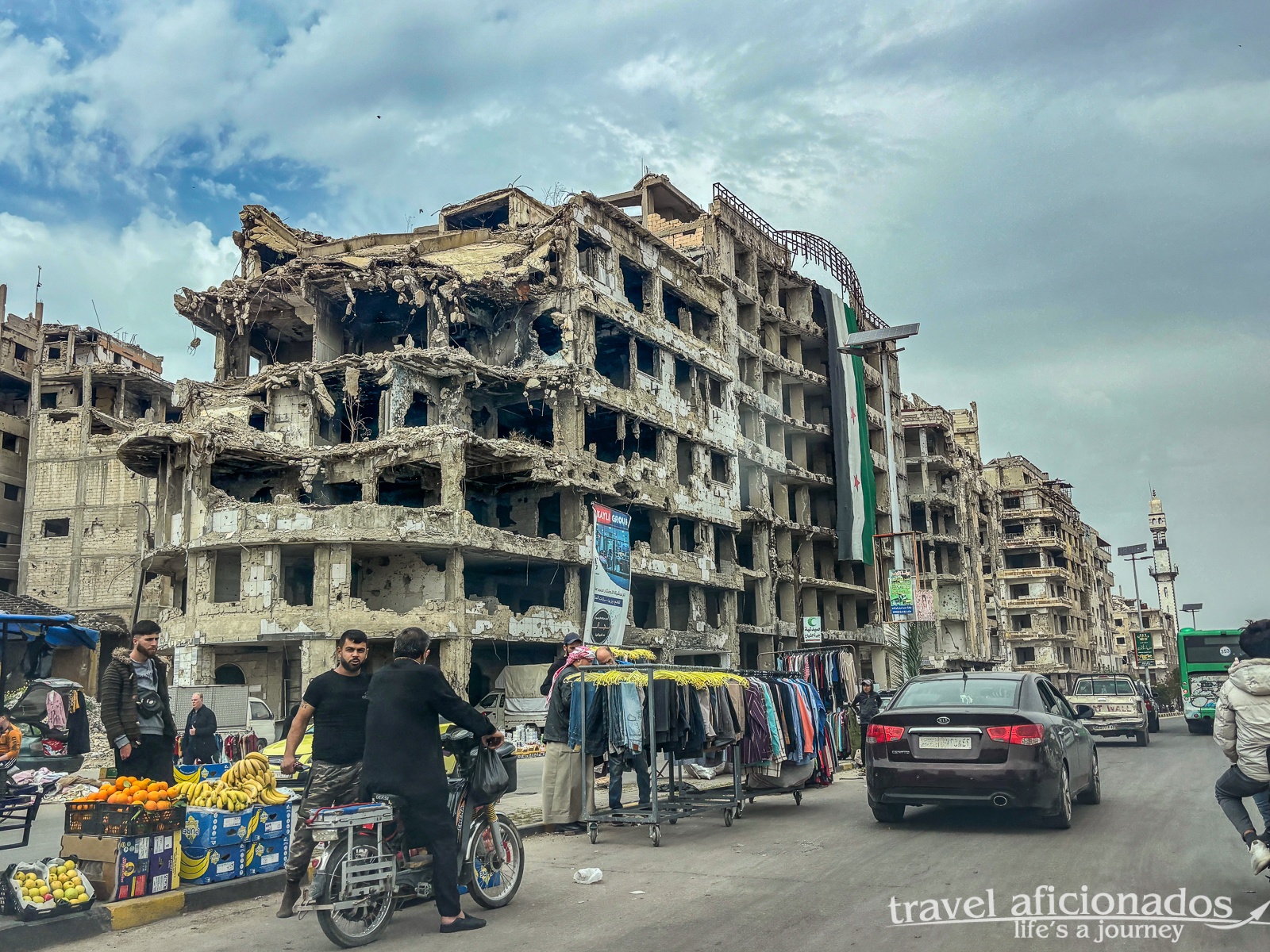
Homs March 2025
One building stood out.
One building stood out. Chalid-ibn-al-Walid-Moschee rose almost untouched above the devastation. During my first visit I wondered whether it had somehow escaped the fighting by miracle. Later I learned that it had been extensively rebuilt with financial support from the Chechen government. Several destroyed churches had likewise been restored through donations from Christian communities in Lebanon.
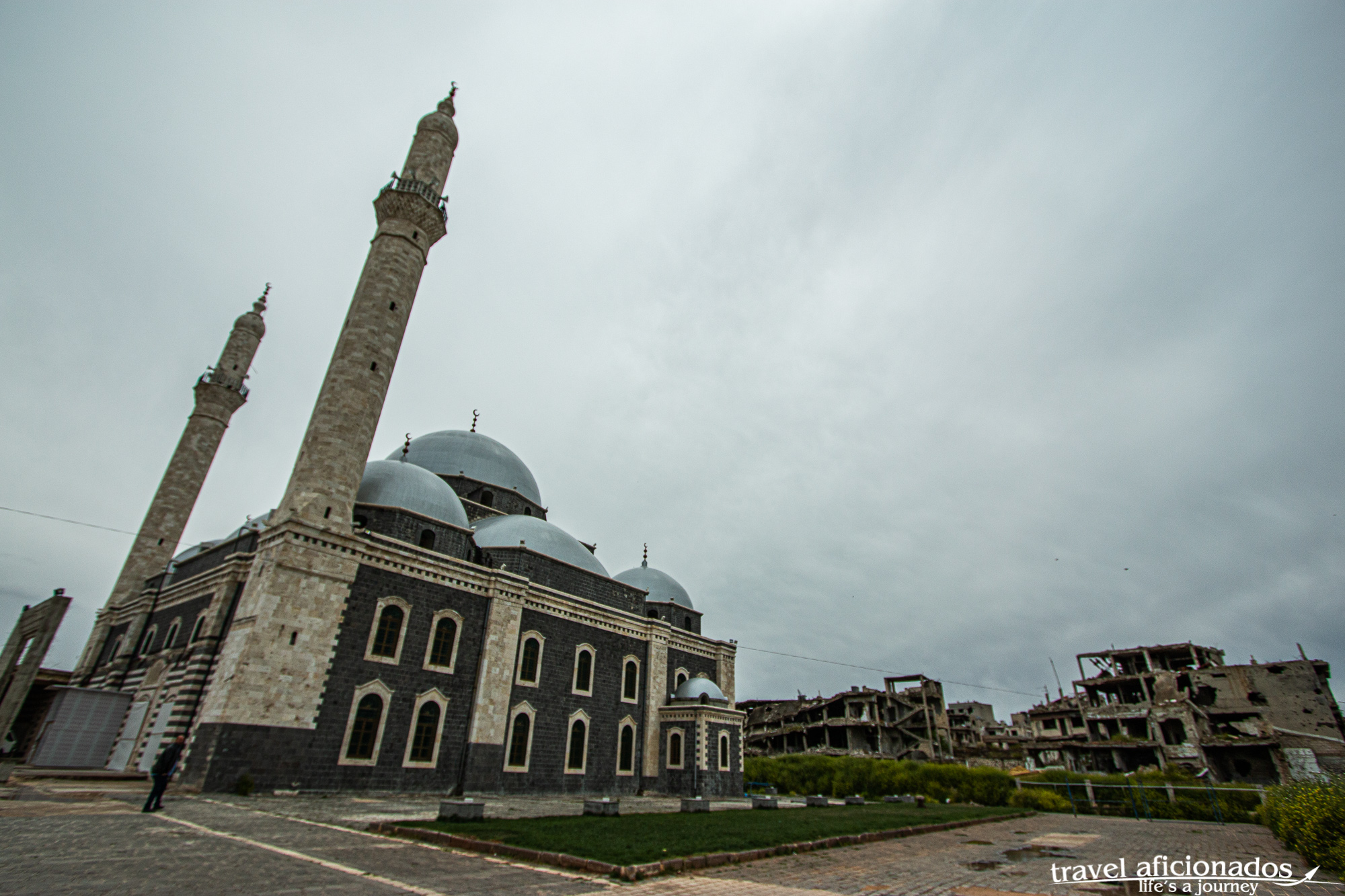
Chalid-ibn-al-Walid-Moschee in the midst of destruction- Renovation was paid by Chechnya
Amid the ruins, these restored religious buildings stood in sharp contrast to the surrounding neighborhoods.



Leave a Reply