


Latakia is Syria’s main port, but for Syrians it is much more than that. They love the coastal region for its beautiful coastline, pristine beaches, and ancient ruins that date back thousands of years.
On my previous trips to Syria, I never managed to visit the coast. During my journey in May 2026, however, I was incredibly lucky. An Armenian friend in Aleppo had organised a trip for the teachers of one of the city’s Armenian schools and kindly invited me to join them.
They took me under their wing, welcoming me as one of their own. It was a once-in-a-lifetime experience and gave me the opportunity to see this beautiful part of Syria through the eyes of locals rather than as an ordinary tourist.
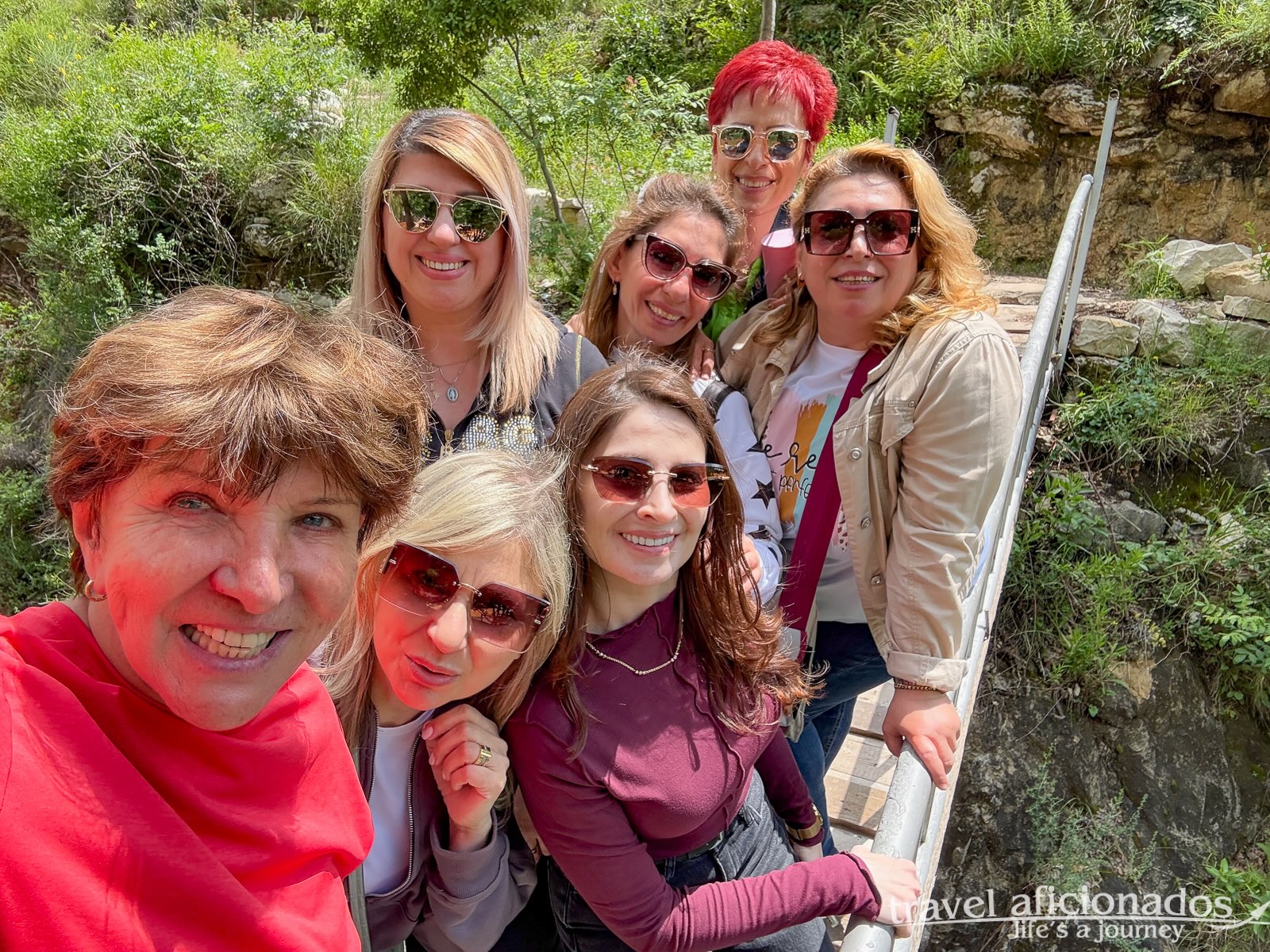
Travelling to the coast with teachers from the Armenian school in Aleppo
We left Aleppo at around five o’clock in the morning on a large bus that Maral had rented for the group of 35 teachers. I was exhausted I had been travelling for two days. So naively I expected everyone to sleep through the journey, but by six o’clock the music was blasting through the speakers and one of the teachers was dancing enthusiastically up and down the aisle. The bus was filled with laughter, singing and clapping, and it quickly became clear that this was going to be a memorable day.
Pit-stop for Shabiyet
Our first stop was at a bakery famous for one of the region’s favourite sweets, Shabiyet. Fresh from the oven, the flaky pastry was filled with rich cream and drenched in fragrant sugar syrup—a delicious way to wake up.
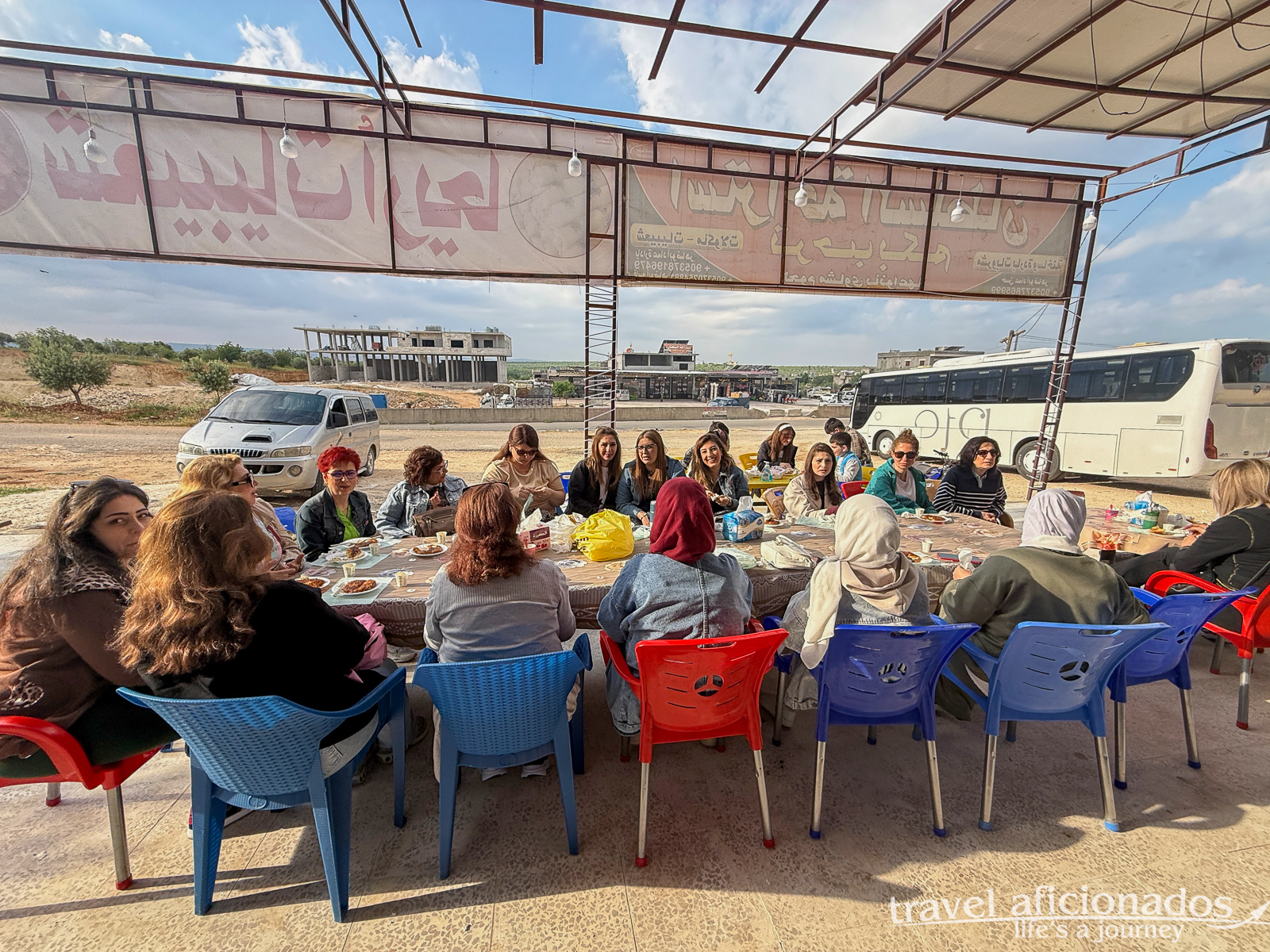
Breakfast stop for the famous sweet Shabiyet
Everyone raved about the pastry. The owner beamed with pride, and when he discovered there was an Austrian among the group, he seemed even more delighted. Like most Syrians I met during my travels, to please guest has top priority.
What surprised me most, however, was how chilly the Syrian coast could be at the end of May. Expecting warm Mediterranean weather, I had packed only a few T-shirts and lightweight trousers. As I sat shivering, Maral’s mother finally took pity on me and wrapped her scarf around my shoulders. It was such a small gesture, but one that perfectly reflected the warmth and generosity I experienced throughout the trip.
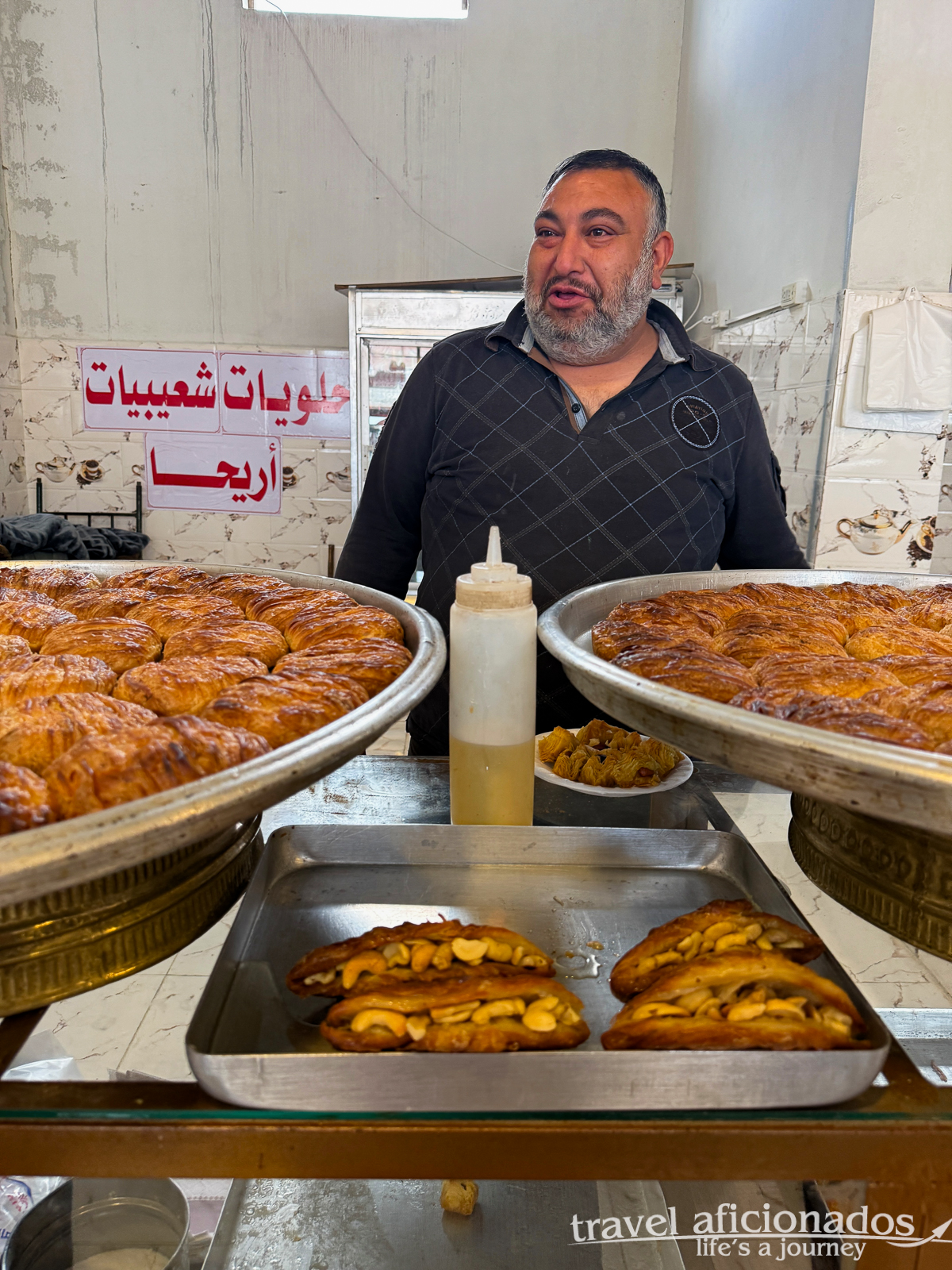
Breakfast stop for Shabiyet, a pastry filled with ashta (sweet custard)
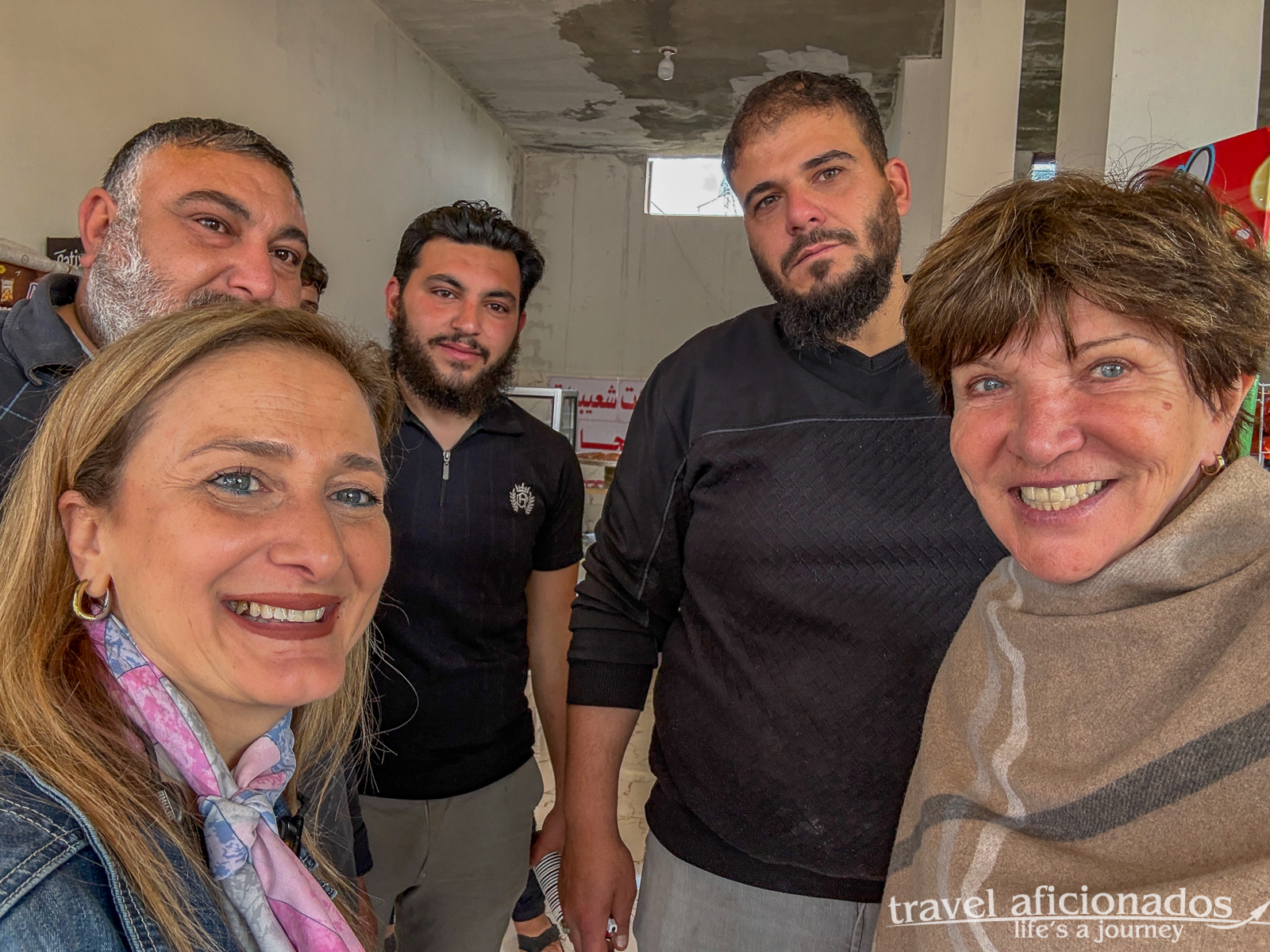
Maral and owners of bakery
Finally being able to travel roads once off limit
We travelled along a road that had been closed for many years. It was heavily contested during the war and remained shut even after the fighting ended in 2017, as Islamist groups in nearby Idlib were still considered a security threat.
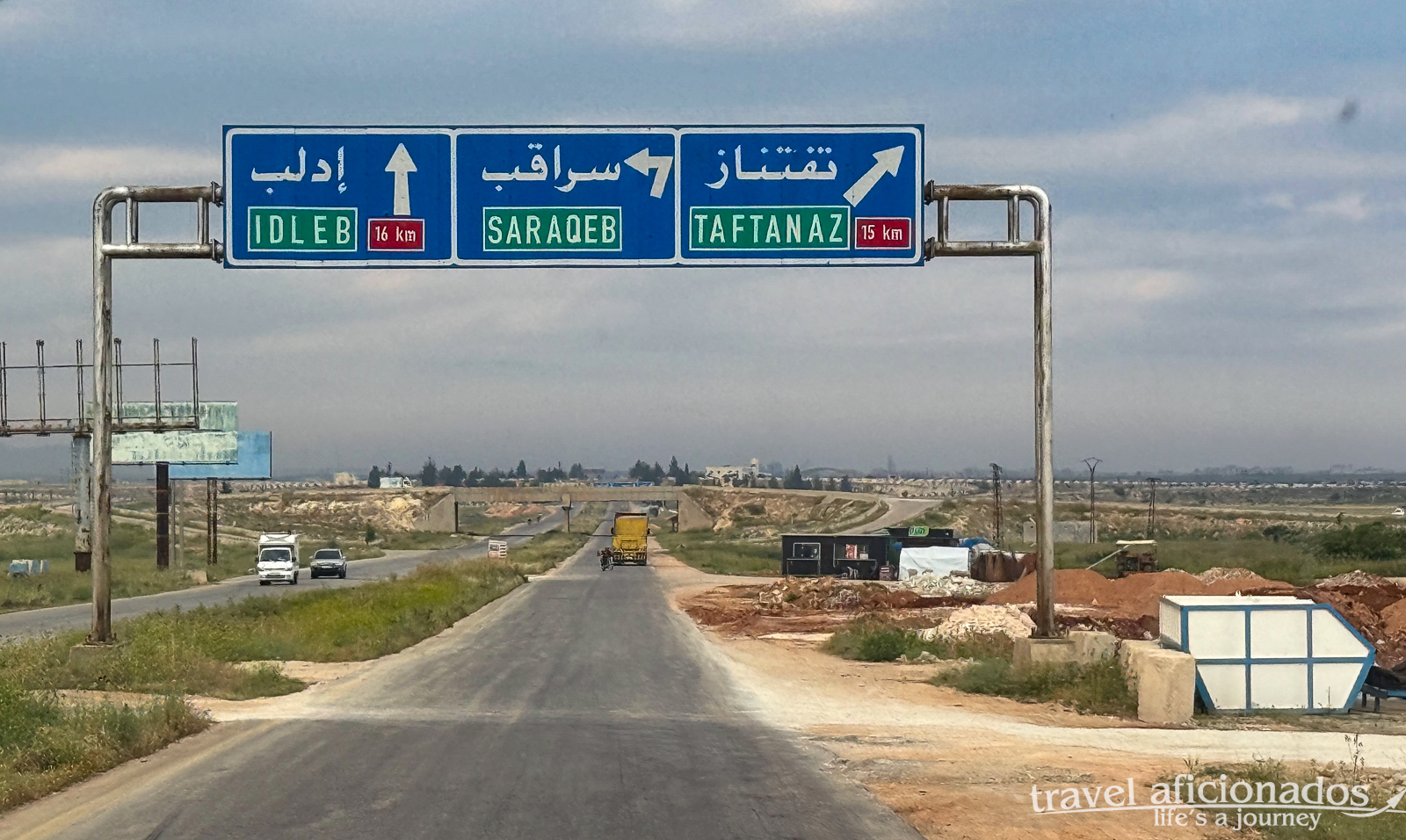
The M4 was closed for almost a decade, it was fought over by Islamist militia and the Syrian government
My travelling companions told me how difficult it had once been to reach the coast from Aleppo. At the height of the conflict, the journey could take as long as 24 hours, requiring long detours through central Syria.

Highway M4 from Aleppo to Latakia was closed for almost a decade since it passed through Idlib province, held then by Joulani’s Islamist HTS
What surprised me even more was hearing that people in Islamist-controlled Idlib also complained about being unable to spend their holidays on Syria’s Mediterranean coast. Instead, they travelled to Turkey, as the border crossing at Hatay remained open to them. According to my companions, this was possible because Turkey had supported the Islamist factions in northern Syria from the early years of the conflict.

Scenery along M4, the Highway from Latakia to Aleppo

abandoned amusement parks remind of the recent war
A painful reminder that the vast majority of Syrian are struggling were the many children along the road selling all kinds of staff.
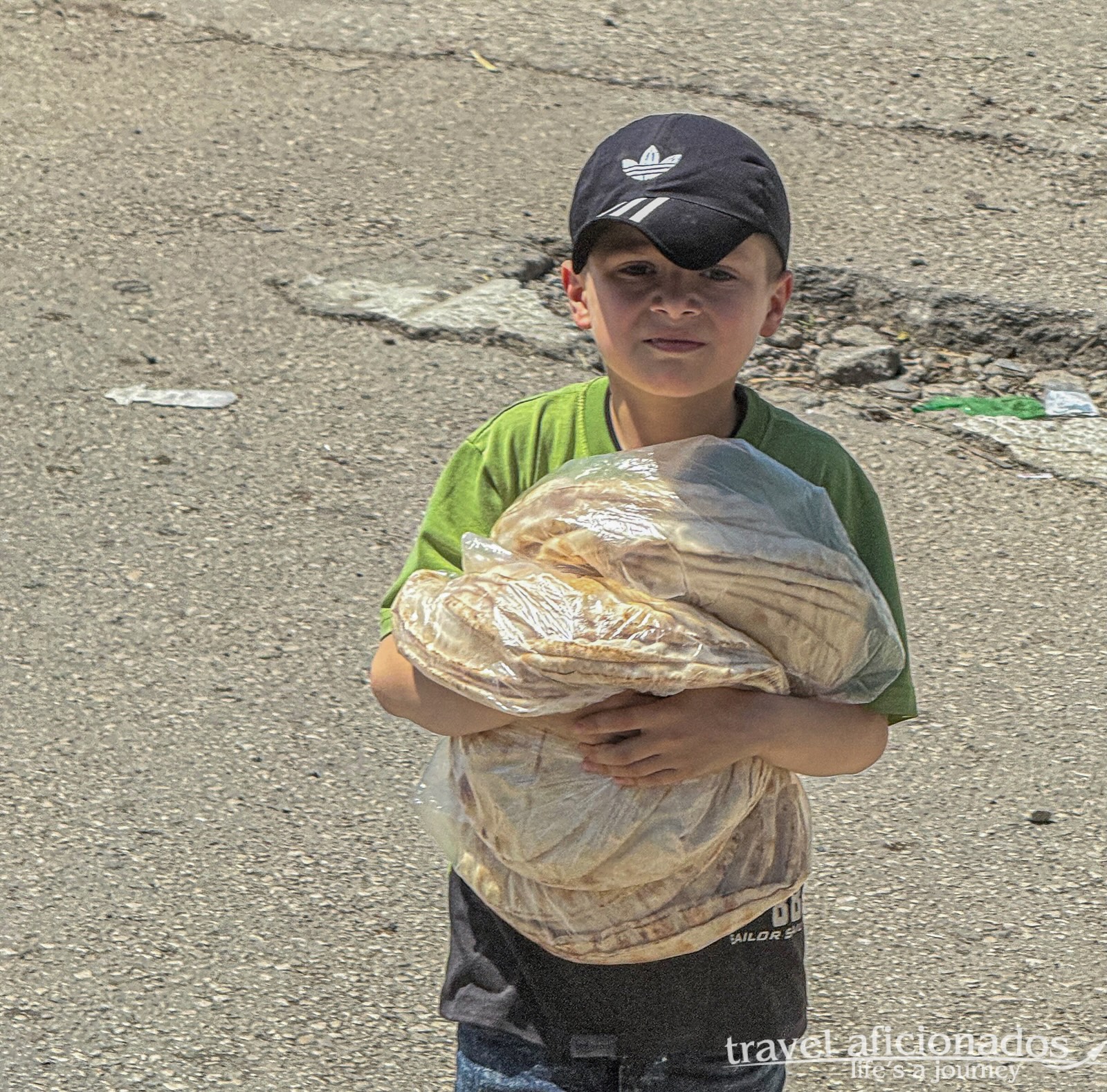
Children along the road sell food to motorists
Wadi al-Muluk -Valley of the Kings
Around noon we reached Wadi Al-Muluk. To get there, our bus driver had to navigate a series of narrow mountain roads clinging to the hillside. At times it felt a little nerve-racking, but every bend revealed another spectacular view.

Wadi Al-Muluk
The resort was packed with Syrian holidaymakers. The contrast with Aleppo was striking, especially when it came to the way women dressed. In Aleppo, I had become used to seeing many women wearing headscarves and long black coats, while some wore a niqab, leaving only their eyes visible. I even saw a few women covering their head and face with a kind of bag. Here on the coast, however, women were dressed much as they would be anywhere in Europe, enjoying the warm weather in colourful summer clothes.
It was wonderfully chaotic, so loud and tumultuous that I felt a little overwhelmed at first. Before long, however, I found myself caught up in the infectious energy.
Every arriving group was greeted by a drummer while a DJ blasted music across the resort. As soon as our bus pulled in, one young man ran towards us waving an Armenian flag, while another carried a Syrian flag. My travelling companions immediately burst into song and danced their way through the resort, waving the flags and laughing all the way to our seating area.
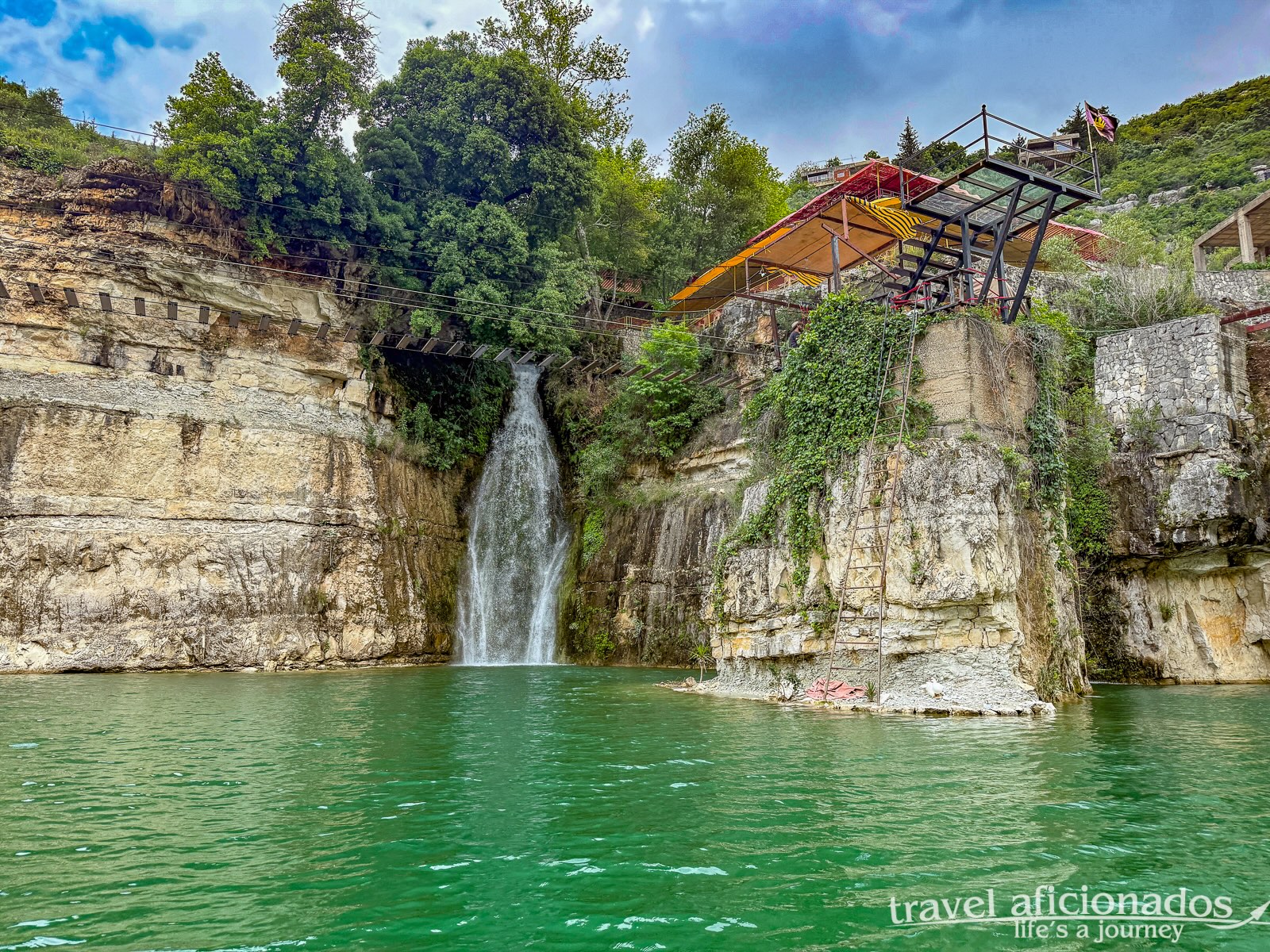
Wadi Al- Muluk
Lots of activities are offered here, from boat rides to cycling across a rope suspended high above the water, or soaring on giant swings attached to the cliffs that stretch far out over the valley.
Maral had only recently passed her English teaching exam, and this achievement was celebrated with great fanfare during the trip.

Maral celebrating she only recently passed her English teaching exam
I was surprised by how expensive the attractions were. Even so, people were lining up to take part. At the moment, there are not many places in Syria where people can simply relax and enjoy themselves, which perhaps explains why this resort was so popular despite the high prices.
When the owner of the resort heard that an Austrian woman was visiting, I was invited to give an interview. It was an unexpected but memorable experience, and I was happy to share my impressions of the country and my travels.
This is their post on Facebook.
https://www.facebook.com/share/v/1Gyf9w7T9v/
I noticed a half-built structure on the hillside and wondered whether they were finally planning to build a hotel in this gorgeous place. The answer was no. It turned out that construction had begun without the necessary permits, and the government had ordered the work to stop.
Burj Islam – coastal village with Turkmen population
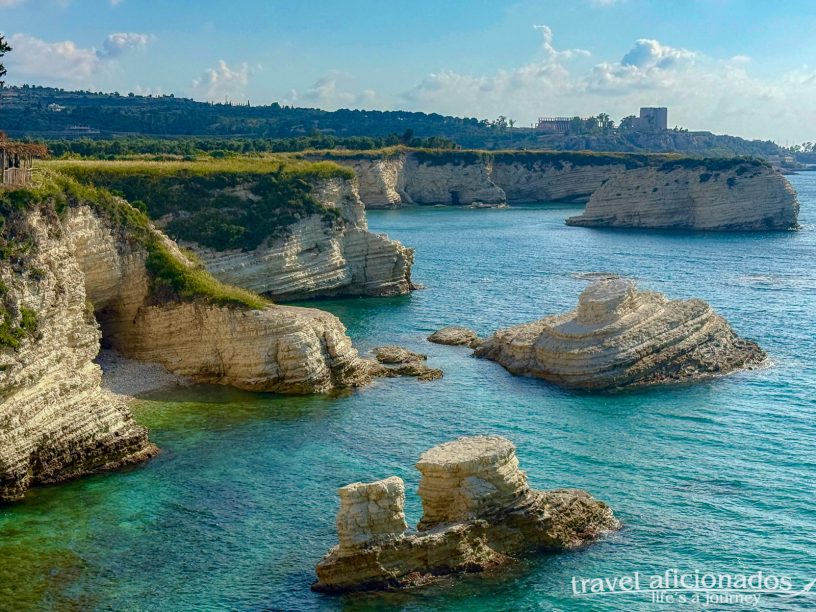
Burj Islam is a picturesque village about 30 minutes north of Latakia. With its white limestone cliffs, crystal-clear turquoise waters and relaxed atmosphere, it is a favourite summer destination for Syrian families.

Coastline near Burj Islam, a pictureque coastal village north of Latakia
We enjoyed an extensive lunch at one of the restaurants perched on the cliffs overlooking the Mediterranean. The meal was frequently interrupted by dancing, short strolls down to the beach, and then more dancing. No one seemed to stay in their seat for very long, and the festive atmosphere continued throughout the afternoon.
One interesting fact about Burj Islam is that its inhabitants are predominantly Sunni Turkmen, many of whom still speak Turkish as their first language—a reminder of the rich ethnic and cultural diversity found along Syria’s coast.
It was also here that I met the brother of Manal, my Syrian friend in Vienna. I had brought an entire suitcase filled with gifts from Austria for her family, and, true to Syrian hospitality, I left with a bag of presents in return.
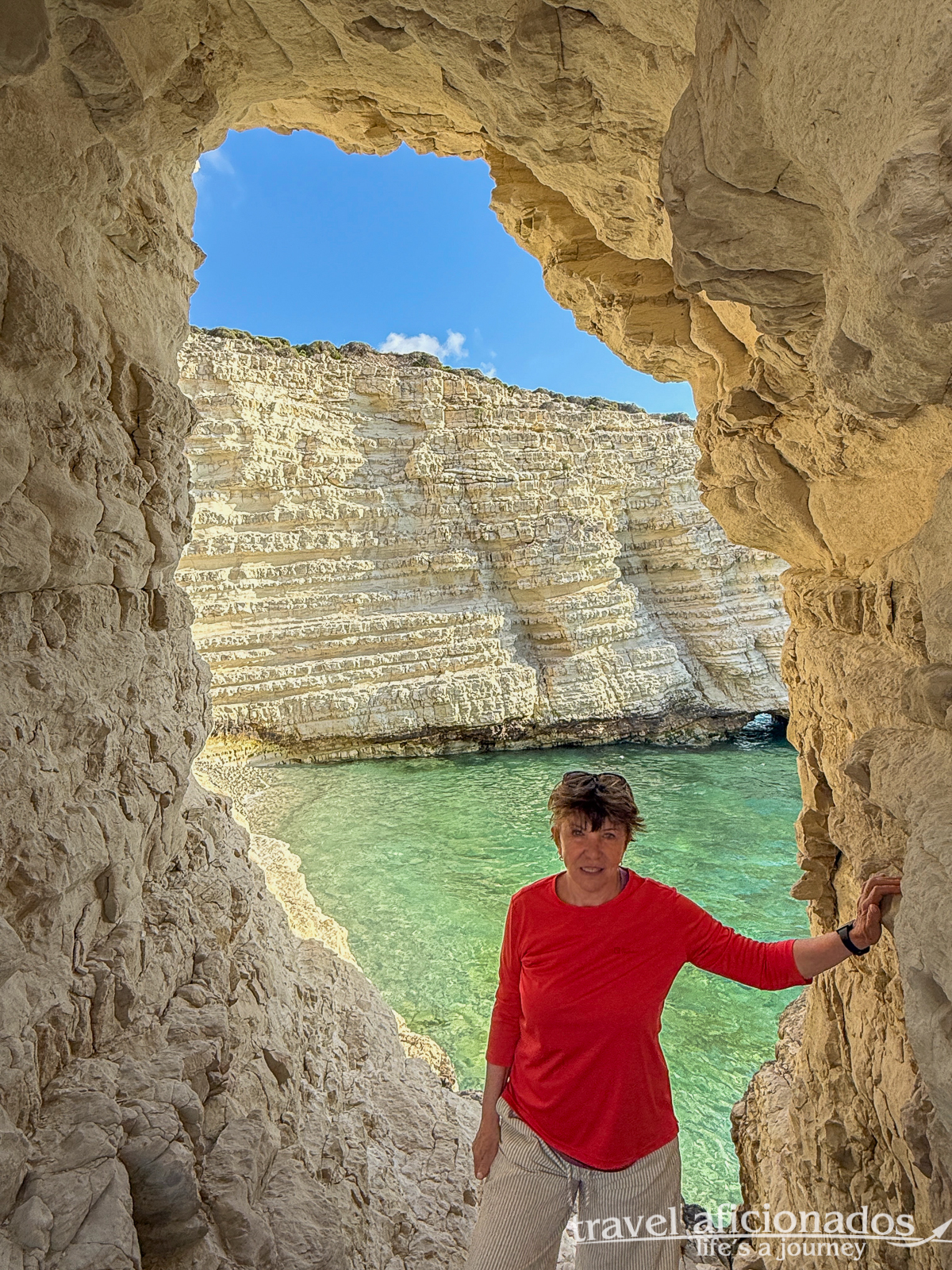
Burj Islam

Extensive lunch at Burj Islam
Latakia – Syria’s window to the sea.
This vibrant city has always been a gateway between inland Syria and the wider world. Like much of Syria, it holds an important spot in history. For centuries, Latakia served as an important harbor for Phoenicians, Greeks, Romans, and Ottomans. Its position on the coast made it a key trading hub, connecting merchants from across the Mediterranean with those traveling inland toward Aleppo, Hama, and Damascus.
The relaxed coastal lifestyle feels distinctly different from inland Syria.
Latakia, Syria’s 5th largest city. It grew a lot during the war, since many people fled here and to the coast in general, a region the war did not reach.
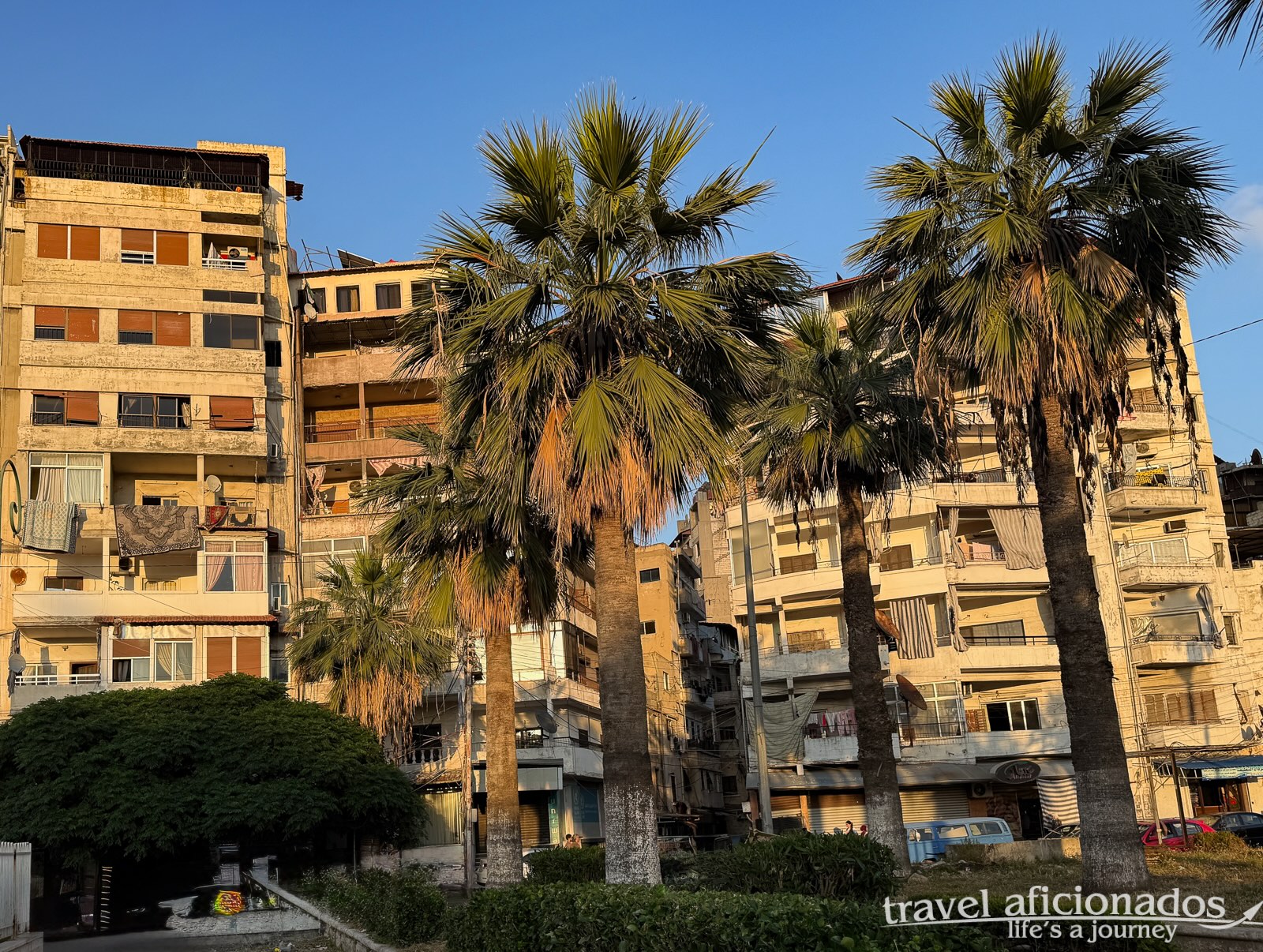
Latakia
Our stop in Latakia was rather short, it was getting dark already and we had a long drive back.
We visited a small church with a crypt underneath. It is all about Saint Thekla (or Tekla), an early Christian saint from the 1st century, the first female Christian martyr and an equal-to-the-apostles. According to early church tradition, after traveling with the Apostle Paul, she was sent to preach in Latakia before eventually seeking refuge as a hermit in the mountains of Maaloula, a Christian village north of Damascus.

Church dedicated to Saint Tekla, the first female Christian martyr

Last stop at Latakia’s most famous ice cream parlor

Sunset over Latakia – view of port in the background
We reached Aleppo around midnight, on the bus ride back there was more dancing. My friends wanted to teach me an Arabic dance, I was so exhausted, I had to pass.
This trip was the most wonderful experience with the loveliest people ever. I feel truly blessed that I was able to join this trip, and will remain thankful to Maral forever.

wonderful Mara


Leave a Reply