
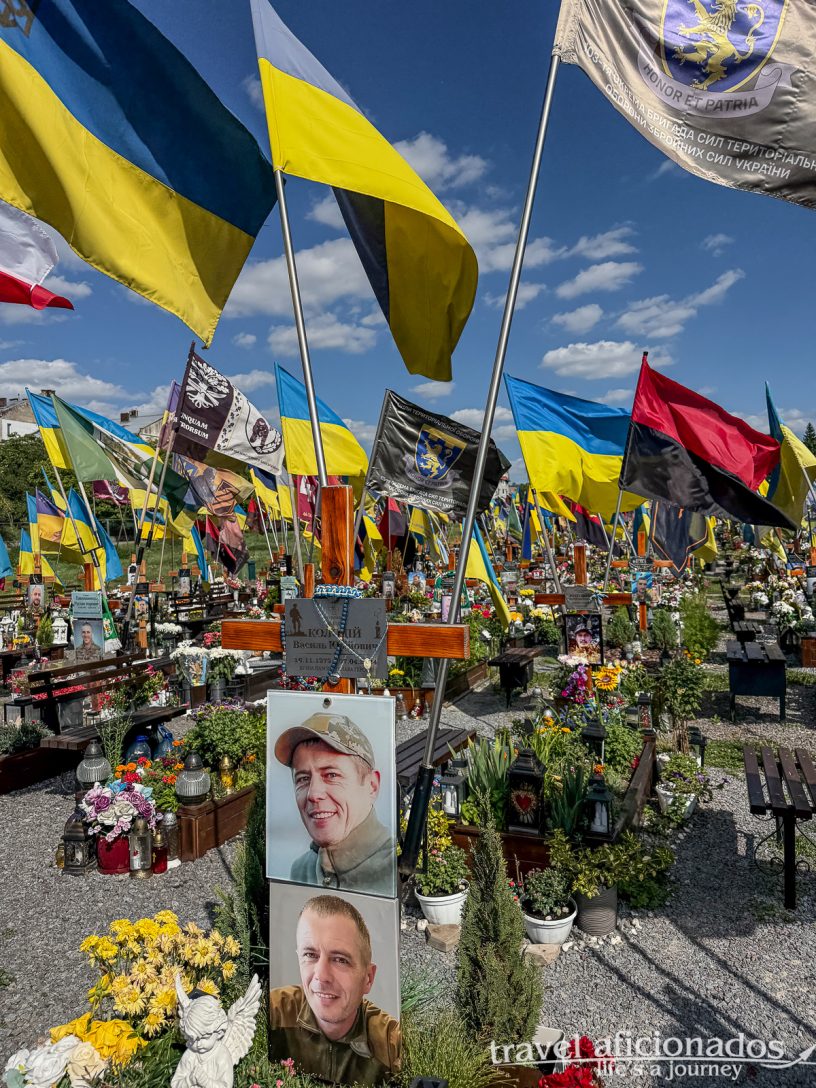


The front line is far from Lviv, yes there are fewer missiles, but the war often feels very close in other ways: the seemingly endless funerals, the daily demonstrations calling for the return of prisoners of war and protesting corruption, and the deeply saddening Field of Mars, where 1,500 men are buried.
Lviv’s many NGOs attract people from all over the world and from all walks of life. Some come to do sincere volunteer work, others to have fun or seek camaraderie, and some eventually move on to the front line. Plus the frequent the many Bars.
What stayed with me were the encounters—with people seeking adventure, mourning loved ones, or quietly turning up every day to help—and how closely grief and ordinary life exist here.
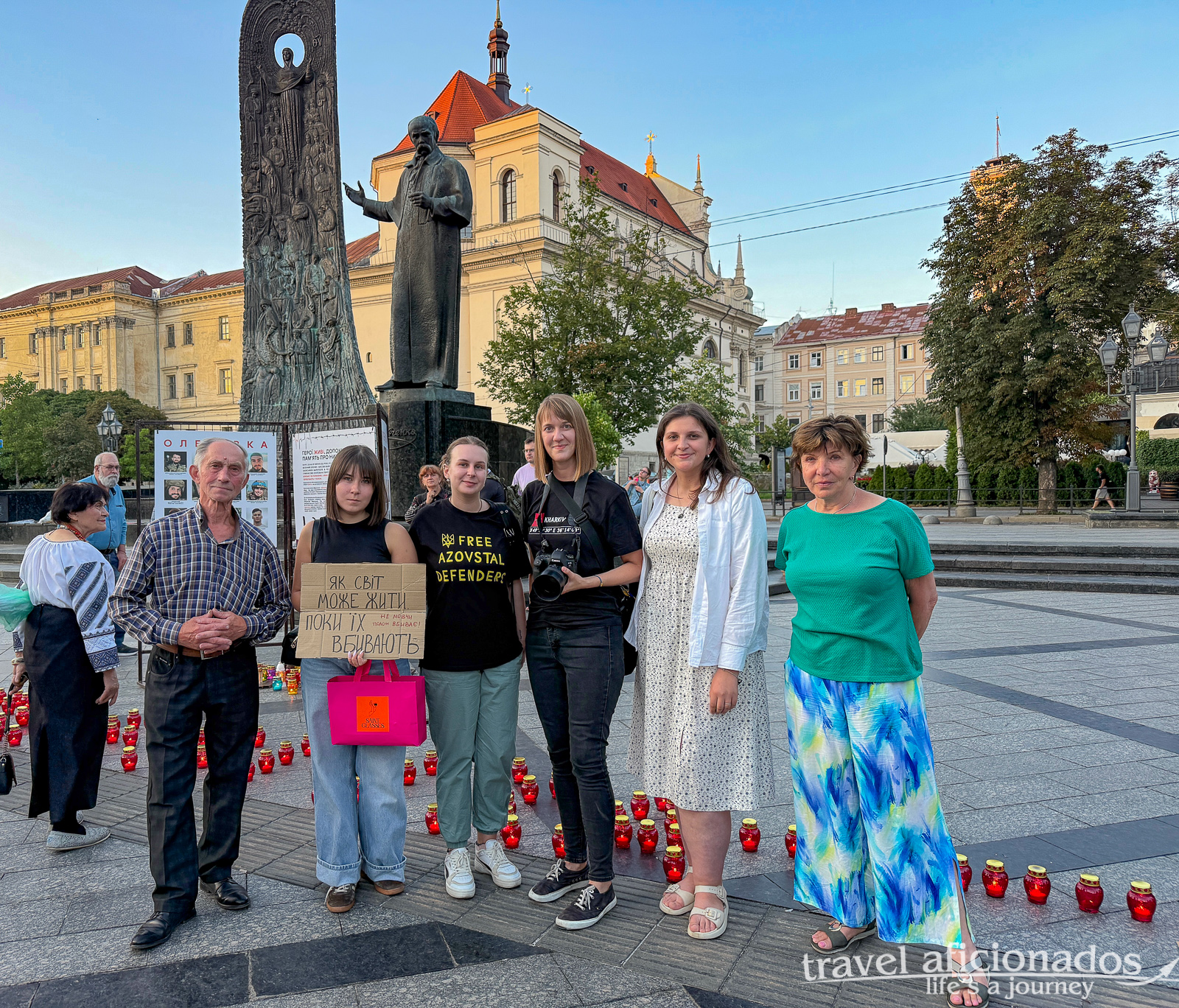
Annivesary of Olenivky Massacre
Nightlife in Lviv
After my horrendous trainride from Kviv in 3rd class I went straight to the bar where I met people from the whatsapp group “Friends of Ukraine.
With so many foreigners in town, many with greater purchasing power than Ukrainians, the bars are full, especially on weekends. Foreigners come not only to drink but also to exchange stories.
Curfew does not seem to be taken very seriously in Lviv, and word of which bars stay open until 4 a.m. circulates among the regulars.
The bars seem to be trying to outdo one another. Their imagination knows no bounds.
One day, somebody took me into what looked like an ordinary bar. At the very back, a bookshelf was moved aside, and we went down into a basement where BDSM equipment was on display.
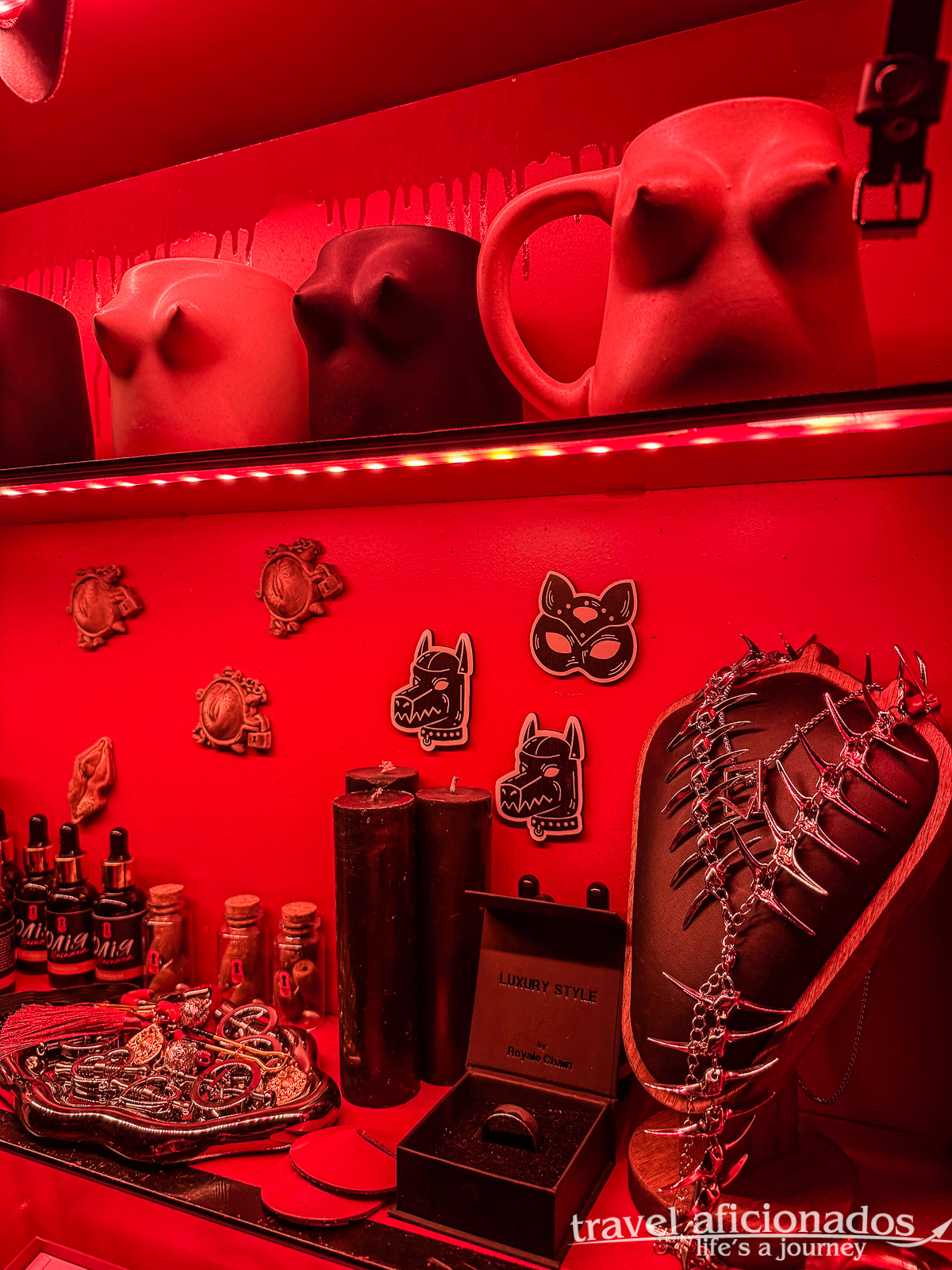
BDSM tools in a secret basement bar
It took me a while to adjust to the dim, dark-red lighting. More unsettling sights were to follow. Two young women volunteered to be flogged. They took off their shirts, their arms were tied, and hot candle wax was dripped onto their skin. They whimpered and whined while older men watched with delight. The women had broken the ice, and soon plenty of others were asking to be flogged.
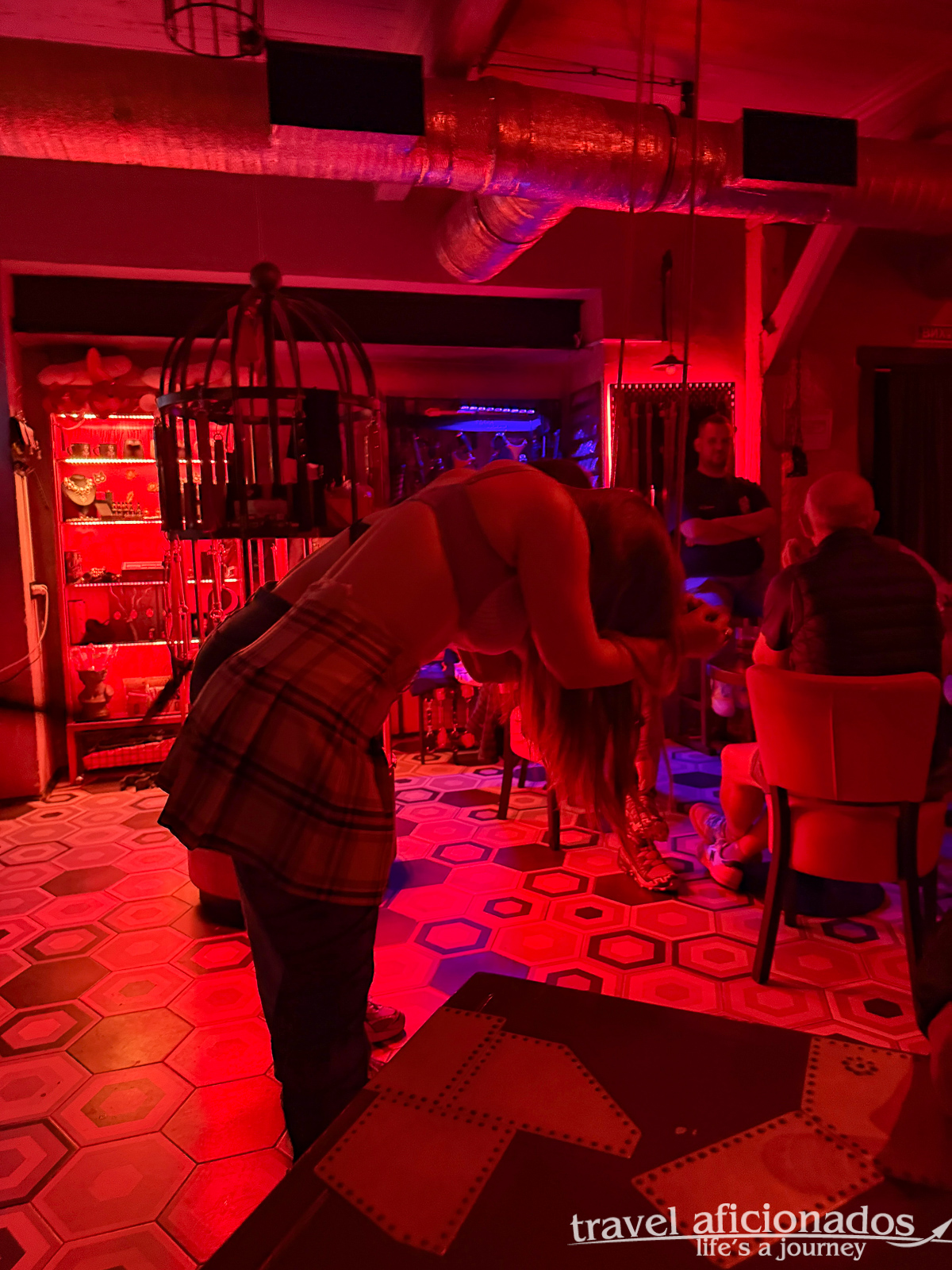
BDSM bar, girls asked to be flogged
What I remember most, though, is being served the best cocktail I have ever had: a bluish drink topped with silver pearls.
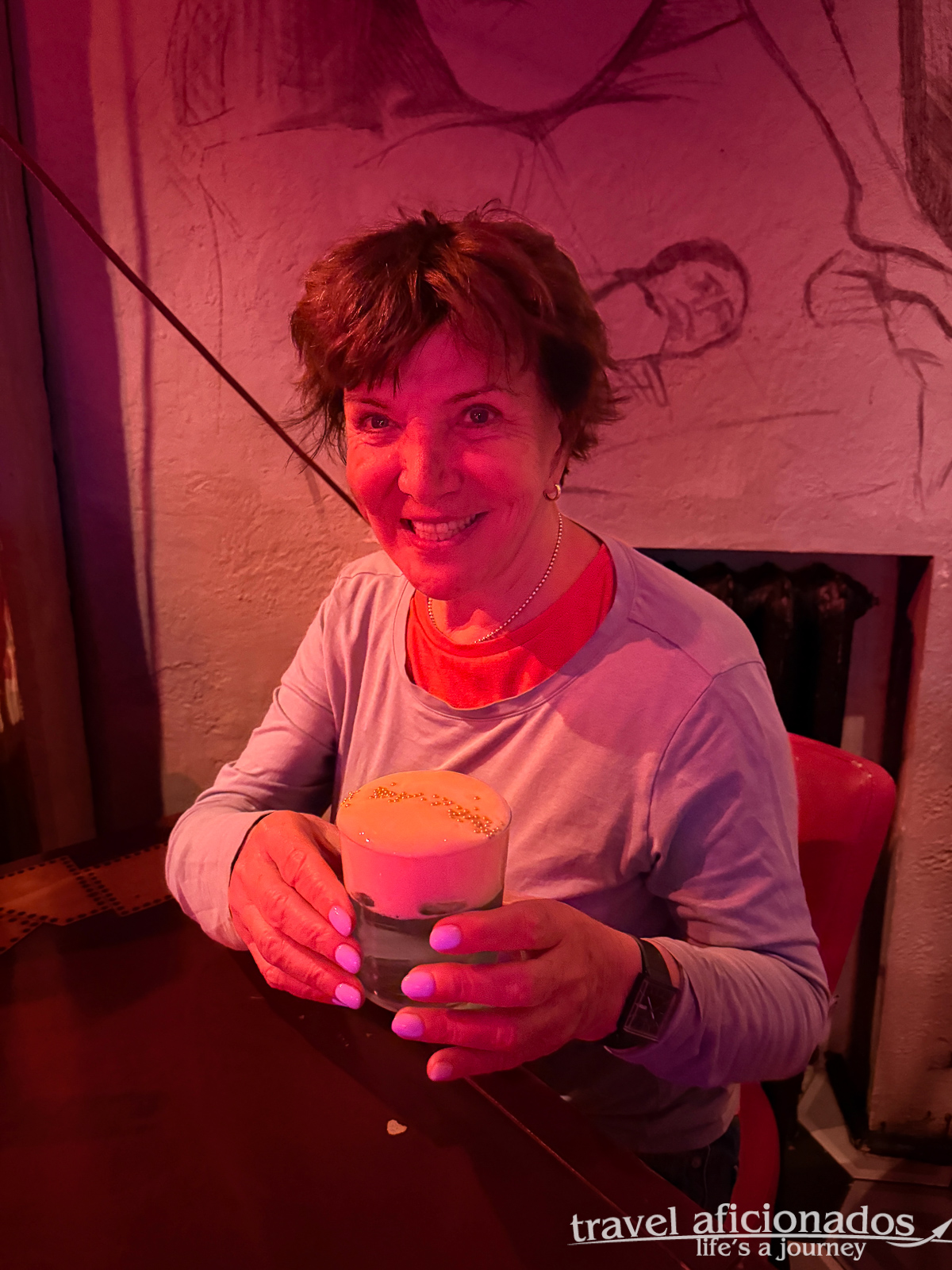
Best cocktail ever
Kryivka is an underground restaurant where you need a password to get in: “Slava Ukraini!” You descend a hidden staircase into a world of vintage uniforms, propaganda posters, and live music.
The place feels like a Second World War bunker: a maze of underground corridors, dim lighting, and basic tables. Military uniforms and other paraphernalia adorn the walls. The only concession to modernity was a television showing footage of the latest attack on an apartment building in Lviv.
Matthew met a friend who had spent 15 hours on a bus from Kharkiv. He was on his way home to the UK, with another 15-hour train journey to Kraków still ahead of him.
The Quiet After the Strike
I slept through the air-raid alert. When I woke up, I saw a message from Katrin: “Are you okay?”
A missile had hit an apartment building near the airport. Katrin and Christian had spent much of the night sheltering in their hotel’s garage.
I took a taxi to the site. As soon as I gave the driver the address, he knew why I was going. I felt a little embarrassed.
We got stuck in traffic on the way. As we drew closer, the reason became clear: streets had been closed to make room for emergency vehicles. From there, I only had to follow the line of fire engines.
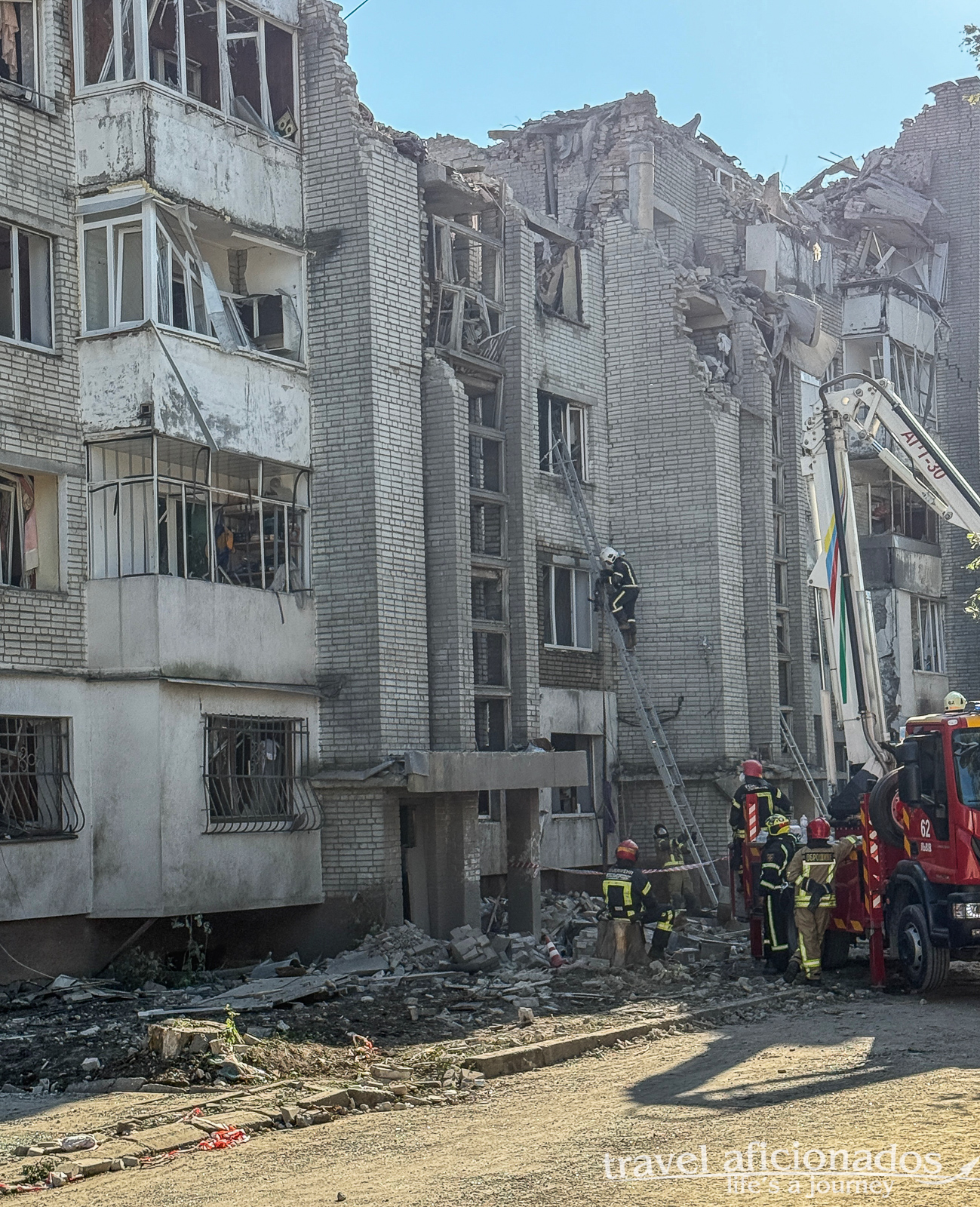
The building was hat by a rocket during the night
I had expected chaos, people crying. Instead, it was strikingly quiet.
Tents had been set up to provide residents and rescue workers with food and drinks. At others, people were reporting damage to their homes. Children played in the playground as though it were an ordinary day. It was crystal clear, there was a routine dealing with such disasters.
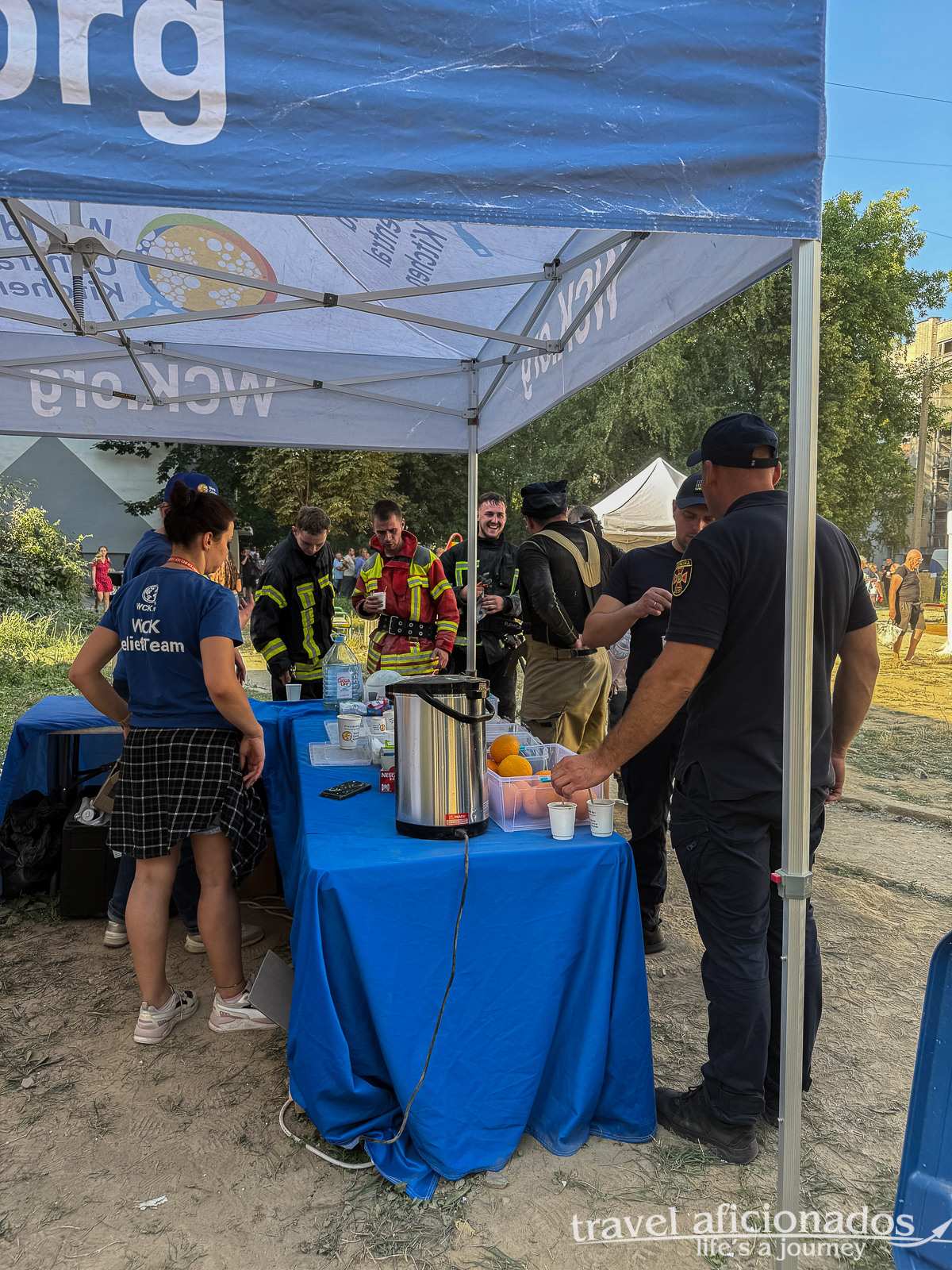
Hey was provided immediately
The top floor of one building had been almost entirely blown away. I could hardly believe that nobody had died. Had everyone gone to a shelter in the middle of the night? During my stay, I had never seen anyone seek shelter when an alarm sounded.
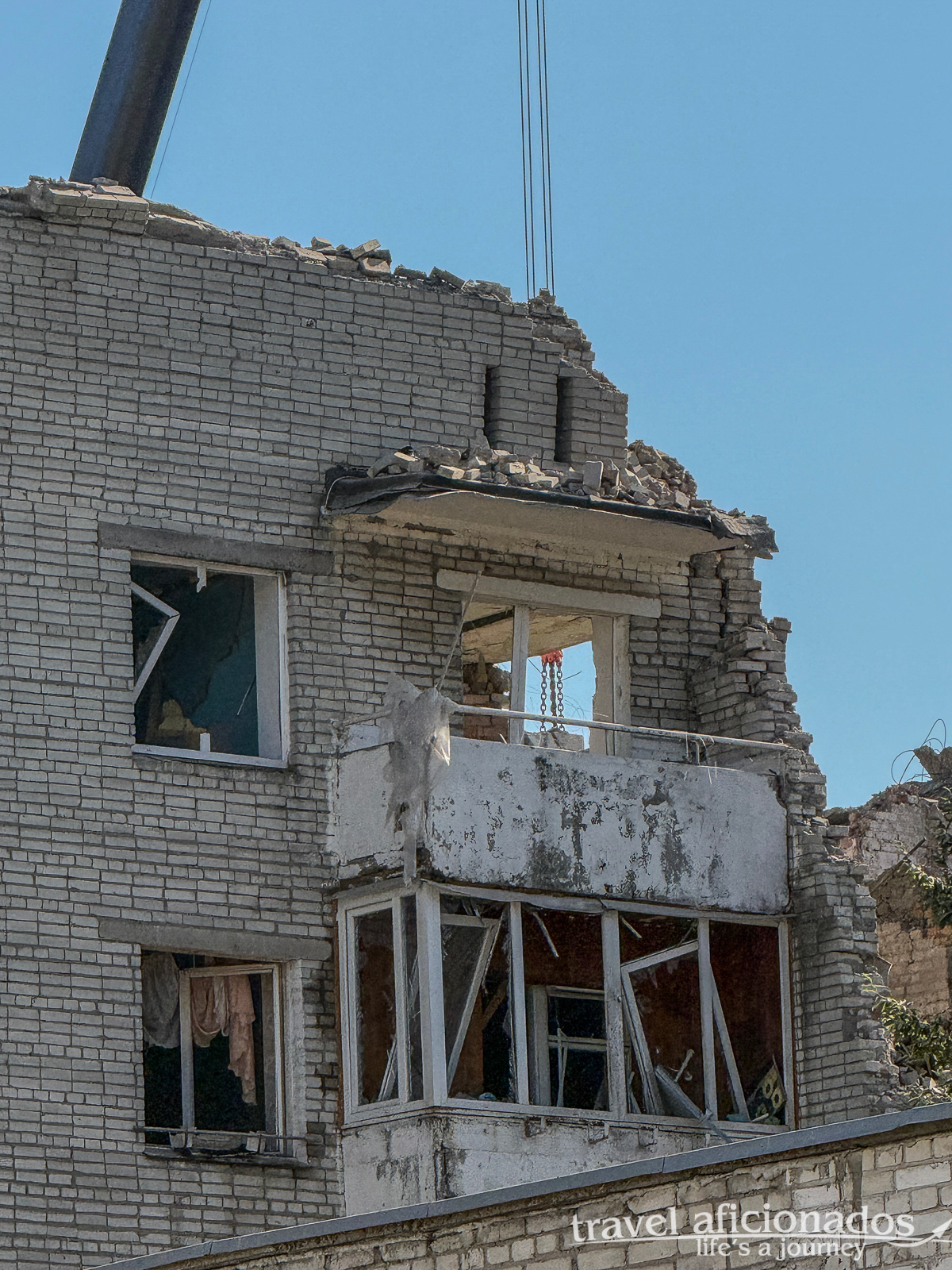
Building was hit by a rocket during the night
Firefighters were securing the building while residents carried away belongings in bags. The neighbouring buildings appeared to have been evacuated too. I was shocked by how far the damage extended: shattered windows, frames torn from walls, even in buildings some distance from the strike. Some openings had already been covered with plastic sheeting or chipboard. People seemed to know exactly what to do.
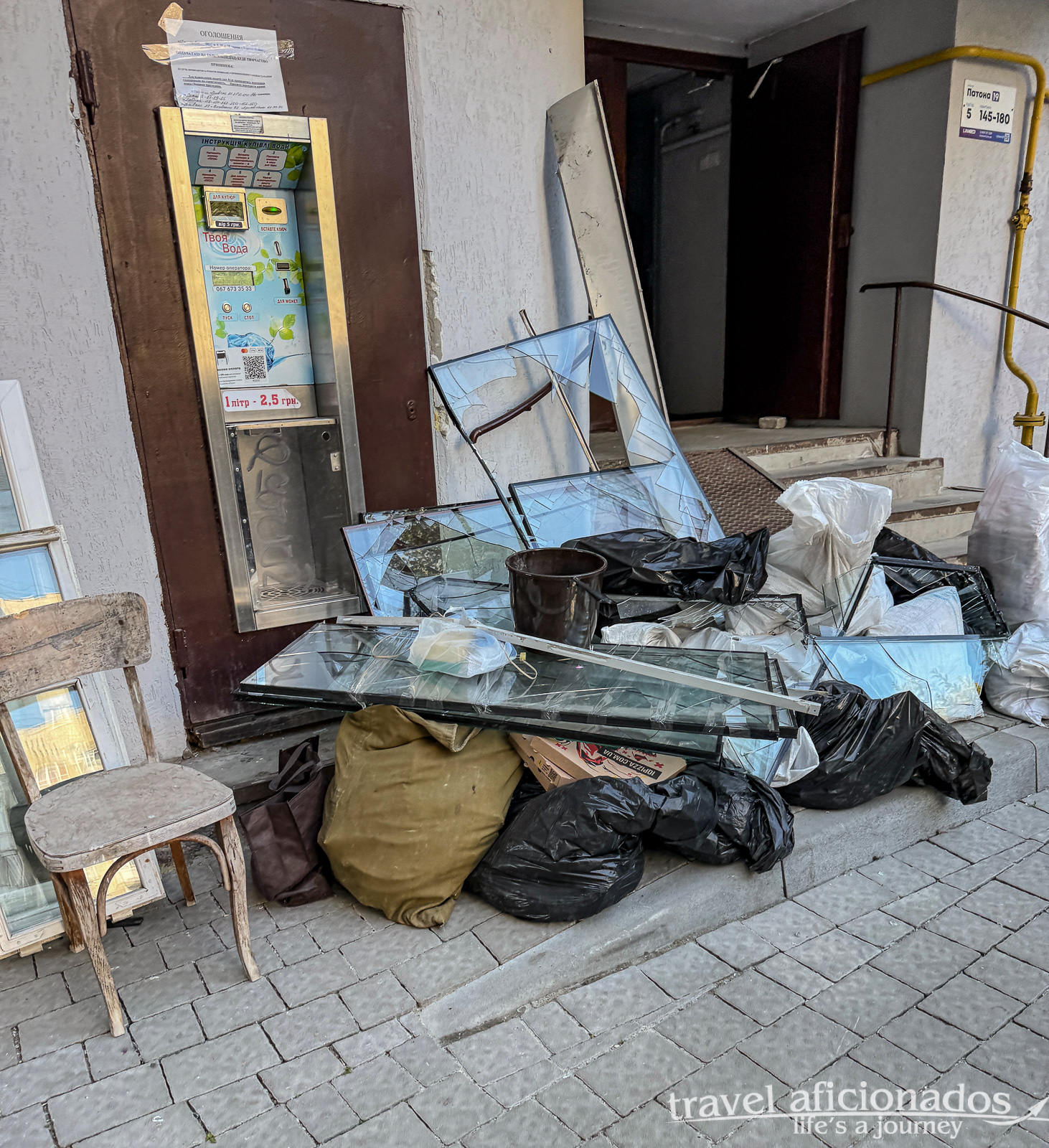
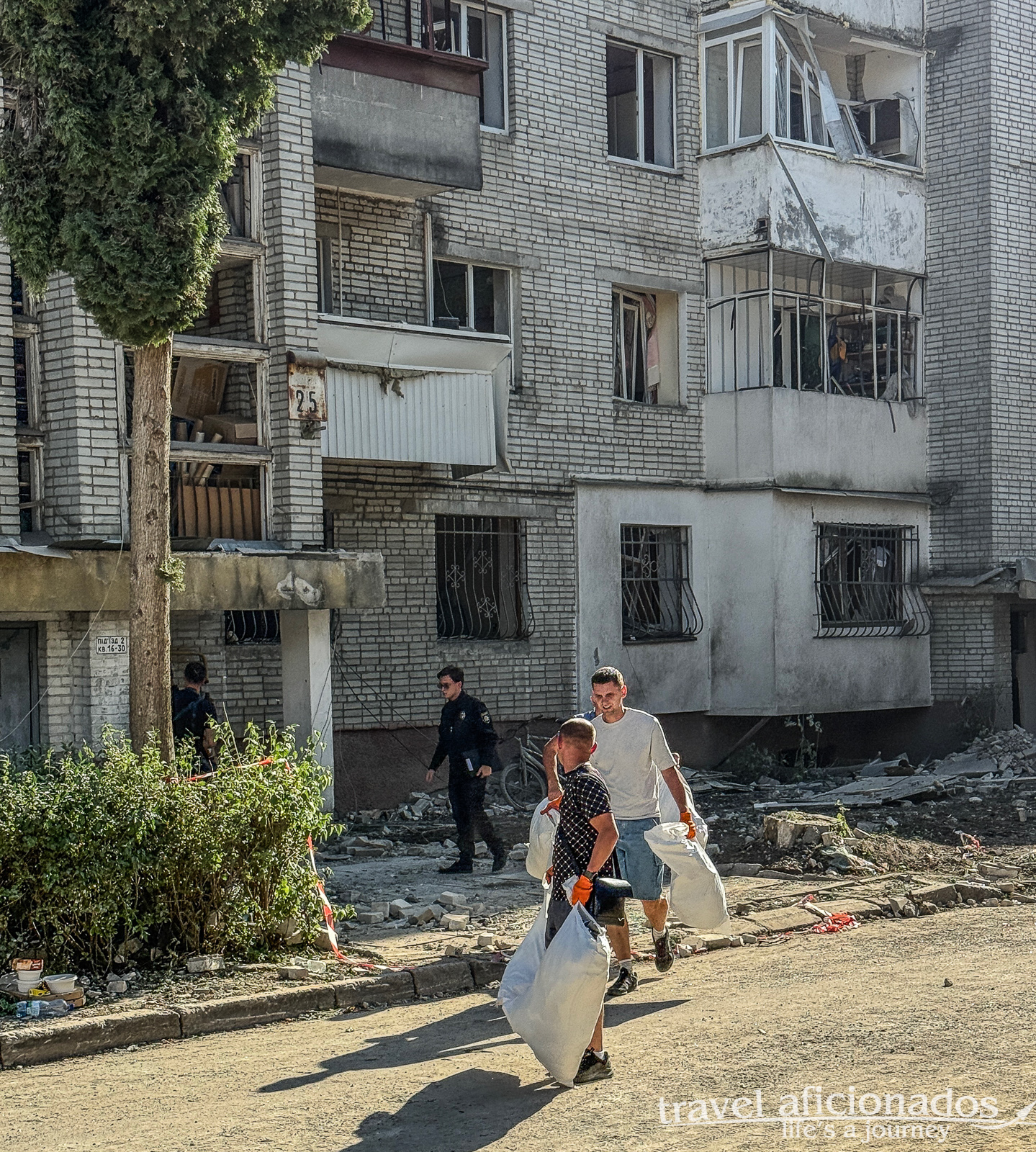
residents securing their belongs from a building
I felt awkward walking around taking photographs. I had no real reason to be there, yet nobody seemed to mind.
People stood in small groups, discussing what had happened or watching the firefighters work. A crowd gathered around an official speaking without a microphone. Even those too far away to hear stood quietly and listened. I imagined the same scene in Austria and wondered how long it would take before someone demanded a loudspeaker.
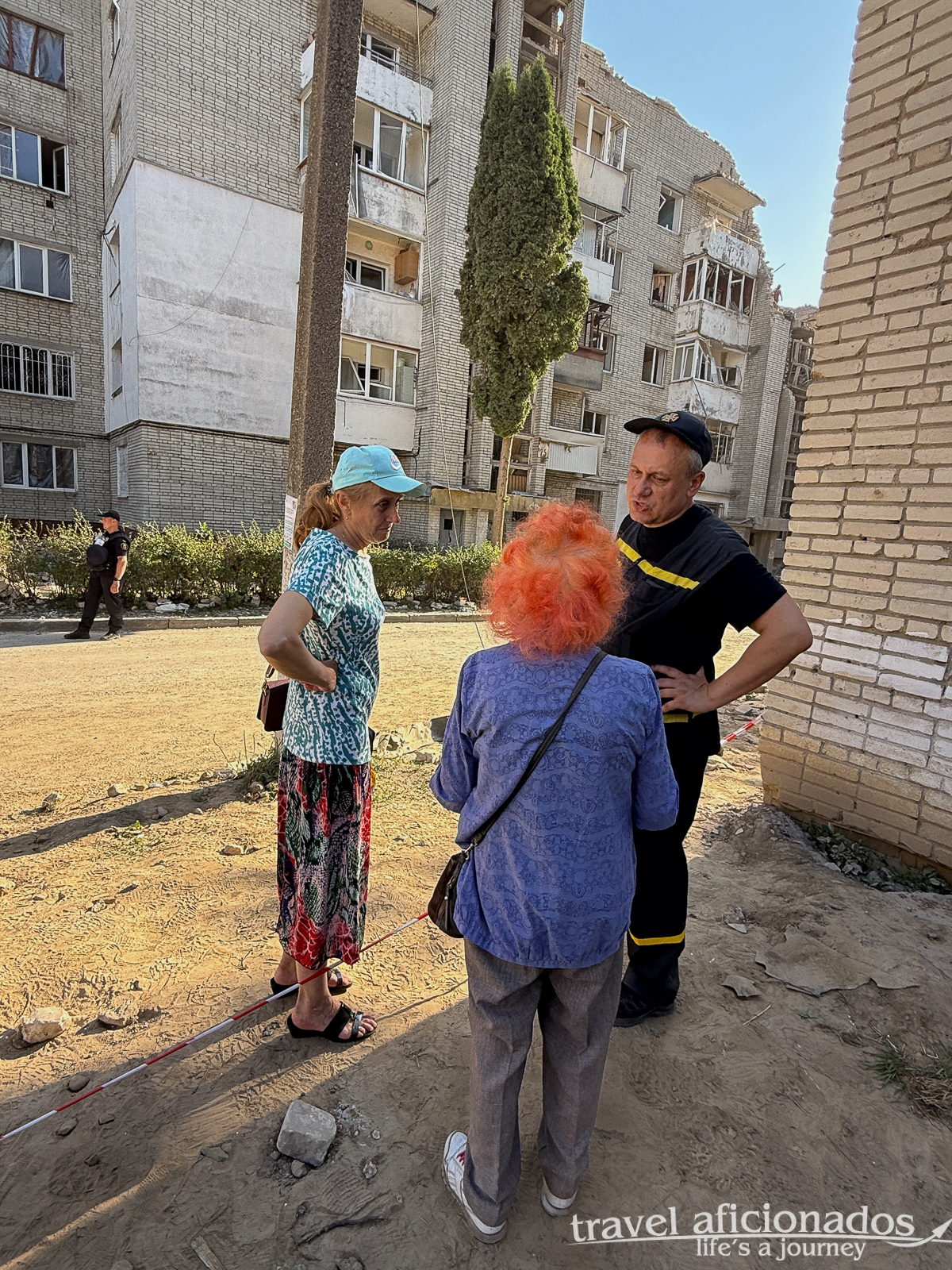
Residetns of the neighborhood
Outside the surrounding buildings, people had piled damaged possessions. Cars stood coated in dust.

Car in a parking lot nearby the bombed building
As I walked away, I tried to imagine losing my home in a second, along with all the familiar things that make it mine.
I couldn’t.
Expats from all walks of life
After years of following the WhatsApp group “Friends of Ukraine,” I had learned a lot about Ukraine and the war. So, in Lviv, I expected to find a more relaxed atmosphere than in other Ukrainian towns, plenty of expats and volunteers, and lots of partying. I was not wrong.
Lviv is packed with expats. In the evenings, the bars in one particular part of the city buzz with every variety of English.
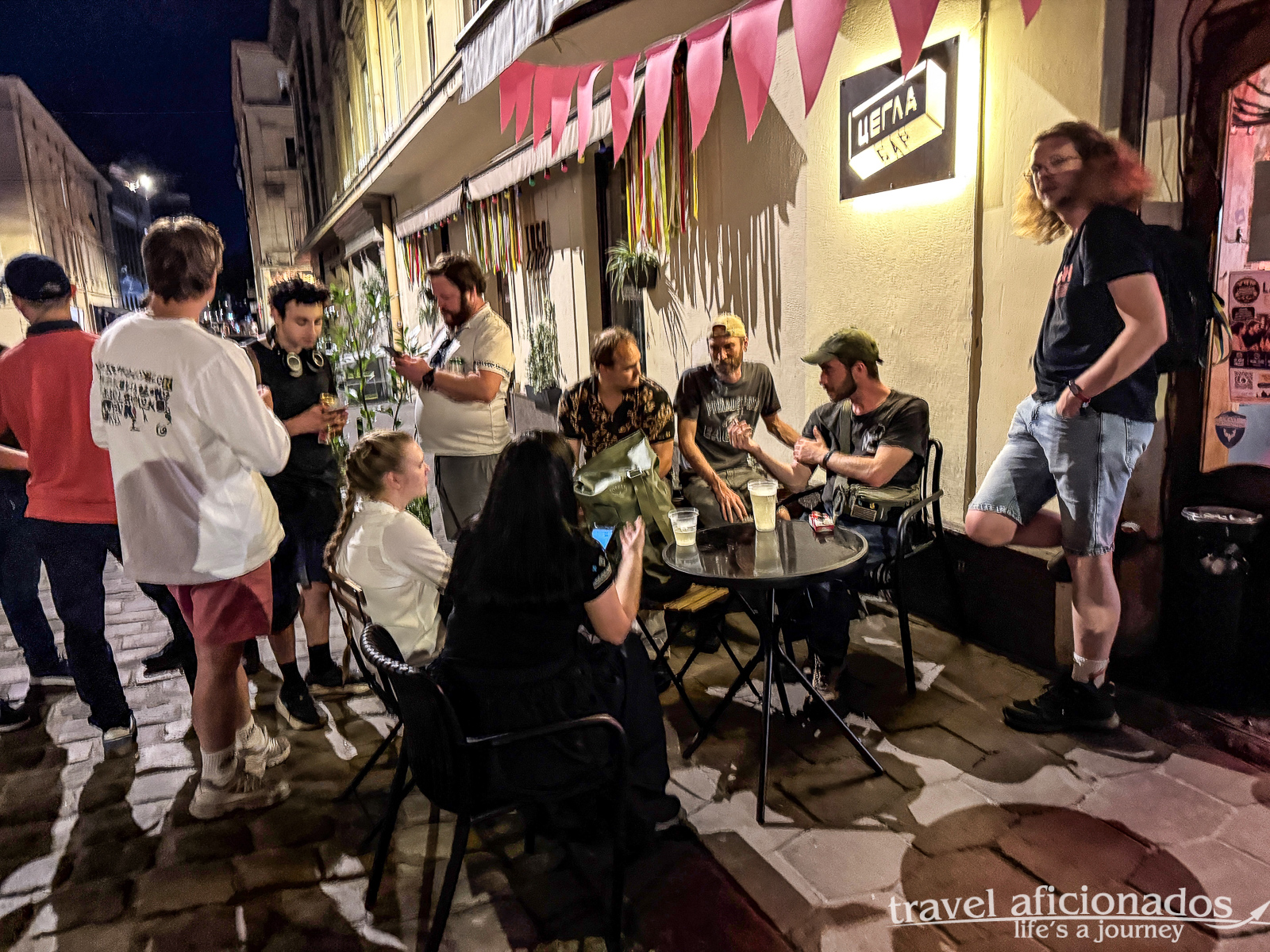
Expats exchanging war stories
Many do sincere volunteer work: weaving camouflage nets, helping in kitchens, taking care of pets, and transporting supplies to cities in the east. Some are actually fighting.
One night, I got talking to a young American who said he had been fighting in Ukraine for four years. He was on his way home to Texas, completely disillusioned with Ukraine. He told me he had come to hate it.
He said he had been severely beaten in a fight over a woman. According to his account, the other man had stamped on his face, causing a head injury and neurological damage. A lawsuit is now pending.
After four years of fighting, he had to borrow money for his flight home. A fellow American who collects war memorabilia had given him US$500 for a medal he had received, with the possibility of getting it back later.
I was stunned. My understanding was that foreigners fighting in Ukraine could earn between US$2,000 and US$10,000 a month, with the highest amounts paid for intensive assault operations or duties at the very front, depending on the number of days spent in active combat.
He also told me about other Americans he had met—men he described as “real psychos,” who had come to Ukraine so they could finally shoot some Russians.
Other conversations I overheard in bars were about train and bus journeys lasting days, trips to places near the front, and the adventures along the way.
All of it felt a little surreal.
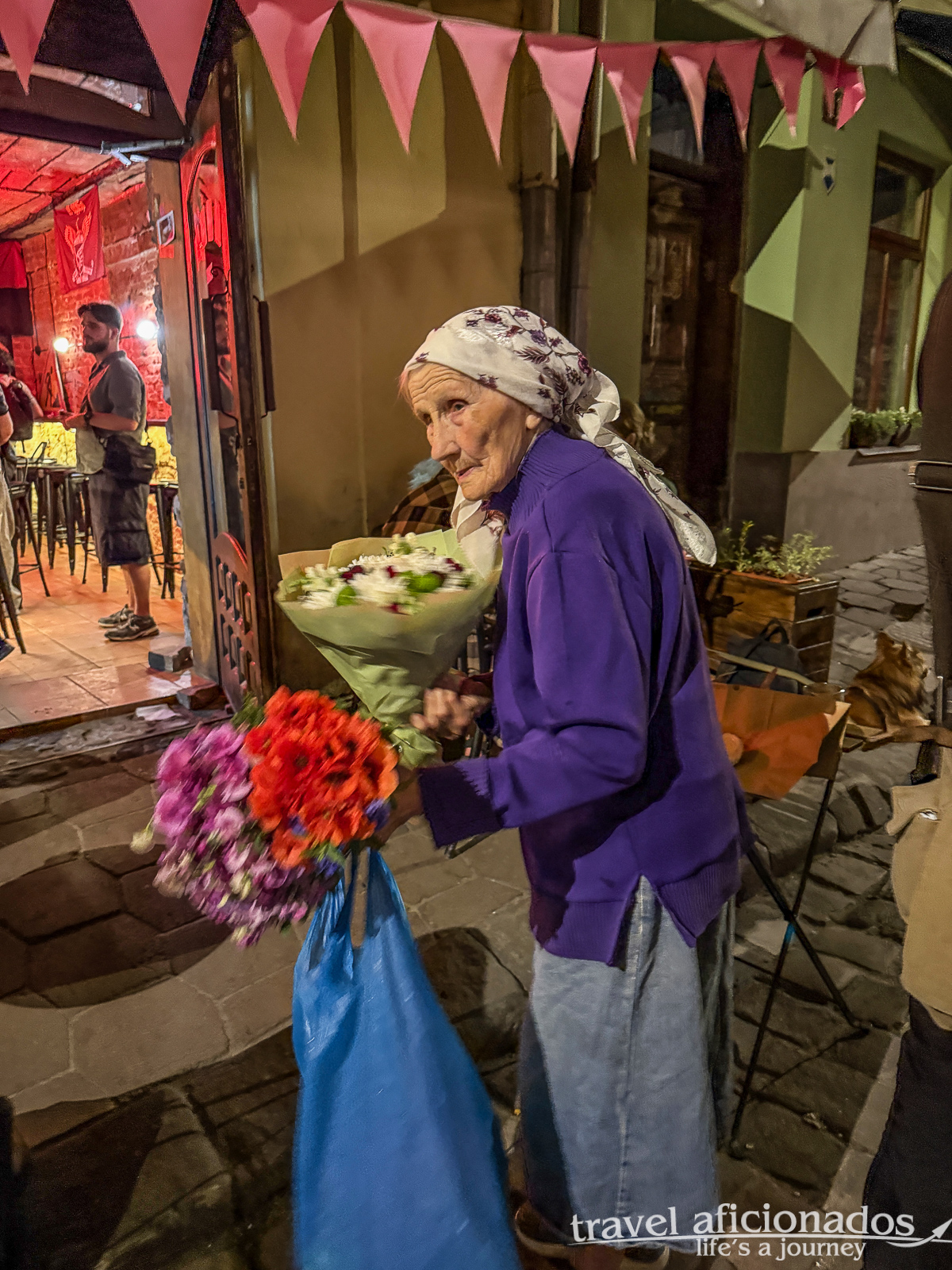
Elderly Woman making a living by selling flowers in the bar district
Marsove Pole —the resting place of around 1,500 fallen Ukrainian soldiers
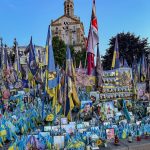
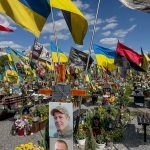
Walking through the Alley of Heroes at the Field of Mars was one of the saddest moments of my stay in Ukraine. Here, the scale of the suffering becomes painfully clear. Rows of graves stretch into a sea of blue-and-yellow Ukrainian flags and red-and-black nationalist banners.
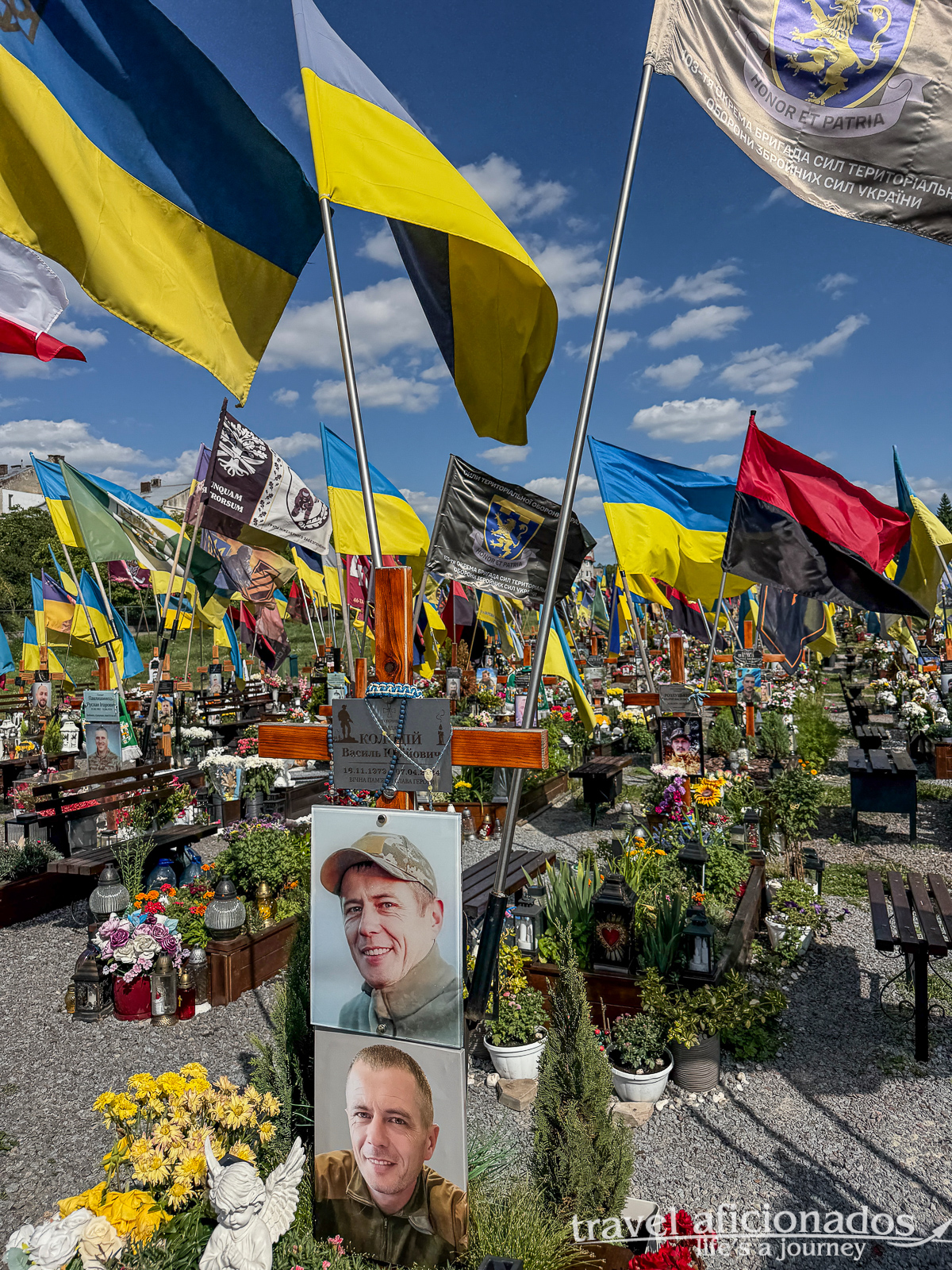
Field of Mars-military cemetery in Lviv
Most graves display photographs of the deceased, some in uniform, others in civilian clothes. Those everyday portraits are especially poignant: reminders of lives cut short, of hopes, dreams, and futures lost.
Beside each grave is a small bench. Families come to sit with their loved ones, sometimes even sharing a drink with them. I saw a woman sitting beside a grave, crying. When she briefly looked towards me, her expression was full of pain, almost embarrassment. I still remember that glance. It felt as though I had intruded on something deeply private.
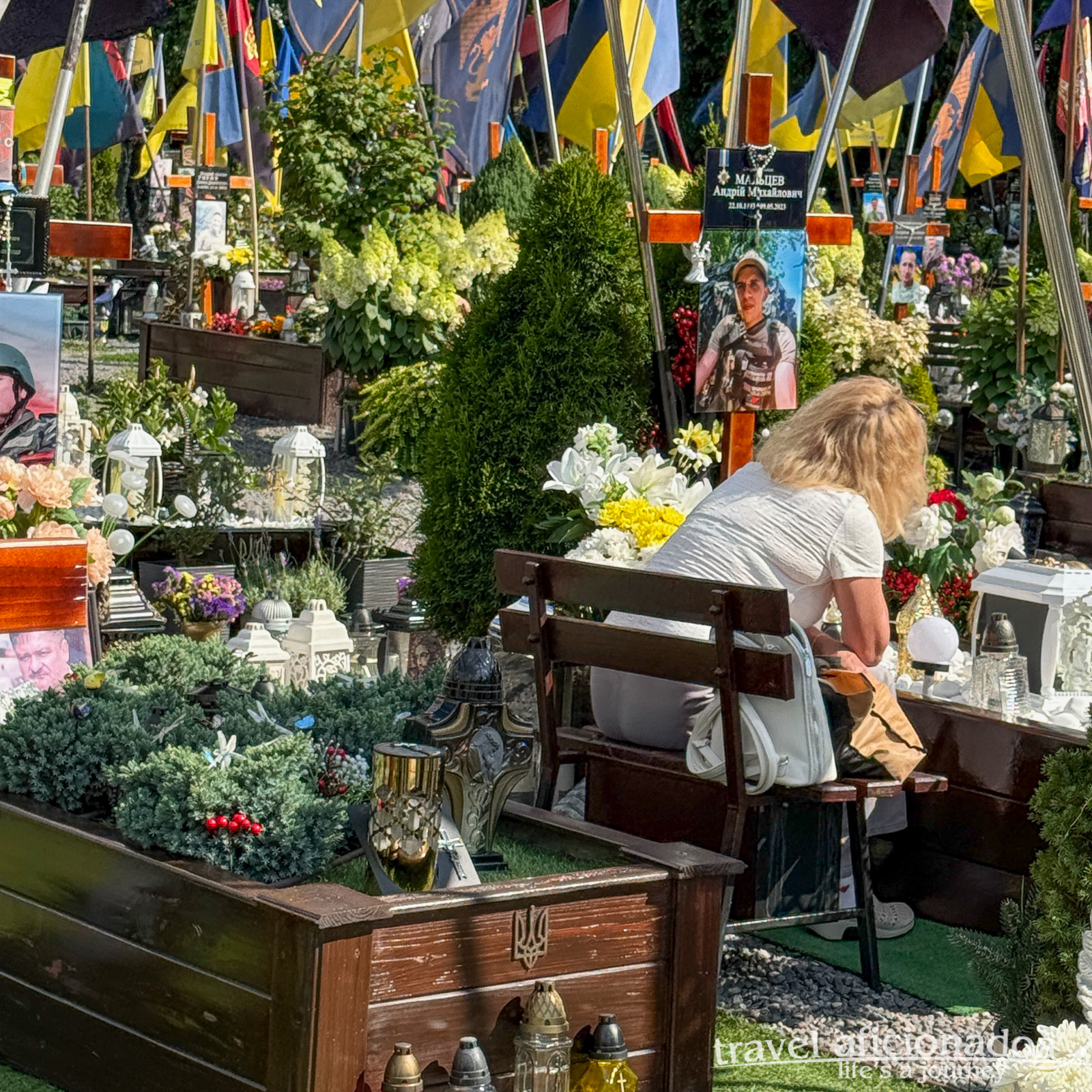
Field of Mars, women sitting at the grave of her husband, crying
Since Russia’s full-scale invasion in February 2022, the Field of Mars, an extension of Lviv’s historic Lychakiv Cemetery, has become a burial ground for fallen Ukrainian soldiers, with funerals taking place almost daily. Originally established in 1974 as a Soviet military memorial, it once held around 3,800 Soviet soldiers’ graves, many of which have since been relocated.
Lviv’s Daily Farewells
Saints Peter and Paul Garrison Church stands in the very centre of Lviv, close to the hotel where I happened to be staying. This 17th-century church now serves as the city’s main military church, often holding several funeral services a day.
I went inside after a friend told me about the photographs of fallen soldiers displayed there. Thousands of portraits line the interior walls. Looking into those faces is heartbreaking. These photographs were taken when the people in them still had plans, dreams, and hopes. Now their families are left to bear the immense pain of their absence. I kept wondering how anyone lives with such grief—and what it means to witness it day after day.
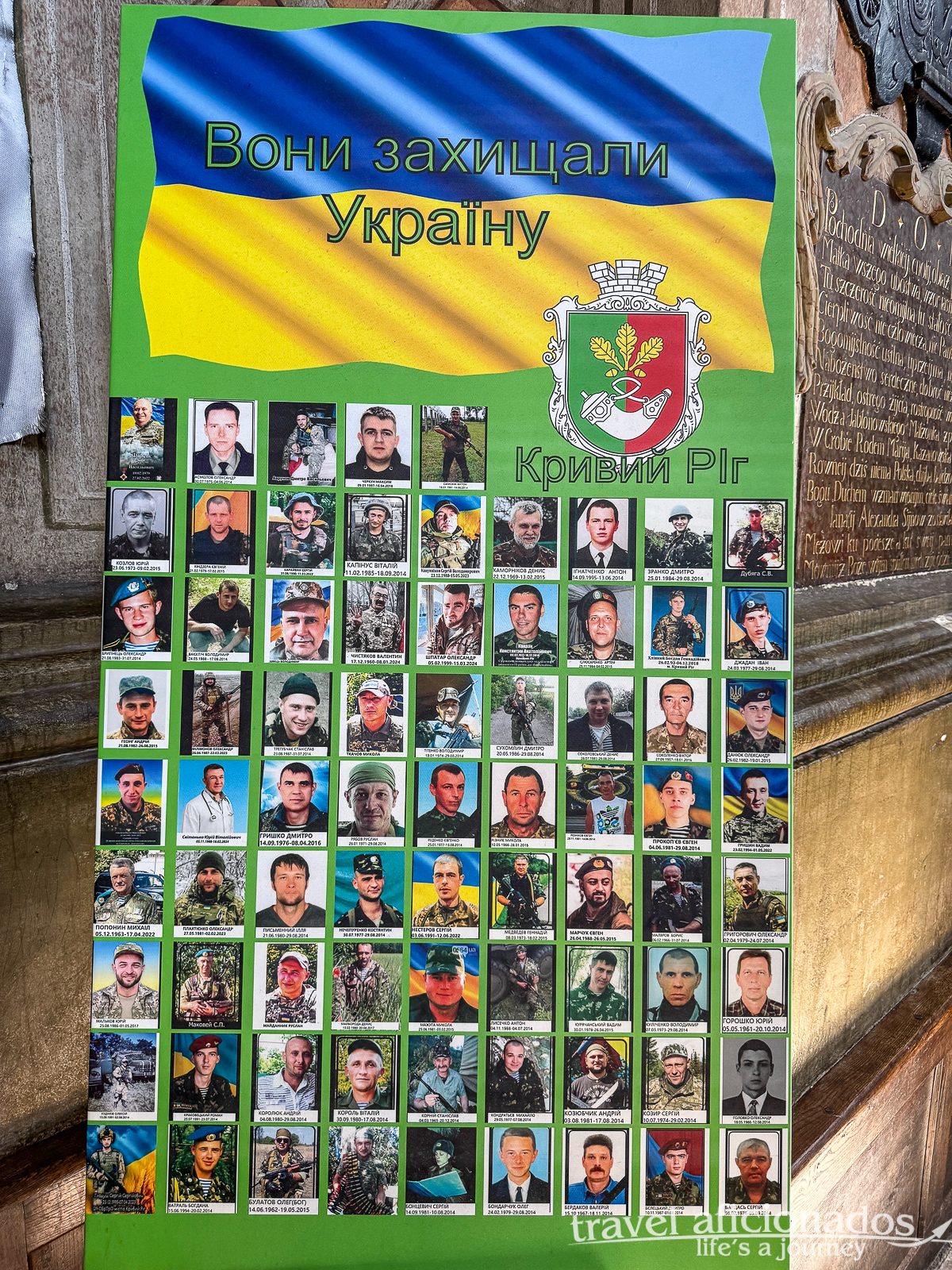
inside Saints Peter and Paul Garrison Church-photos of fallend soldiers are displayed
Shortly after I entered, I heard the solemn music of an approaching funeral procession. The church filled with mourners: relatives, soldiers who may have served alongside the deceased, and young police officers.
A crowd gathered outside. As the coffin was carried out and placed in a black van, people knelt in respect. Three women dressed in black clung to one another, their faces swollen and their eyes red from crying. That moment was particularly hard to watch.
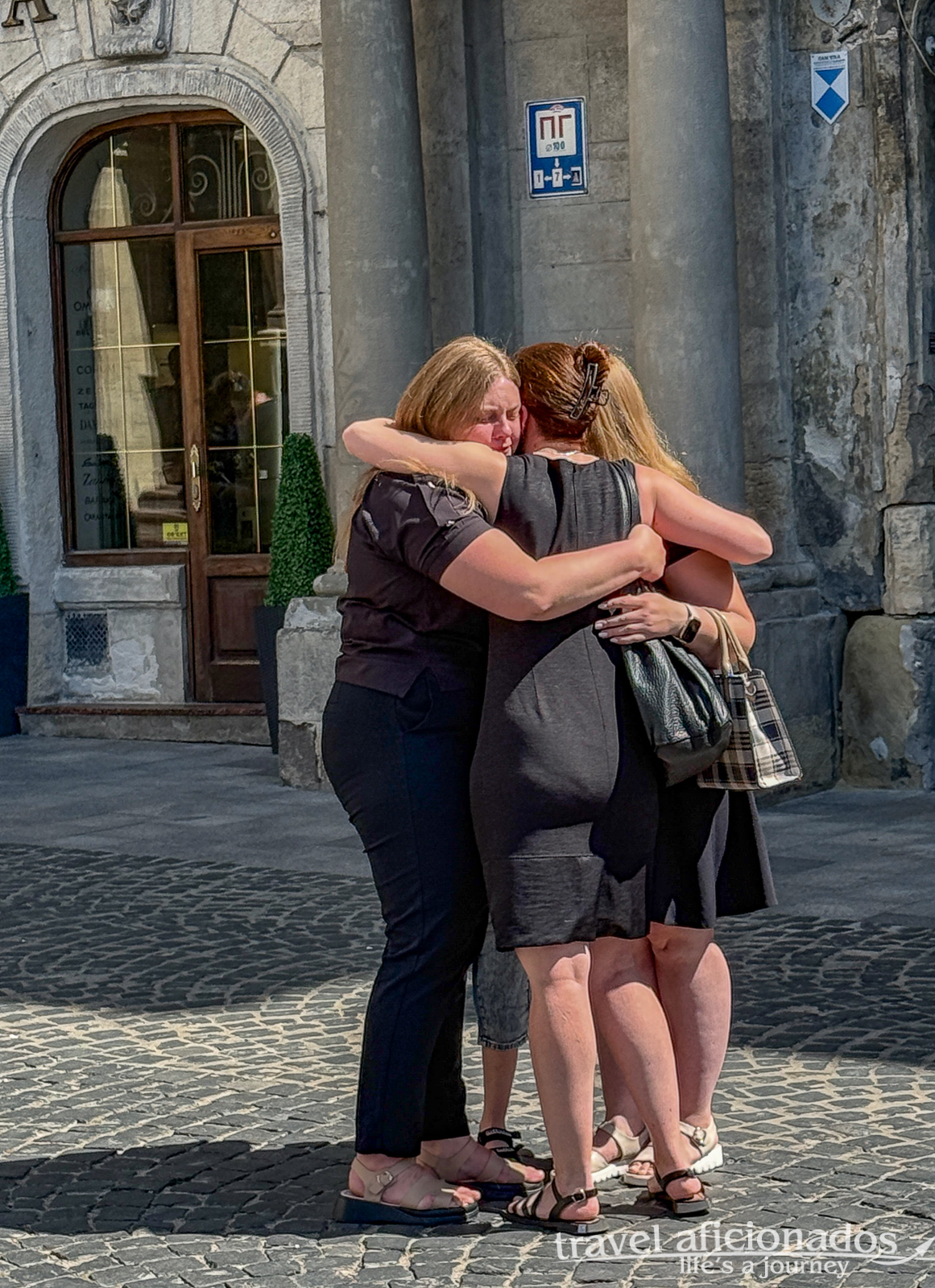
Funeral at Saints Peter and Paul Garrison Church- family members grieving
Among the soldiers, some held photographs of the deceased. A large cross was placed in the van before it drove away.
Not long afterwards, another funeral procession arrived. Another family had come to say goodbye.
The farewells also extend beyond the church. Fallen soldiers are driven in convoys along the main roads of their hometowns, with lights flashing and horns sounding—a public tribute as they make their final journey home.
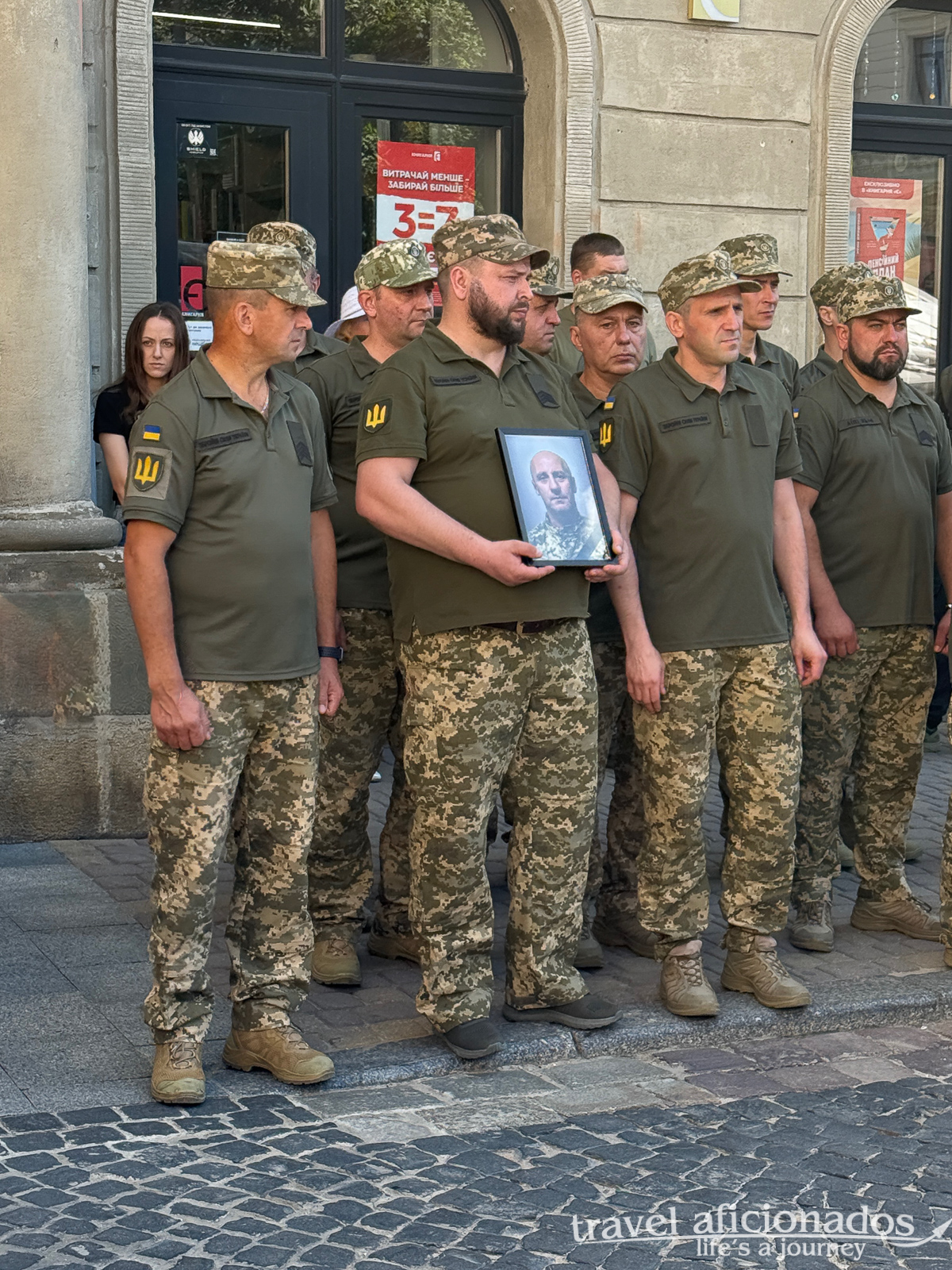
comrades paying their respect at a funeral in Lviv
Lviv’s Evenings of Remembrance
Hotel Wien, where I stayed, overlooked a square where people gathered for events and demonstrations almost every evening.
The most moving was a commemoration of the victims of the Olenivka massacre. On the night of July 28–29, 2022, an explosion destroyed barracks holding Ukrainian prisoners of war, many of them defenders of Mariupol and the Azovstal steelworks. Dozens were killed and many more wounded.
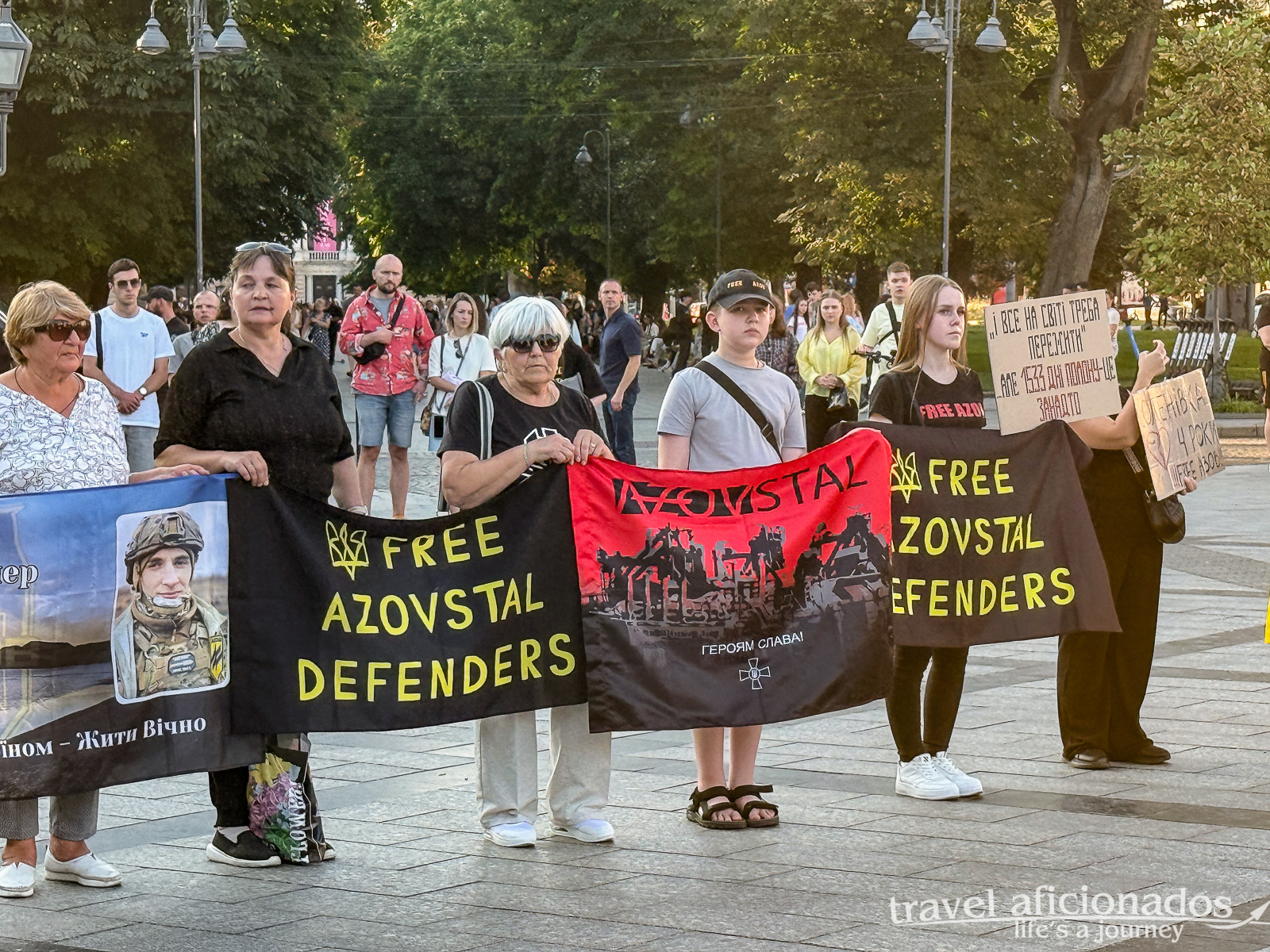
Anniversary of Olenivky massacre
People gathered with handwritten posters, flags, and candles. Children were dressed as angels. What struck me most were the solemn faces of so many young people. It was a sight unfamiliar to me from Austria, where most young people do not have to confront the realities of war every day.
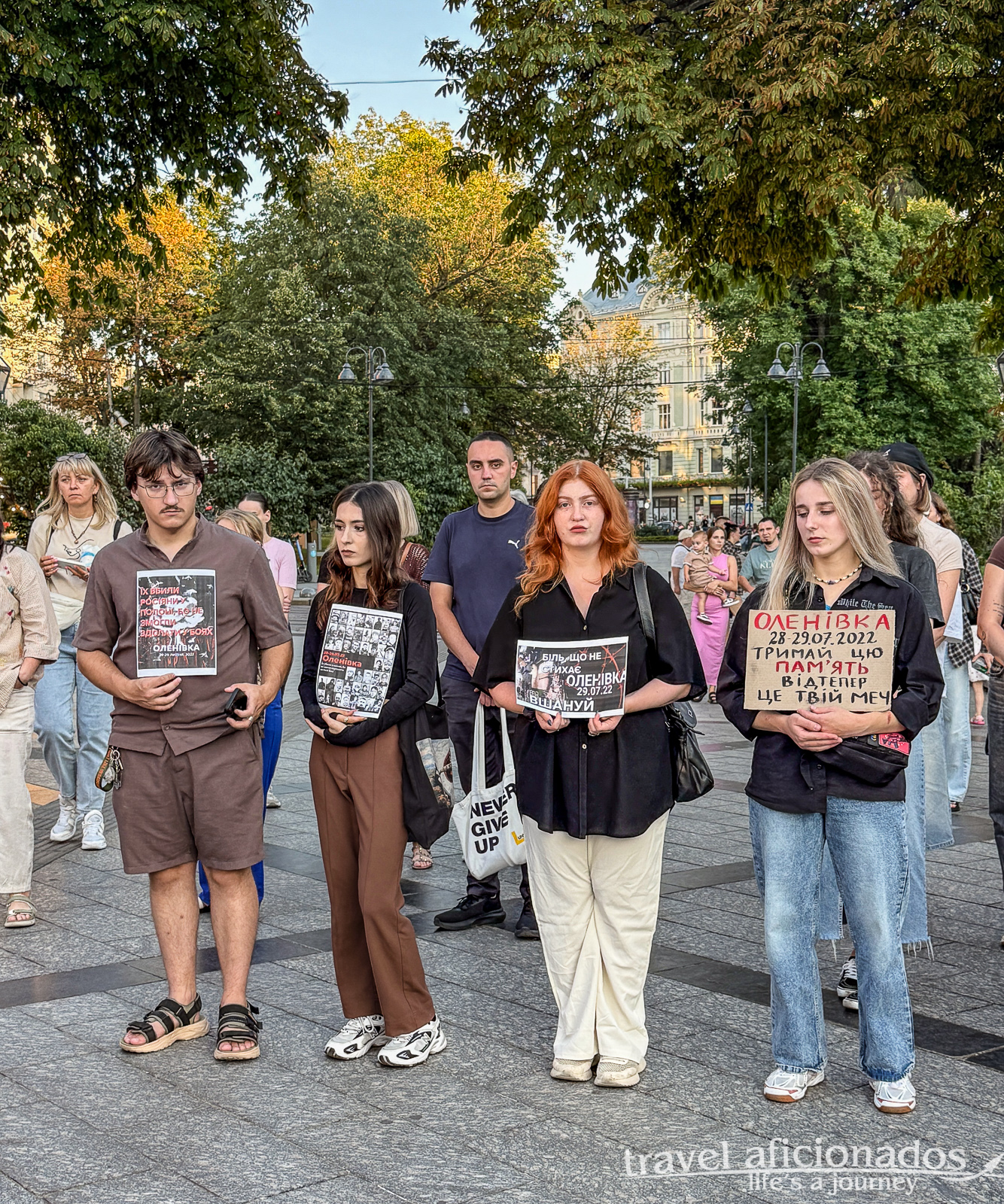
Anniversary of Olenivky massacre
There were speeches, and I used the translation app on my iPhone to follow what I could. One woman appeared to be recounting her experience of the fighting around Azovstal and its tragic aftermath.
Many women wore black T-shirts calling for the release of the Azovstal defenders. A group of men in wheelchairs joined the gathering; some had lost a leg, while others bore visible injuries.
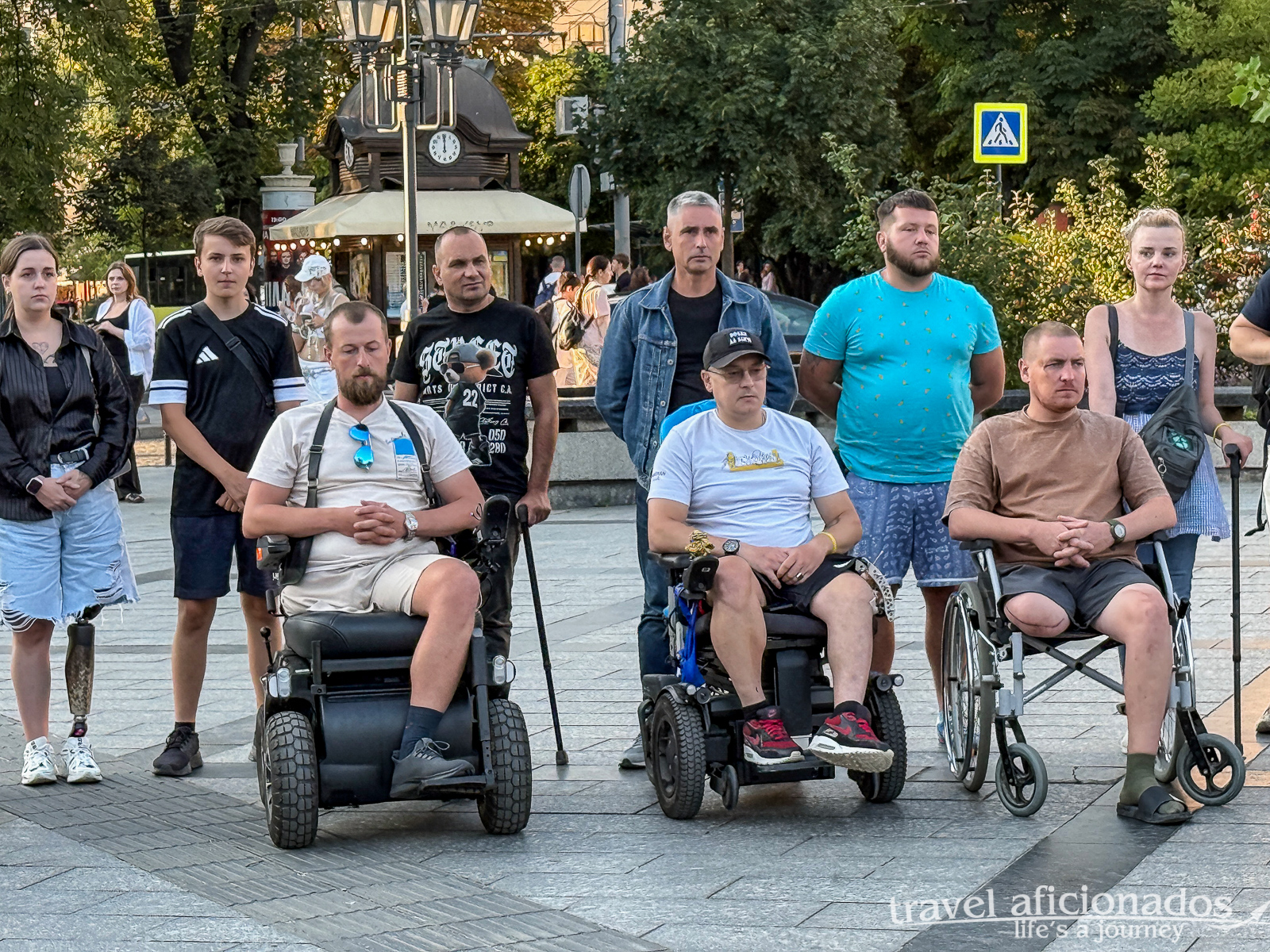
Veteran attending the anniversary of Olenivky massacre
One family approached Katrin and me and asked where we were from. They thanked us again and again for being there. I felt embarrassed by their gratitude. Simply standing beside them seemed so little.
On other evenings, people gathered to protest against corruption, echoing demonstrations I had seen in Odesa and Kyiv. Many Ukrainians were shocked by the dismissal of Federow. He is a symbol for most Ukrainians, he tried to fight corruption, especially within the military, where EU money is syphoned Alongside the mourning, there was a determination to hold those in power accountable, even as the war continued. off.
Weaving Nets, Saving Lives
A former school in Lviv has become a workshop where volunteers weave camouflage nets by hand.
I was surprised by how little a finished net weighed, but was told that keeping them light was essential.
Valentina, an older woman overseeing the work, was cutting fabric into the long strips used to weave the nets. She told me how many boxes of fabric she had cut over the years. Unfortunately, I did not write down the number.
Her English was flawless, but her dedication impressed me even more. Every day, rain or shine, she showed up.
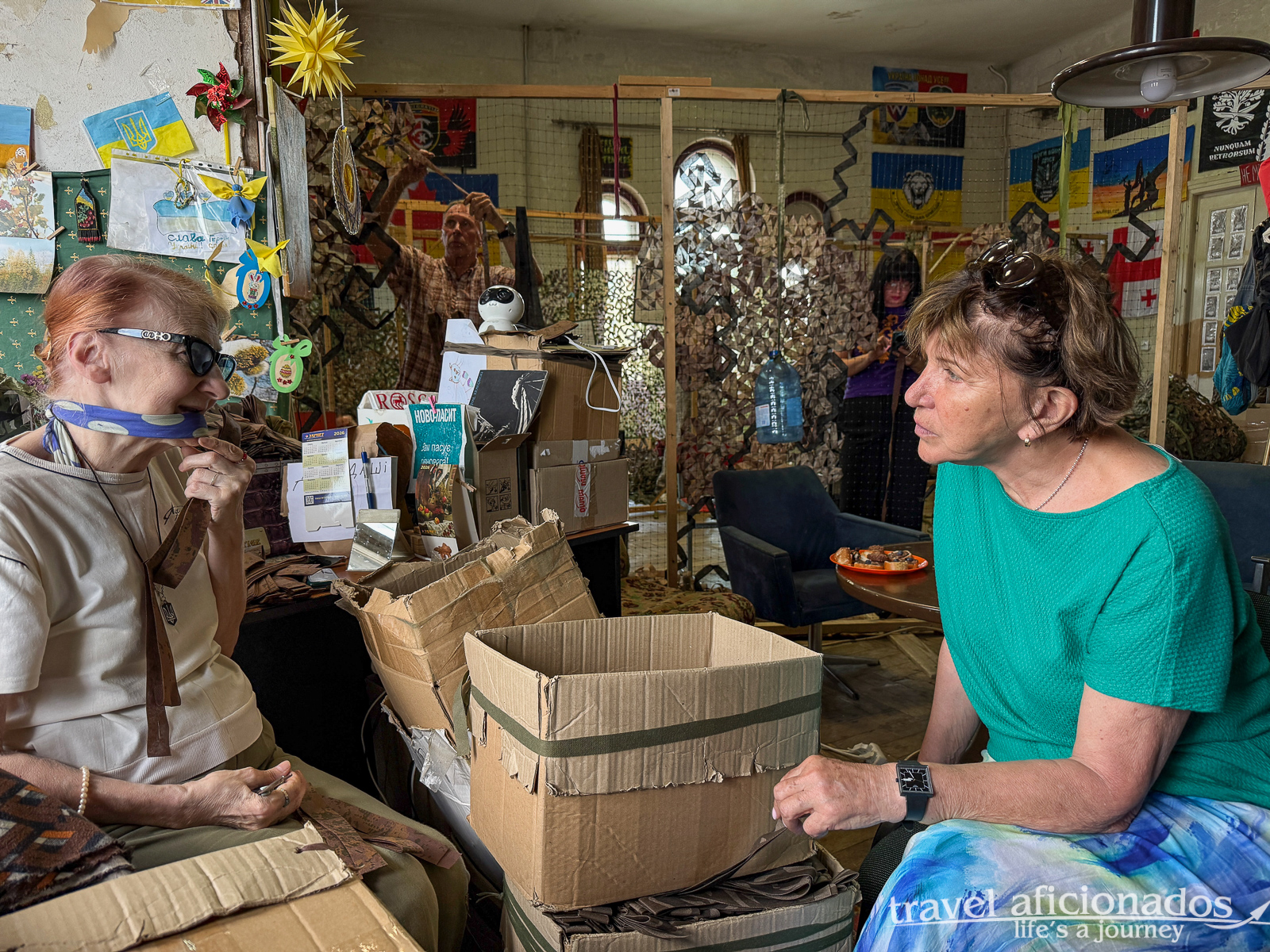
Valentina, the very soul of the place
Around ten people were there during my visit. Half were Ukrainians, coming after work or whenever they could spare the time. The others were Americans, British volunteers, a woman from Finland, and another from Germany.
The foreign volunteers, in particular, come and go. Some turn up every day for months, like the retired construction worker from Texas who patiently tried to teach me to weave—with little success. What looked so simple, weaving two triangles that meet, proved beyond me.
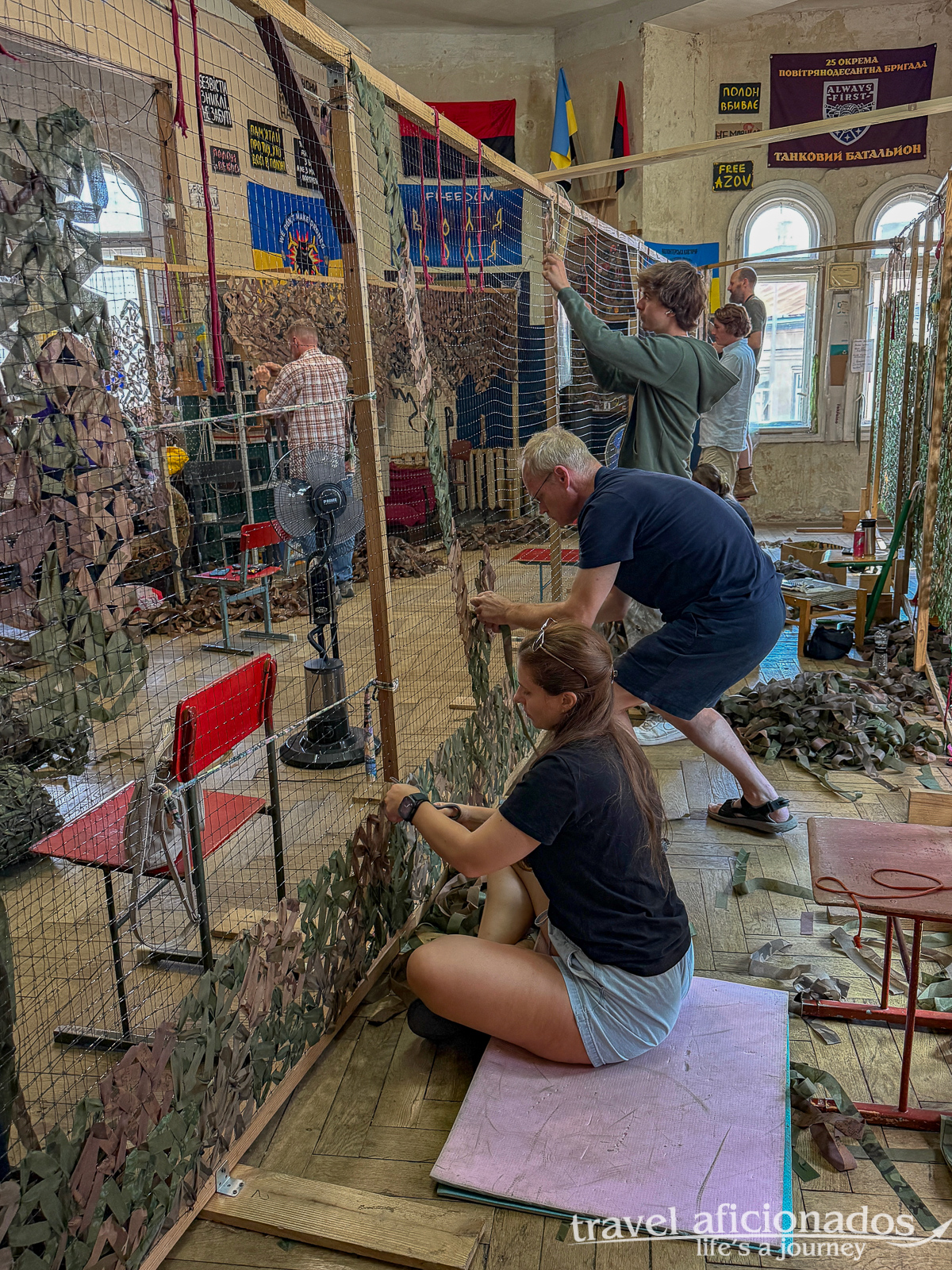
Volunteers weaving camouflage nets
Others drop by, take a photograph, and move on.
I left deeply moved by the perseverance and devotion of those who kept returning. They understood that even a small contribution could make a difference—and perhaps save a life.




Leave a Reply