
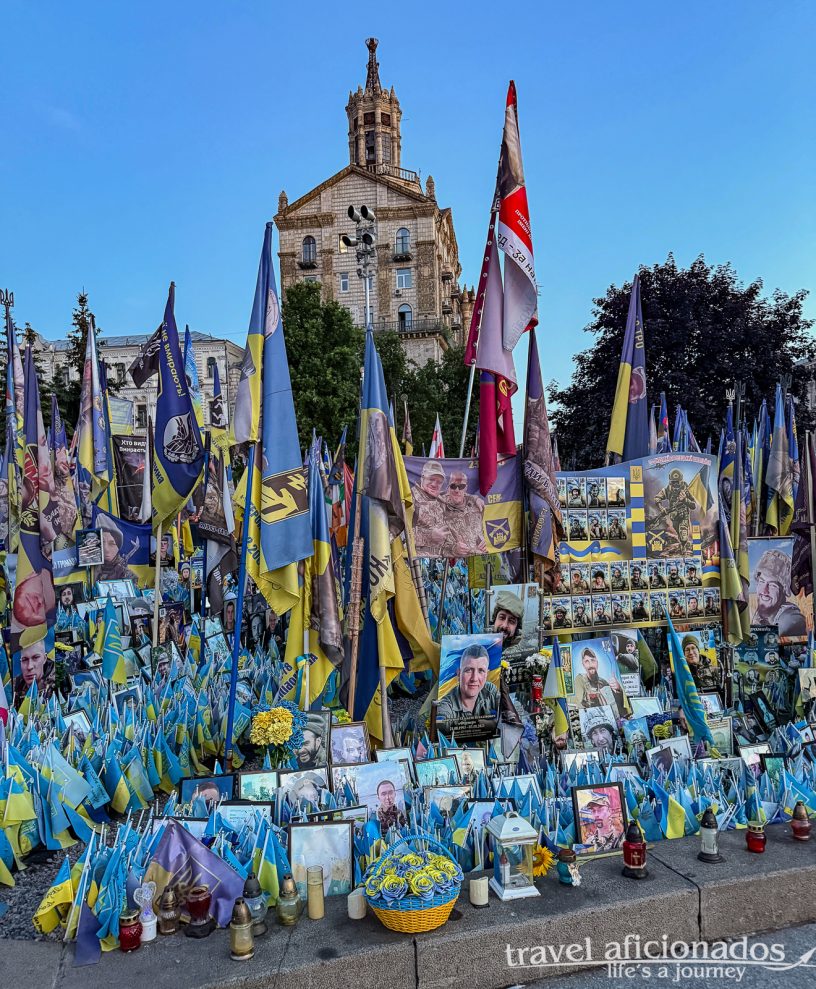


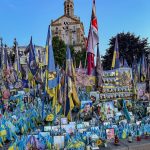
At first sight, Kyiv is still the grand city I have known for ten years. It was only when I reached Maidan that I noticed how much had changed. During my visits in 2017 and 2018, I had seen memorials across the city to those killed during the revolution that brought down President Viktor Yanukovych. Returning in 2026, I found Maidan filled with photographs of people killed since Russia’s full-scale invasion in 2022. Their sheer number was overwhelming. Ukrainian flags, large and small, stood among the portraits, giving this place of mourning a strong sense of national identity.

Photo taken in 2018 of memorial reminding of those killed during the demonstrations 2014
Khreshchatyk – the heart of Kviv slowed down
Another thing that had changed was the restaurant scene. It was almost impossible to get food after 9:30pm—only McDonald’s stayed open until 11pm. With curfew starting at midnight, customers and staff all needed time to get home. On my previous visits, cafés and restaurants had been buzzing. This time, they were so quiet, even the pulse in Kviv very heart, Khreshchatyk, slowed down. Due to severe electricity shortages, streets were more dimly lit, too, adding to the serious, gloomy atmosphere.
This doomsday athmosphere is re-enforced by a certain sense of lawlessness. One evening, I sat in a café on Khreshchatyk, the broad avenue running through the heart of Kyiv. Motorcycles and tuned cars raced up and down, their engines making an unbearable noise. Police officers stationed nearby at Maidan seemed untroubled. I wondered whether, in wartime, enforcing such everyday rules had become a lesser priority.
Otherwise, Khreshchatyk has remained Khreshchatyk, with its grandeur still intact. Walking around in Kviv I did not notice any destroyed buildings, only when someone took me to the site of a missile strike did I begin to grasp the enormous destruction a single attack could cause.
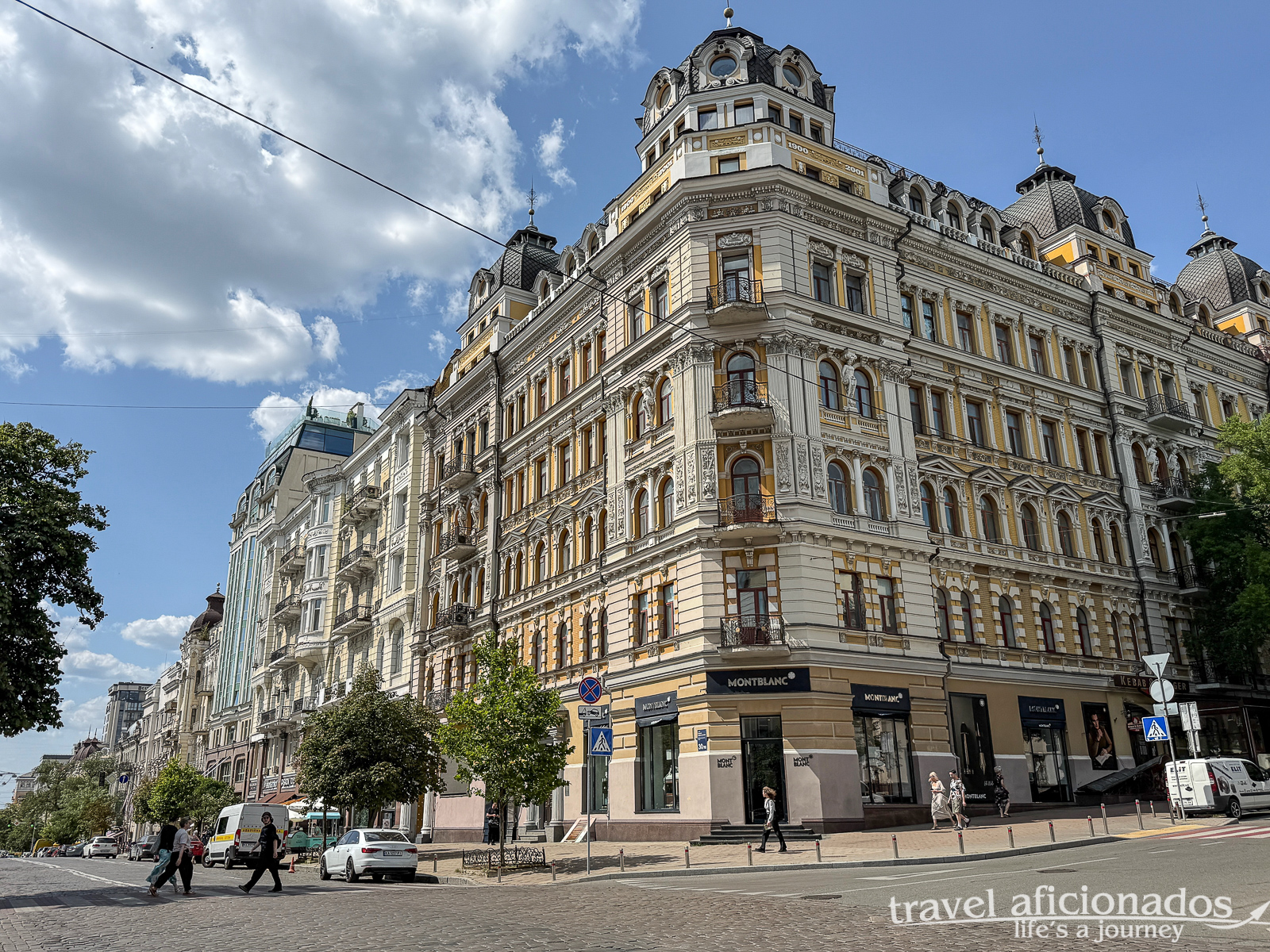
Kviv’s grand houses along
https://www.youtube.com/shorts/zKYCJFO4r8Q
Although these grand buildings remained unharmed, the scars of the war, show different, like this one, reminding of the defenders of Mariupol, still in Russian captivity.

large banner on a building on Khreshchatyk Street

The omnipresent “shelter” signs also never let you forget that you are in a city at war.The
The Human Cost of War
Out of curiosity, I googled “things to do in Kyiv”. One of the first results was an announcement of a funeral at St Volodymyr’s Cathedral: a farewell to a young woman killed in a missile attack a few days earlier. The Azovstal plant became one of the best-known symbols of the siege of Mariupol.

St Volodymyr’s Cathedral
Suddenly, the war became painfully real. The grieving family and friends, the priest’s voice, the solemn choir, and the sight of a young woman lying in an open coffin were more than I could bear. I began to cry.
At the funerals I witnessed, police officers and fellow service members stood alongside families and friends. Some of those attending wore prosthetic limbs after losing an arm or a leg.

St Volodymyr’s Cathedral: funeral of a young women killed in a rocket attack
For me, the memorials on Maidan and the funerals were the hardest part of the journey. The immense human suffering hit me like a blow. I also thought of the funerals across the border in Russia, and of families there devastated by loss.
Yet grief was not the only thing filling the streets.

St Volodymyr’s Cathedral: funeral of a young women killed in a rocket attack
Civil society going strong even in times of war
One day, approaching my hotel from the other side of Maidan, I heard chanting and drumming. The square behind the hotel was crowded with demonstrators, most of them young, protesting against the dismissal of Defence Minister Mykhailo Fedorov.
During my travels in July and August, I encountered these demonstrations in every city I visited.
For many Ukrainians, Fedorov had become a symbol of reform and of the struggle against deeply entrenched corruption, including in military procurement. His dismissal by President Volodymyr Zelenskyy had provoked anger and dismay among his supporters.

young protestor seeking shelter in metro station durng a Rallye
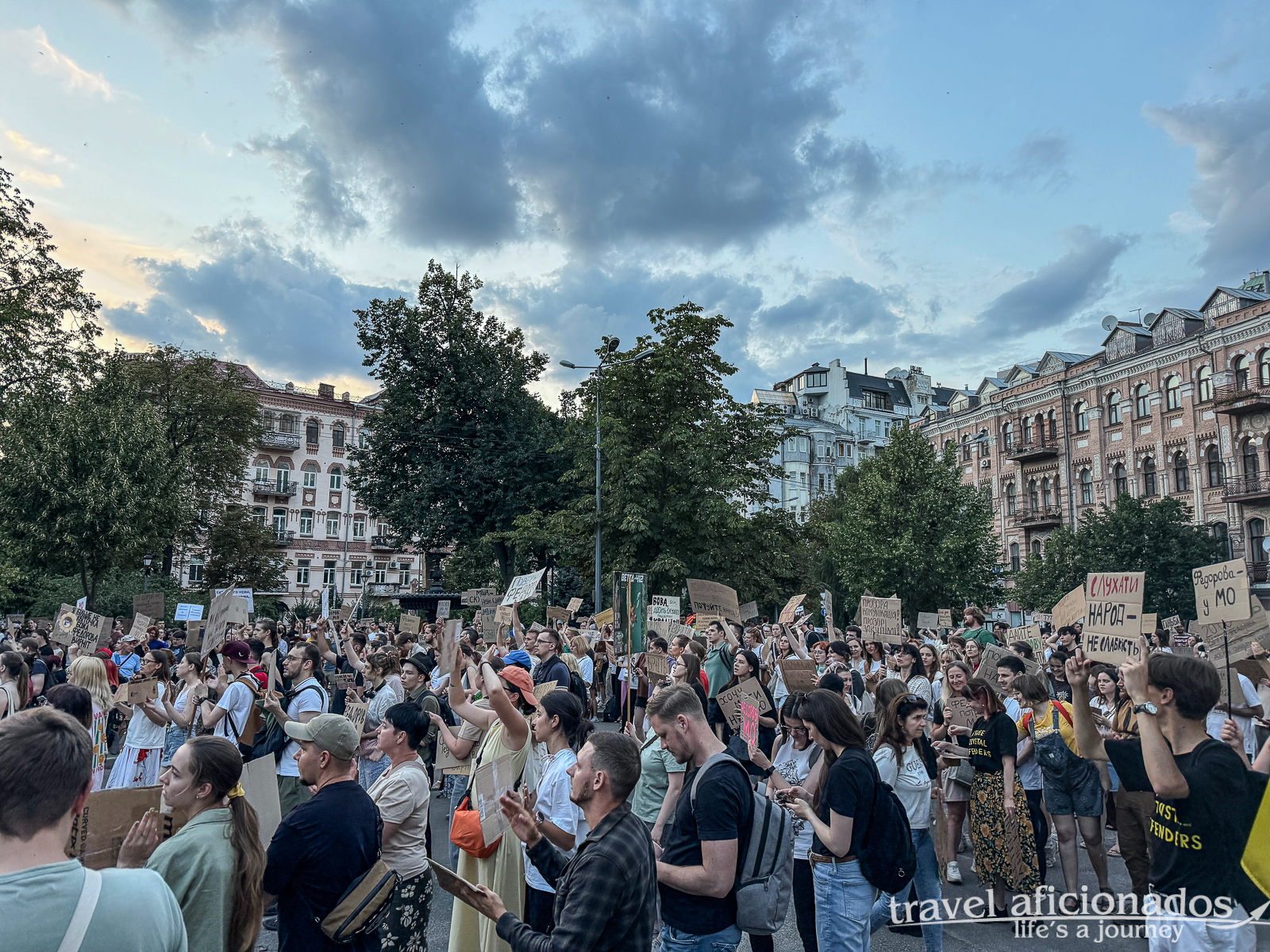
Every day rallies are held on the square behind Hotel Ukraine
As I try to do whenever I travel, I also met with the Austrian ambassador. I always learn a great deal from these conversations.
Even embassy staff had struggled through the bitterly cold winter. They described charging their devices and doing their laundry in the middle of the night, whenever electricity became available.

Mr Roither, first secretary of the Austrian Embassy in Kviv
Hotel Ukraine has seen it all
I stayed at the historic Hotel Ukraine, which open in 1961. Then it was called Hotel Moscow.
From my window, Maidan and the city could still look peaceful—even as the air-raid sirens sounded, again and again.

View from my room

Historic photo of Hotel in Ukraine, taken 1961
In the lobby middle-aged men from various European countries bragging about stories from the frontline while holding on to a beer bottle. I could not resist listening. Sadly, the war in Ukraine has attracted all kinds of people, adventurers, kind-heated people who want to help, mercenaries that go for the money, crazy lunatics, eager to hold a gun and kill Russian. I will write an blog entry, about foreign fighters.

Maiden with Hotel Ukraine in the background

Lobby of Hotel Ukraine

Young men trying to earn a little money by offering visitors the chance to pose for photos with doves.
The poverty is clearly visible. People are trying to make a little money however they can: offering a punching ball for young people to hit, dressing up as Mickey Mouse and posing for photos, or holding a dove for people to take pictures with. In the evenings, street musicians entertain appreciative crowds, while young people perform dance routines. I had seen all of this on previous visits, but against the darker mood this time, these efforts to make ends meet felt more urgent—and all the more saddening.
What was new were the many people collecting donations for soldiers on the frontline and to support the war effort.
After three days, I was more than ready to move on to Lviv. Booking a train at such short notice turned out to be nerve-racking and complicated—a story I tell in a separate blog post about my train travels through Ukraine.

Leaving Kviv for Lviv




Leave a Reply