


Andres and I hired a local guide, Vladimir, to explore the Jewish heritage of Minsk. Before World War II, half of the city’s population was Jewish. In Tsarist Russia, Jews were only allowed in live in what today is Belarus, Ukraine, and Poland, leading to large Jewish communities across the region.
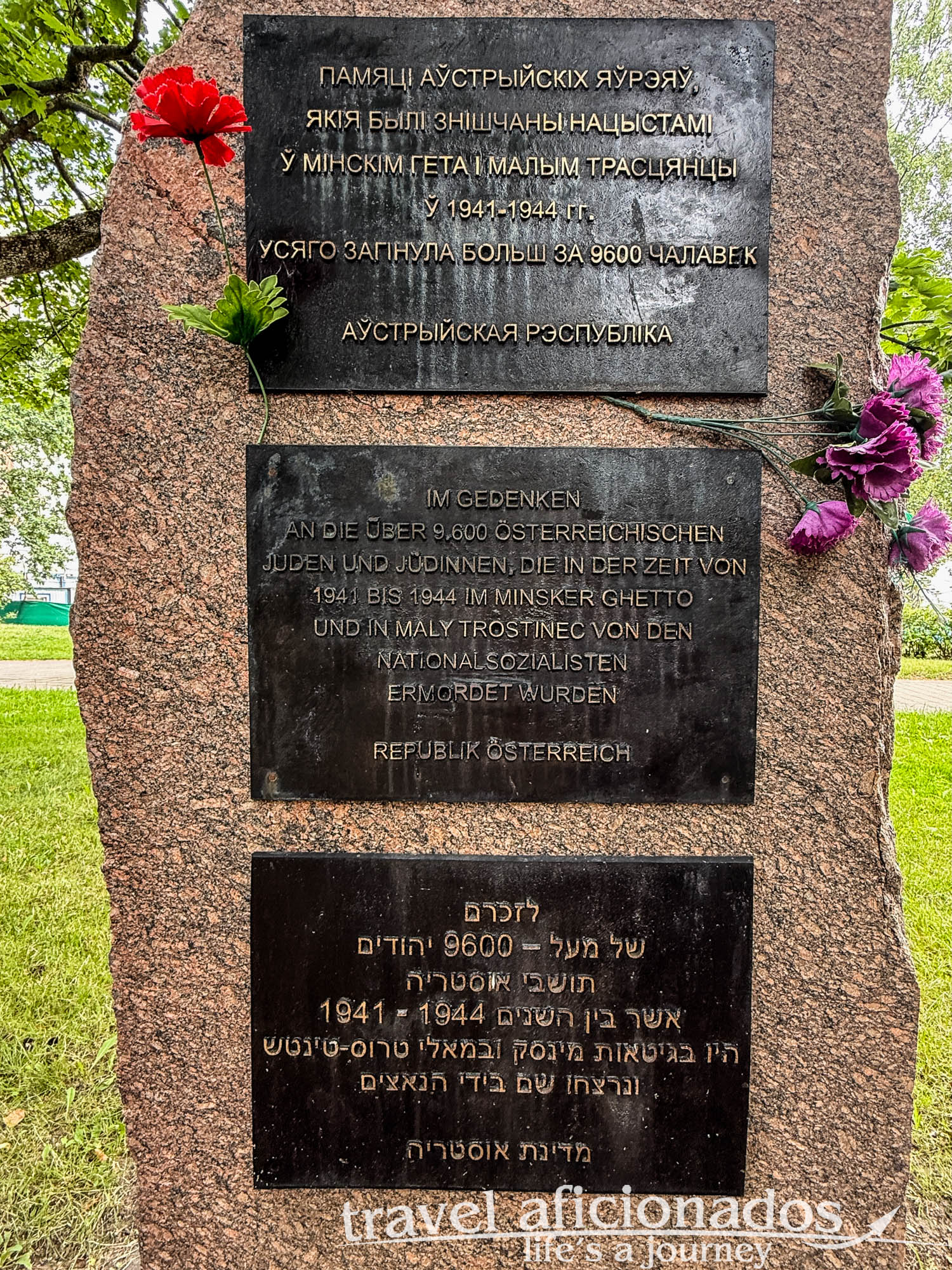
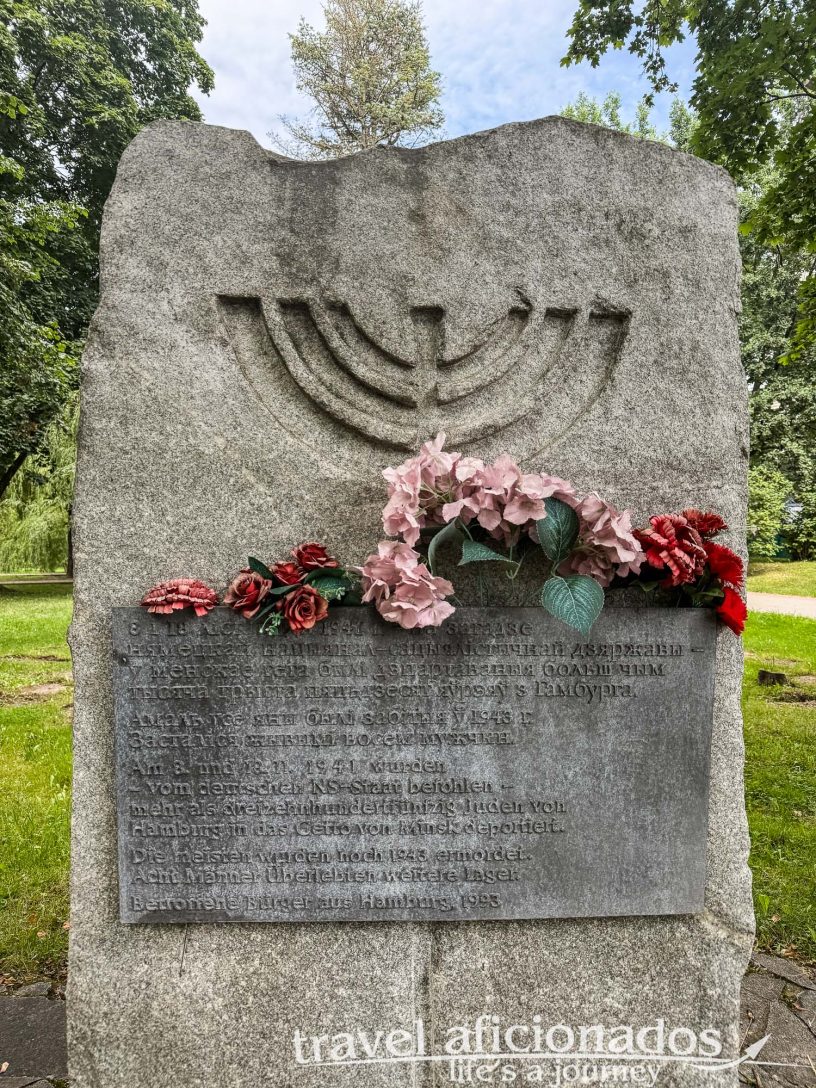
Memorial for the Austrian Jews killed to the Minsk ghetto and Maly Trostenets
The Minsk Ghetto
Our hotel bordered the edge of the former ghetto. Vladimir pointed out the boundary when he picked us up, taking us straight to the heart of the city’s dark history.
Within a month of conquering Minsk, the German army forced the Jewish population into a ghetto. Established in July 1941, it held nearly 100,000 people. At first, the Nazis kept the Jews alive to exploit their skills. Because Jews were historically barred from owning land, many had become master craftsmen and experts in vital trades.
The Memorial and the Empty Spaces
We walked through a shaded park to a quiet memorial. A tilted bronze table sat on a raised platform, with a single chair leaning against it. This sculpture symbolizes the total disorder and destruction brought upon the Jewish community by the German occupation.
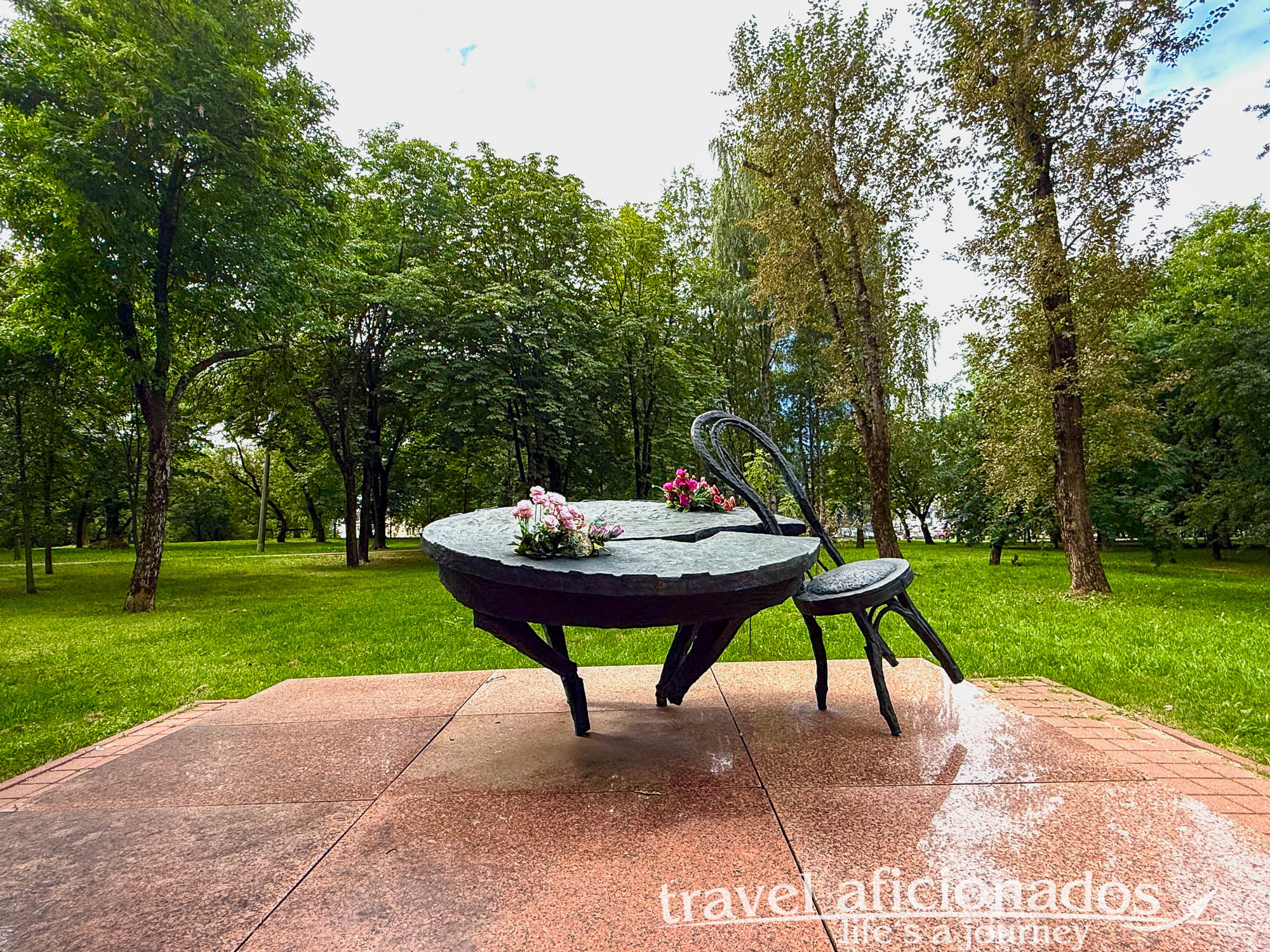
The tilted table symbolizing the total disorder & destruction brought upon the Jews of MInsk
Next to the table stood memorial stones sent from cities in Germany and Austria—including Berlin, Düsseldorf, Hamburg, and Vienna. These markers pay tribute to the victims deported from those cities and murdered at the nearby Maly Trostenets extermination camp.
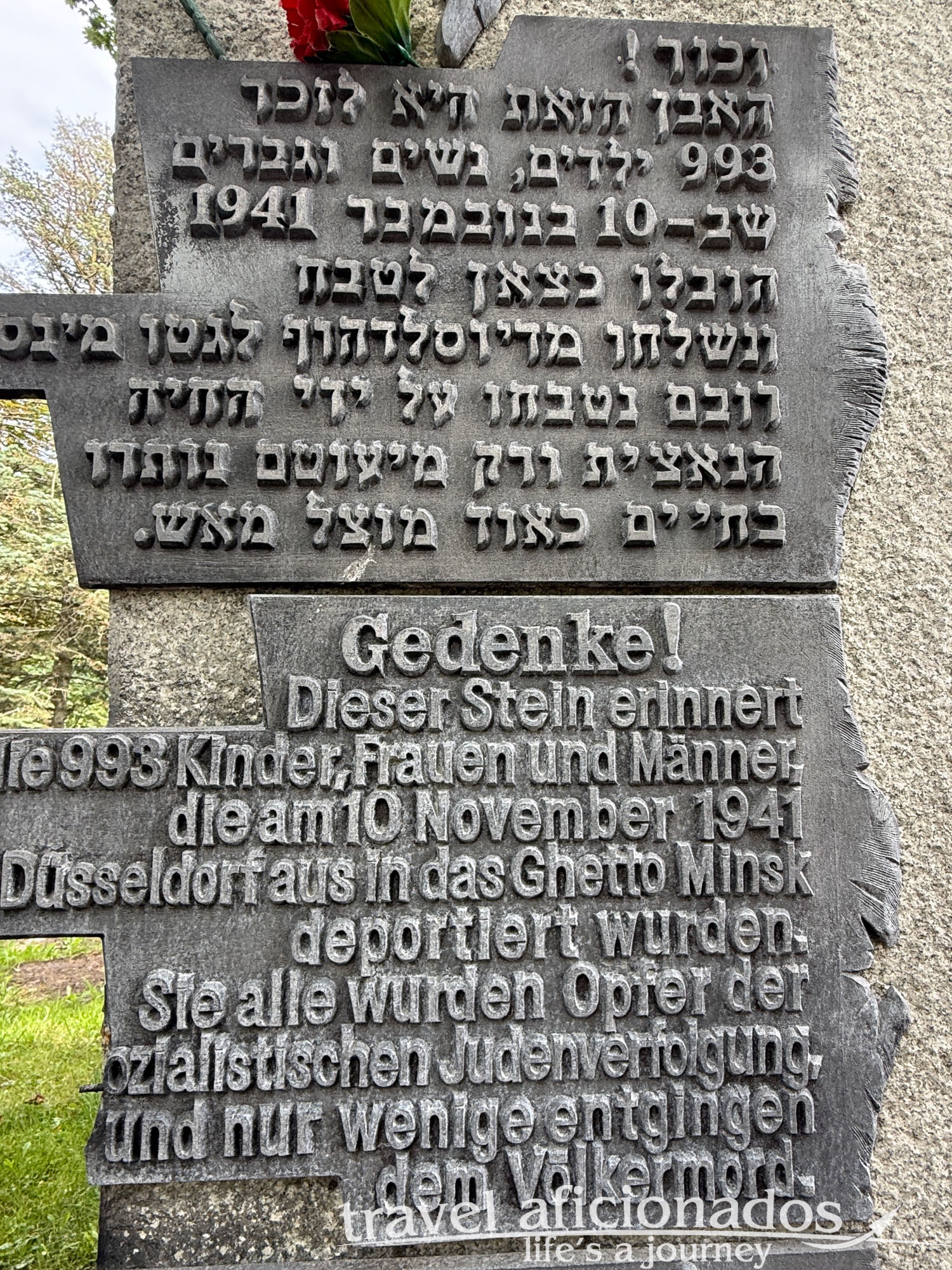
Memorial for Jews from Düsseldorf deported to the ghetto in Minsk
A Disturbing Discovery
Vladimir noticed something wrong near the memorial. The Jewish tombstones—which served as a symbolic monument rather than actual graves—were completely gone. Only empty imprints remained in the grass where they had recently stood.
Our guide looked upset. He took photos of the bare ground and promised to investigate what happened to the missing stones.
The Last Way – The Pit
For me the Pit (Yama) is the most touching and haunting Holocaust memorial in Minsk. It marks the precise site of a mass grave where Nazis murdered 5,000 Jews from the Minsk Ghetto on March 2, 1942. Today, it is a tranquil place shaded by trees. As we sat on the edge of the pit, our guide, Vladimir, took us back in time. He explained the long history of this memorial and showed us how a few persistent people can truly make a difference.
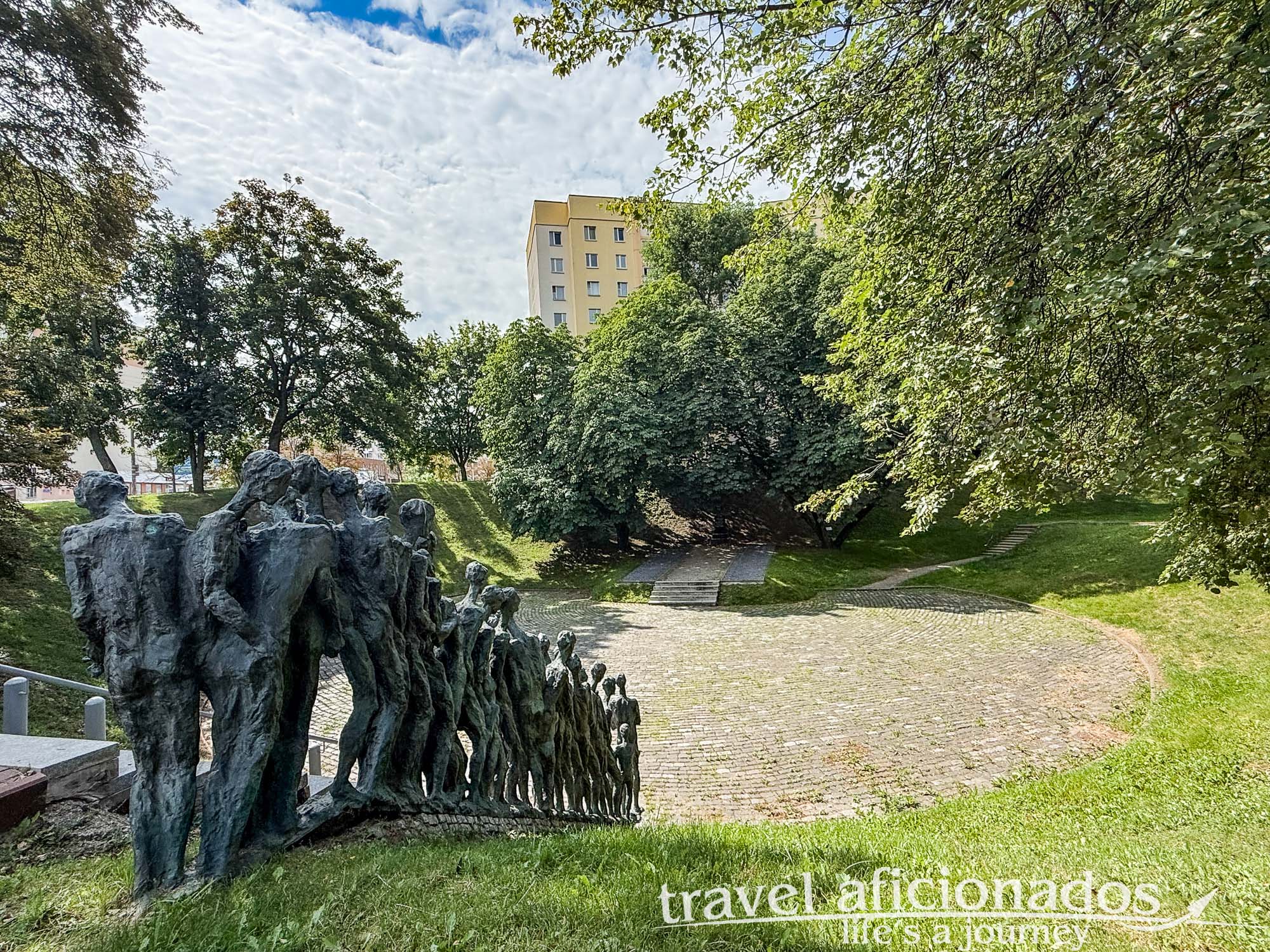
The Last Way- memorial erected in 2000 by the prominent Russian architect Leonid Levin
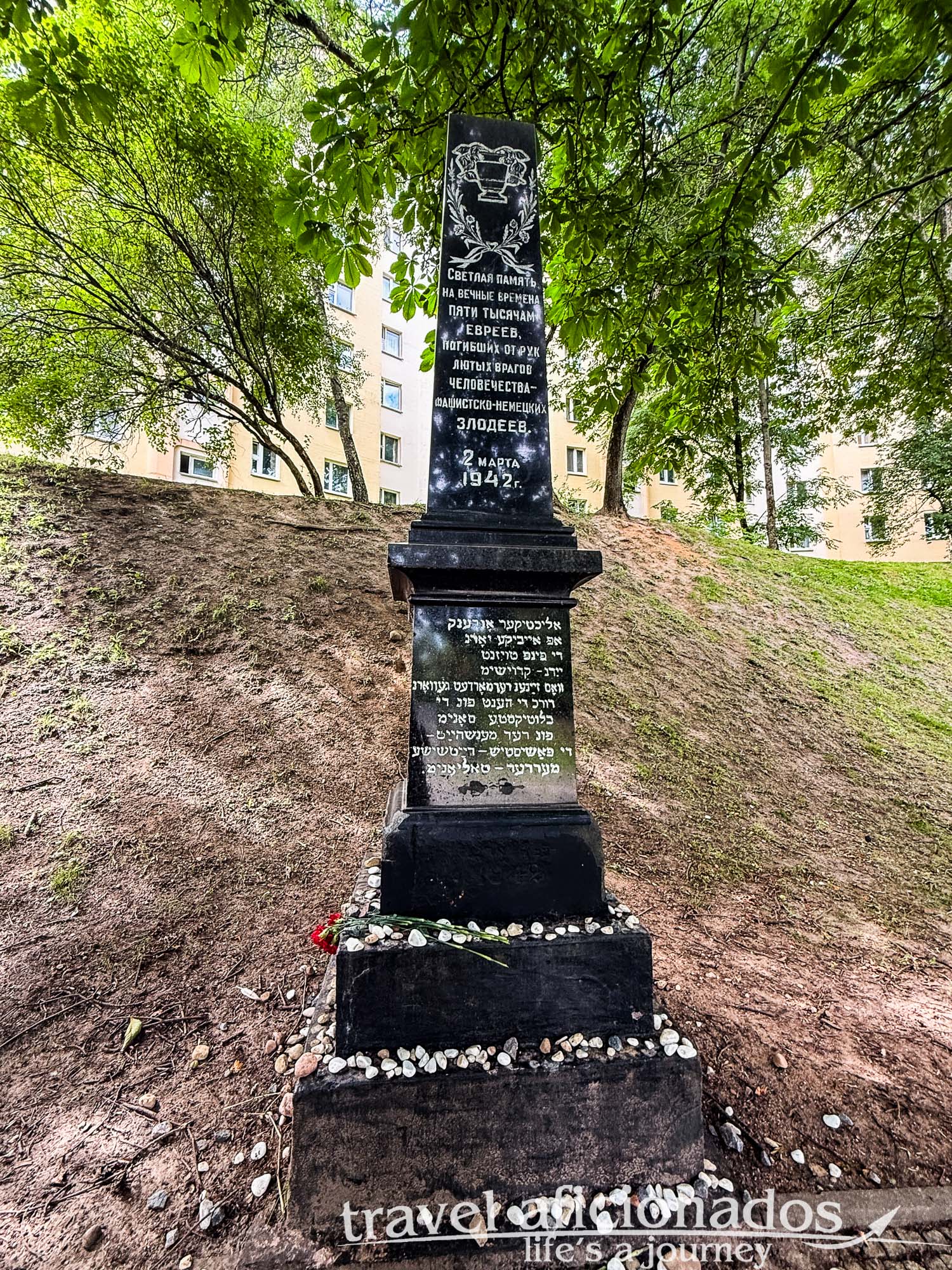
1947 survivors of the holocaust put up this black obelisk at the site of a mass grave
In 1947, despite heavy resistance from Soviet authorities, a group of surviving Jews bravely erected a black obelisk here. It featured inscriptions in both Russian and Yiddish—a bold act that showed immense respect for the victims. At the time, the area was overgrown with wild grass and bushes, which is likely the only reason the authorities overlooked its construction. As the political climate relaxed in the 1970s, the space was redesigned with stone stairways and a paved gathering area.
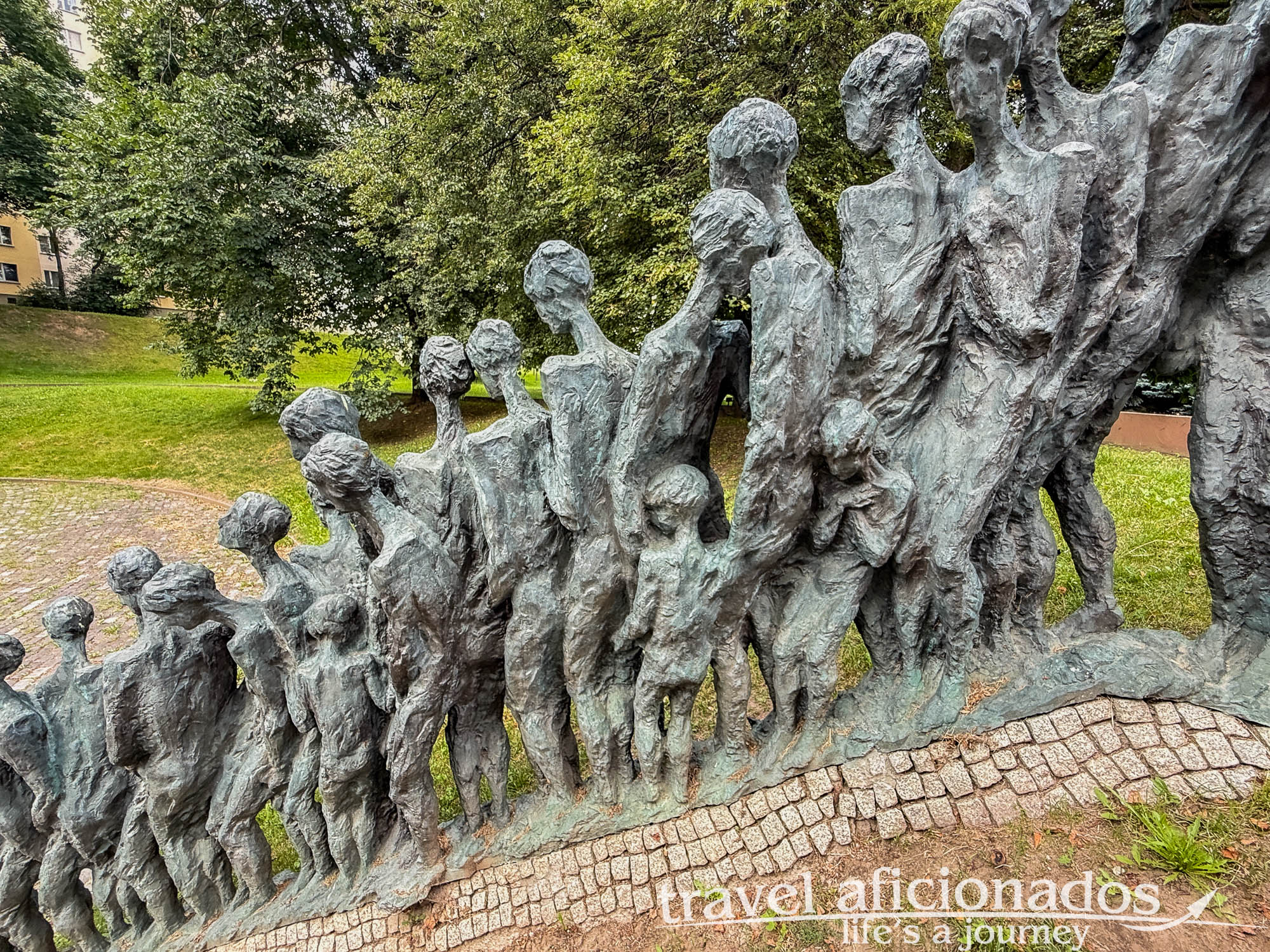
The Last Way- memorial erected in 2000 by the prominent Russian architect Leonid Levin,
The site changed drastically in 2000 when prominent architect Leonid Levin, alongside sculptors Elsa Pollak and Alexander Finski, expanded the lonely obelisk. They added a haunting bronze sculpture called “The Last Way.” It depicts a line of emaciated figures, including children, walking down the steps into the pit toward their tragic deaths.
German bunker
Right next to a one of Minsk monumental buildings, a heavy, funnel-shaped concrete mass breaks through the earth—a forgotten World War II German bunker. Because demolition crews missed their chance to blow it up immediately after the war, it survived until the city grew up around it. Today, removing those ultra-thick concrete walls would risk destroying the neighboring structures. It stands like a silent relic, reminding me of the towering concrete flak bunkers still looming over Vienna.
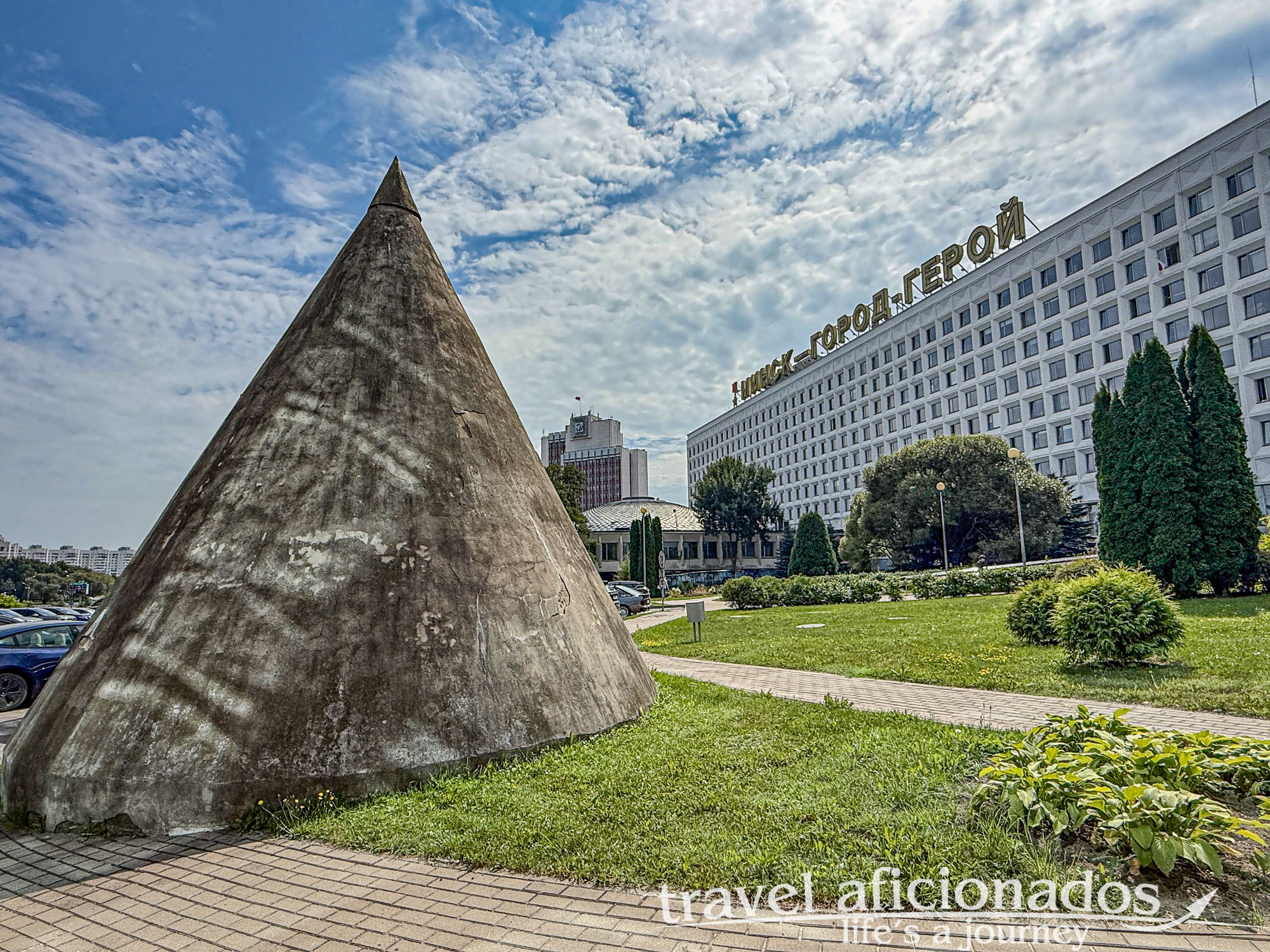
German bunker from WWII- blowing it up would risking destruction of neighboring buildings






Leave a Reply