
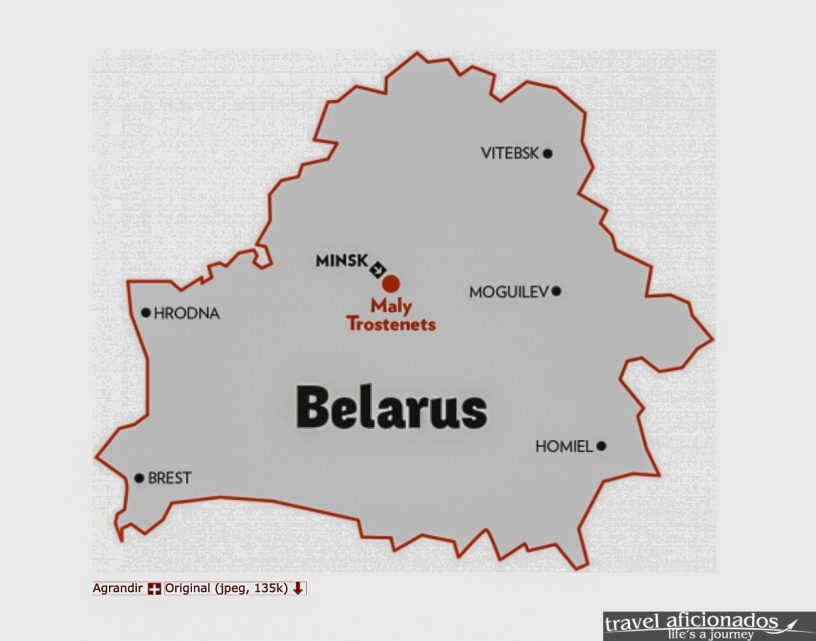

Visiting Maly Trostenets was certainly not on my agenda after weeks of traveling through Ukraine. A tiresome train journey throughout the night took me from Lviv to Przemyśl and further on to Warsaw, where I crashed for a couple of days in a nice hotel.
As fate would have it, I met Andres, an Estonian guy, in the hotel bar. He was heading to Minsk to do research on Maly Trostenets. The minute he told me, I decided to tag along. I quickly checked the website of the Austrian Ministry of Foreign Affairs: no visa required, no matter how I entered Belarus, by land or plane. Entering Belarus by land is a VERY complicated, frustrating process that I will get into later.
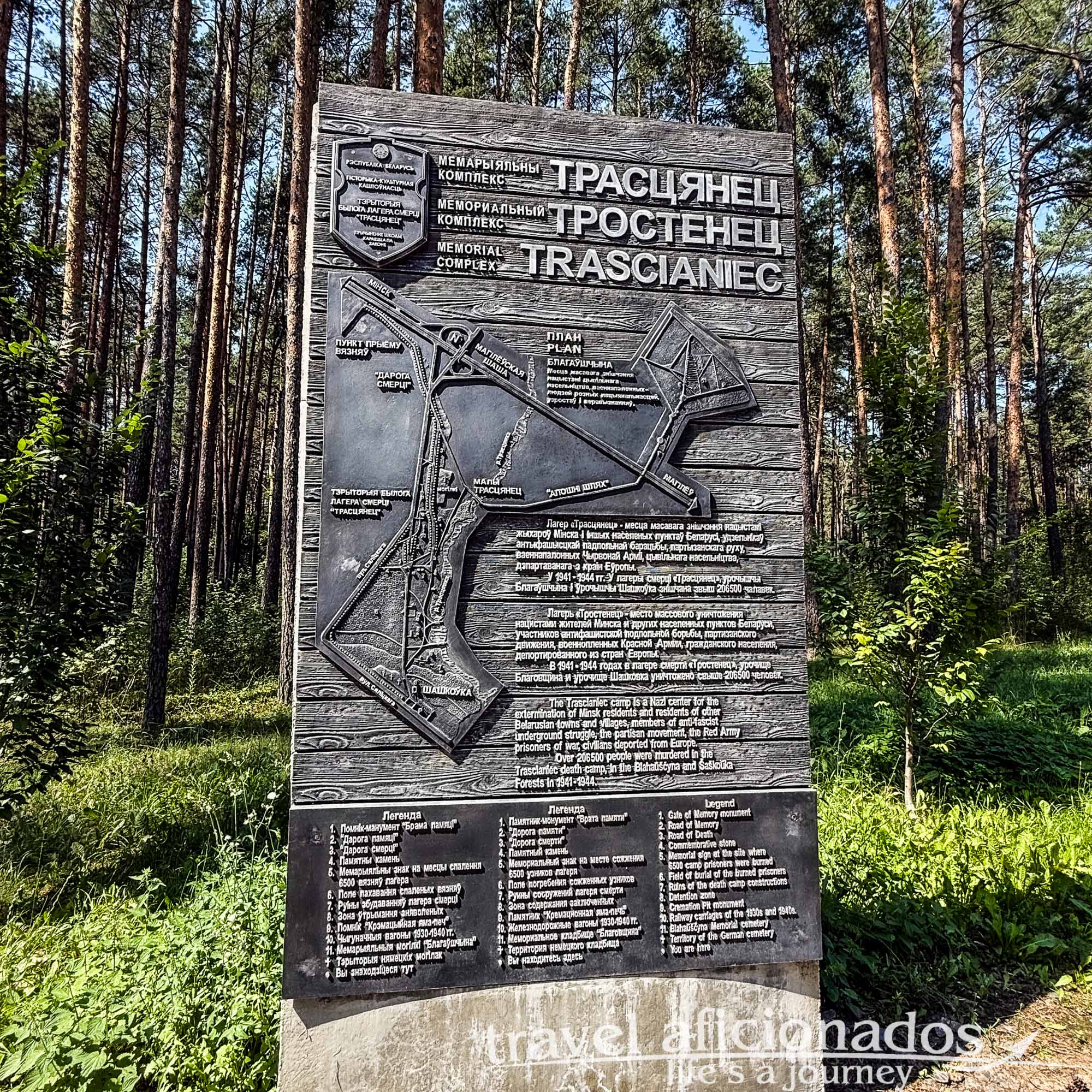
Memorial in Maly Trostenets
How the small village of Maly Trostenets became a death camp
On June 28, 1941, Nazi Germany occupied Minsk following the swift German invasion of the Soviet Union. The advance happened incredibly fast, leaving virtually no line of defense. The old fortifications from World War I—often referred to as part of the Stalin Line—had already been dismantled. This left the Brest Fortress, located on the western border of the CSSR, as the primary barrier between the invading forces and Minsk. Though its few defenders resisted bravely, their isolation meant the effort ultimately ended in tragedy.
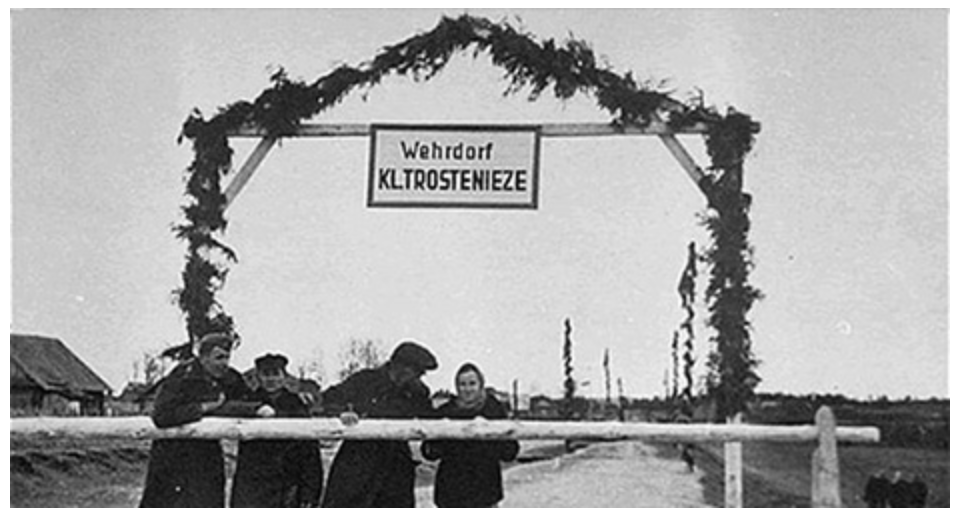
Photo taken from display in the Great Patriotic War Museum in Minsk
The Nazi forces moved rapidly, establishing the Minsk Ghetto by July 1941. By the end of that year, Eduard Strauch, the Commander of the Security Police, seized 25 hectares of farmland in the village of Maly Trostenets, just southeast of Minsk.
Originally, the site was intended only to supply local Nazi forces with food. Soviet prisoners of war and Jewish laborers were forced to build barracks for about 600 slave workers and their guards.
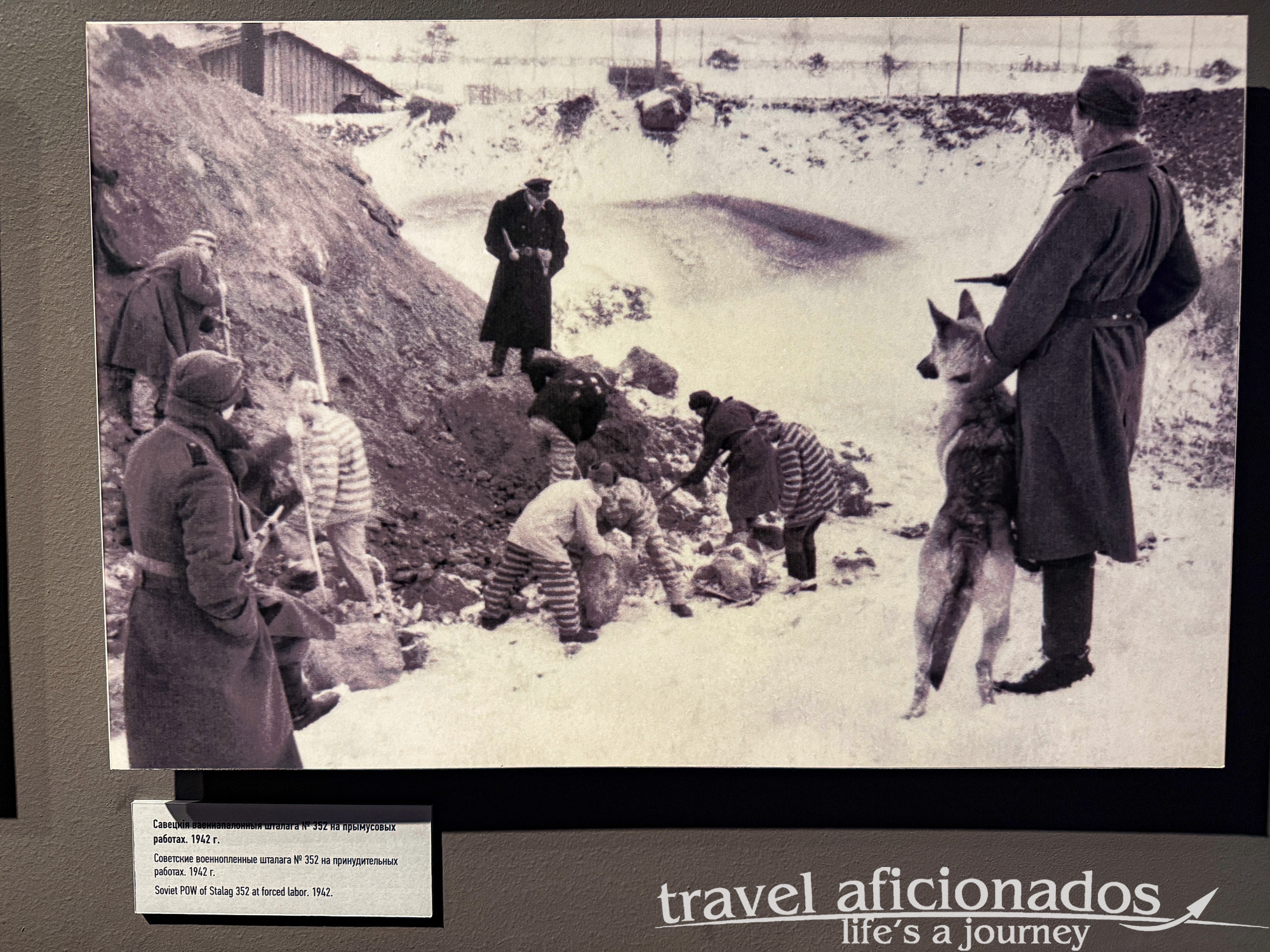
Photo taken from display in the Great Patriotic War Museum in Minsk
Within a few months, however, the site evolved into the largest extermination camp on occupied Soviet territory. Between 1942 and 1944, Nazi forces murdered approximately 200,600 people here. The victims included Jews deported from Western Europe—including Czechoslovakia, Austria, Germany, the Netherlands, and Poland—as well as residents of the Minsk Ghetto, Soviet prisoners of war, suspected partisan fighters, and others targeted by the regime
Maly Trostenets long way to becoming a memorial site
I had visited Minsk in 1983, but not Maly Trostenets, since in the former CSSR this was not a popular topic.
The attitude of the Soviet politburo was: admitting that 200.600 people were massacred in Maly Trostenets would taint or belittle the victory over Nazi Germany.
During Soviet times, only two small memorials were erected, in 1961. I visited the one where the former crematorium was. Its plague plainly says “In this place Fascist executioners were burning Soviet citizens”
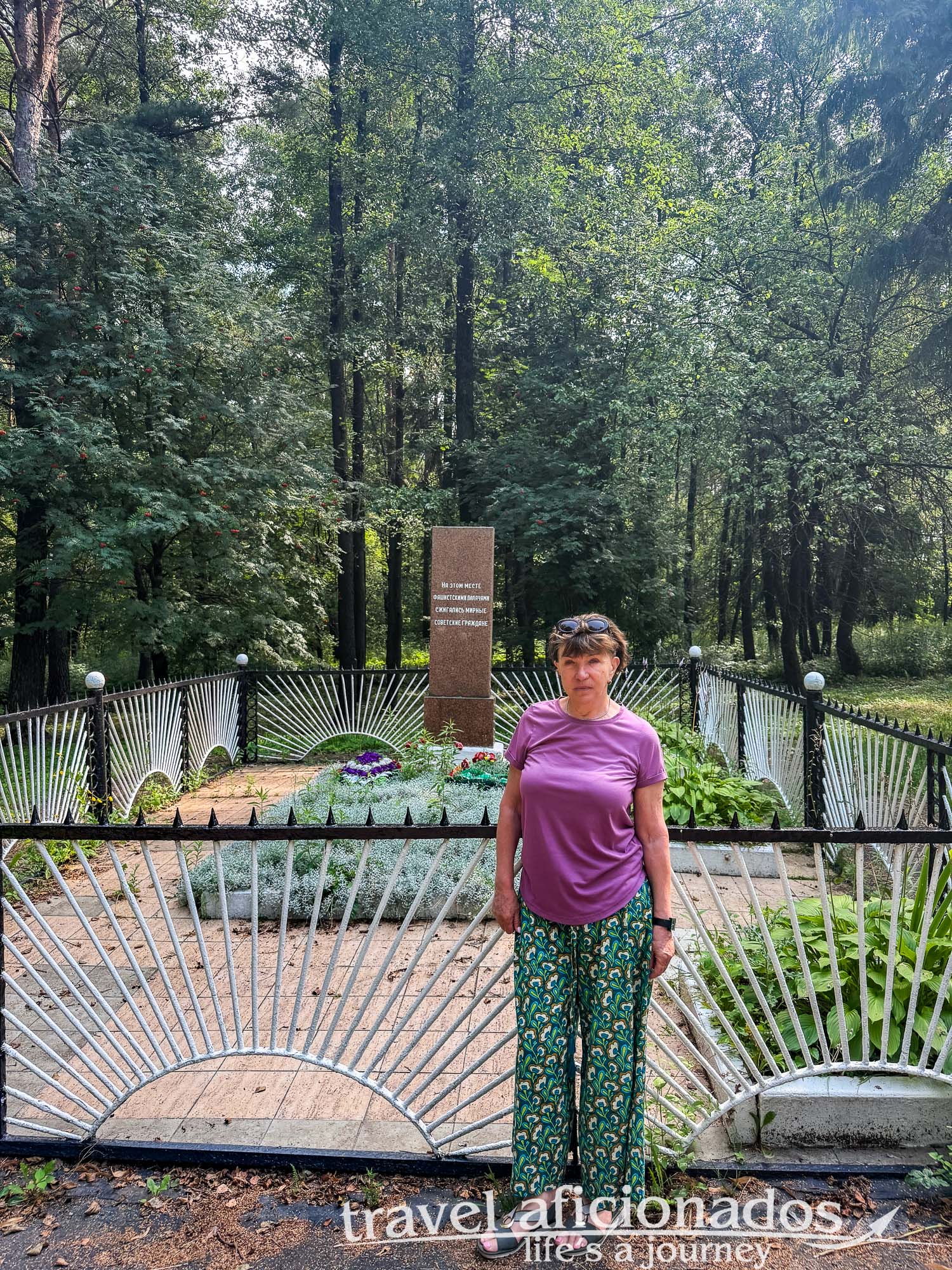
Memorial from 1961 saying “In this place Fascist executioners were burning Soviet citizens”
That’s it. No mentioning of Jews from all over Europe who were murdered there.
Finally in 2016, other more significant memorials were added, some of the victims were named, the regions where they came from mentioned plus the number of victims.
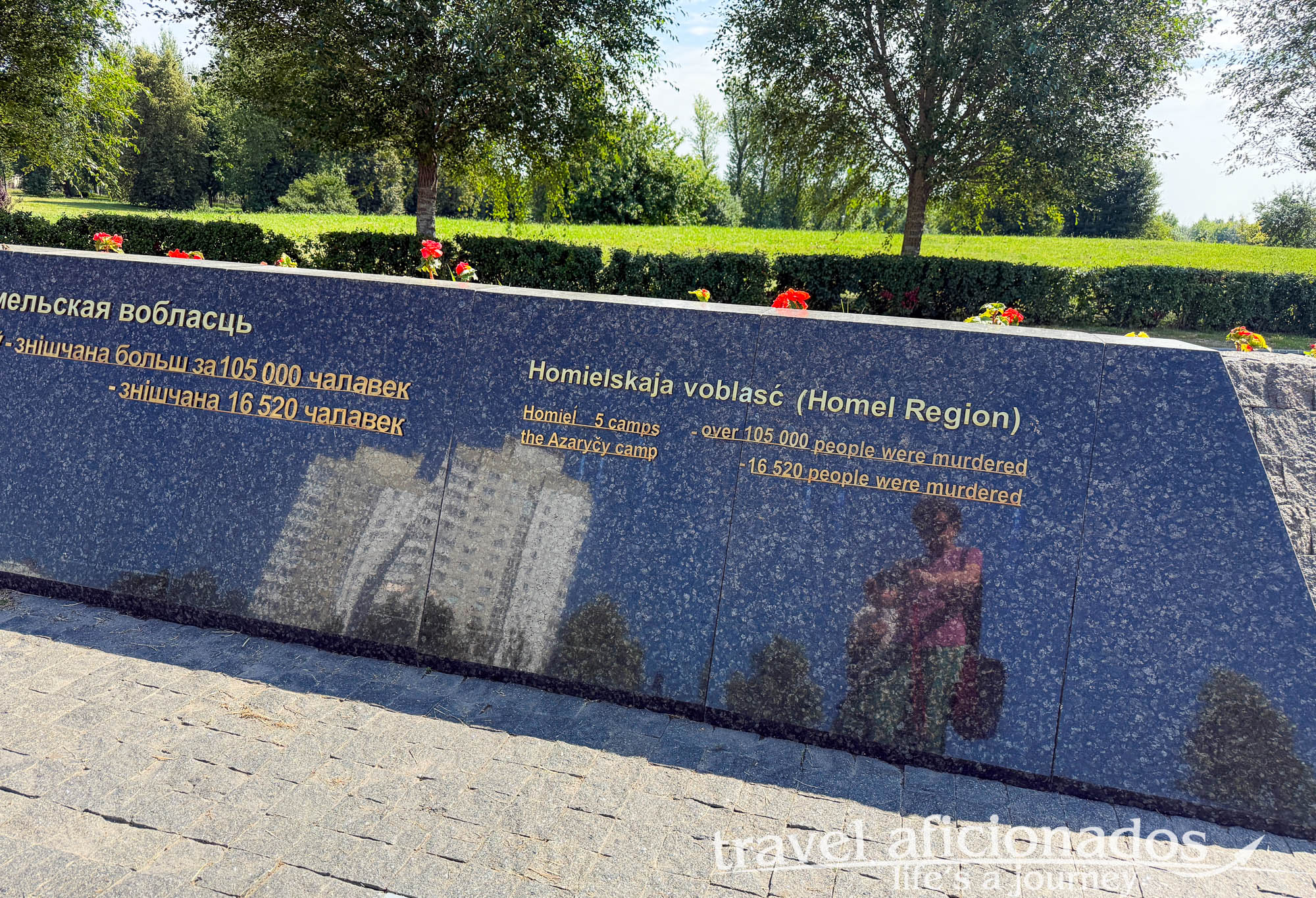
a memorial for each region in Belarus where the victims came from
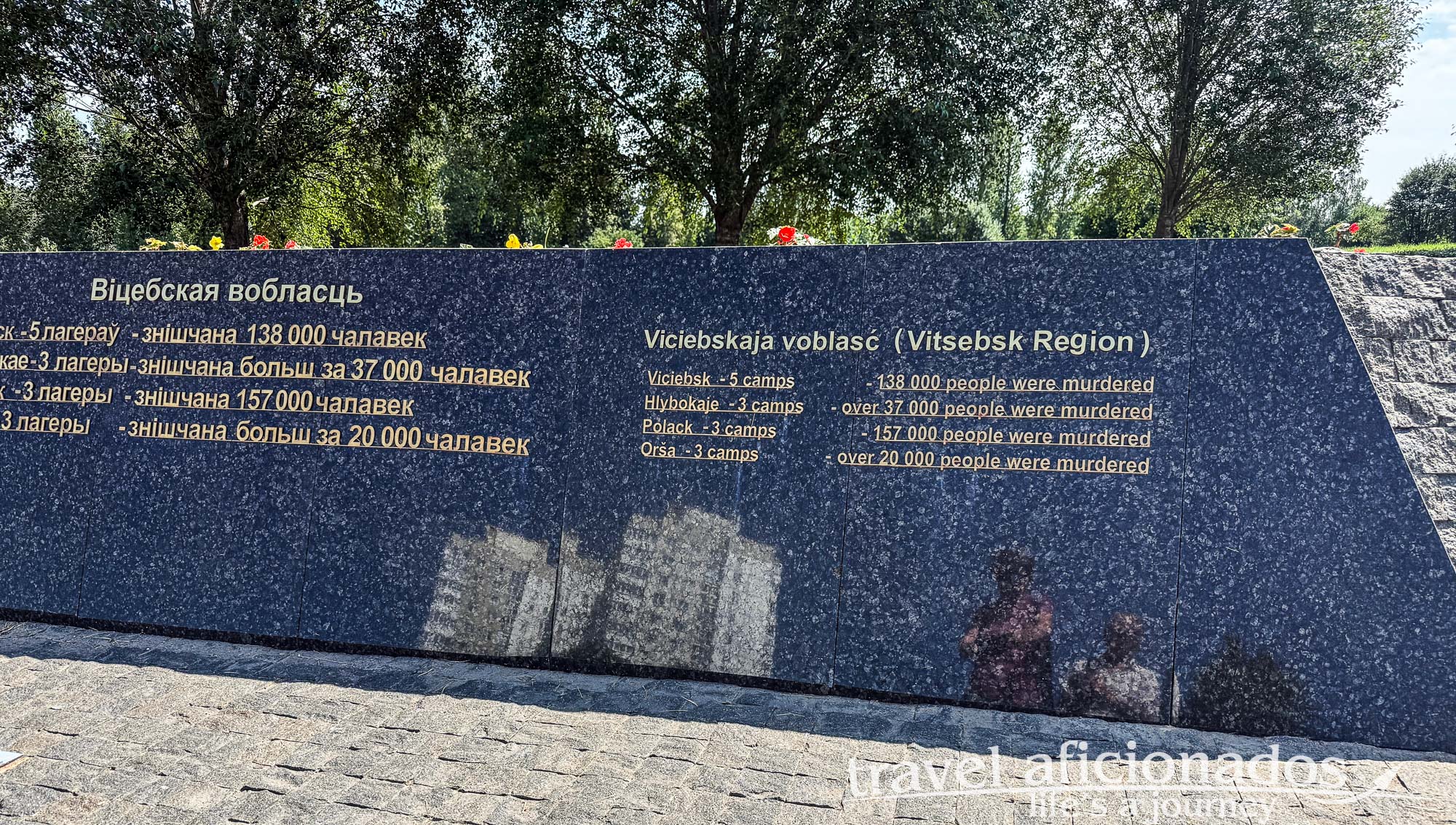
a memorial for each region in Belarus where the victims came from
A few things struck me immediately.
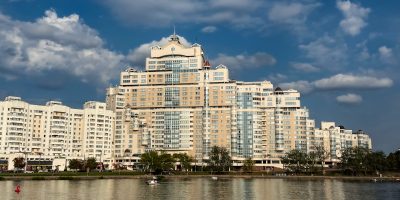
First of all, we were the only visitors. But within 500m of the former death camp people went on with their daily lives. From the high-rise apartment buildings people would look at the grassy area – the mass graves.
Well, in 1941 this area was far away from the city, but Minsk expanded enormously. Lots of factories were built after World Ward II, since the winds are coming from the west – these factories had to be built in the east, near to the former death camp. Along with the factories large apartments buildings for the workers went up as well.
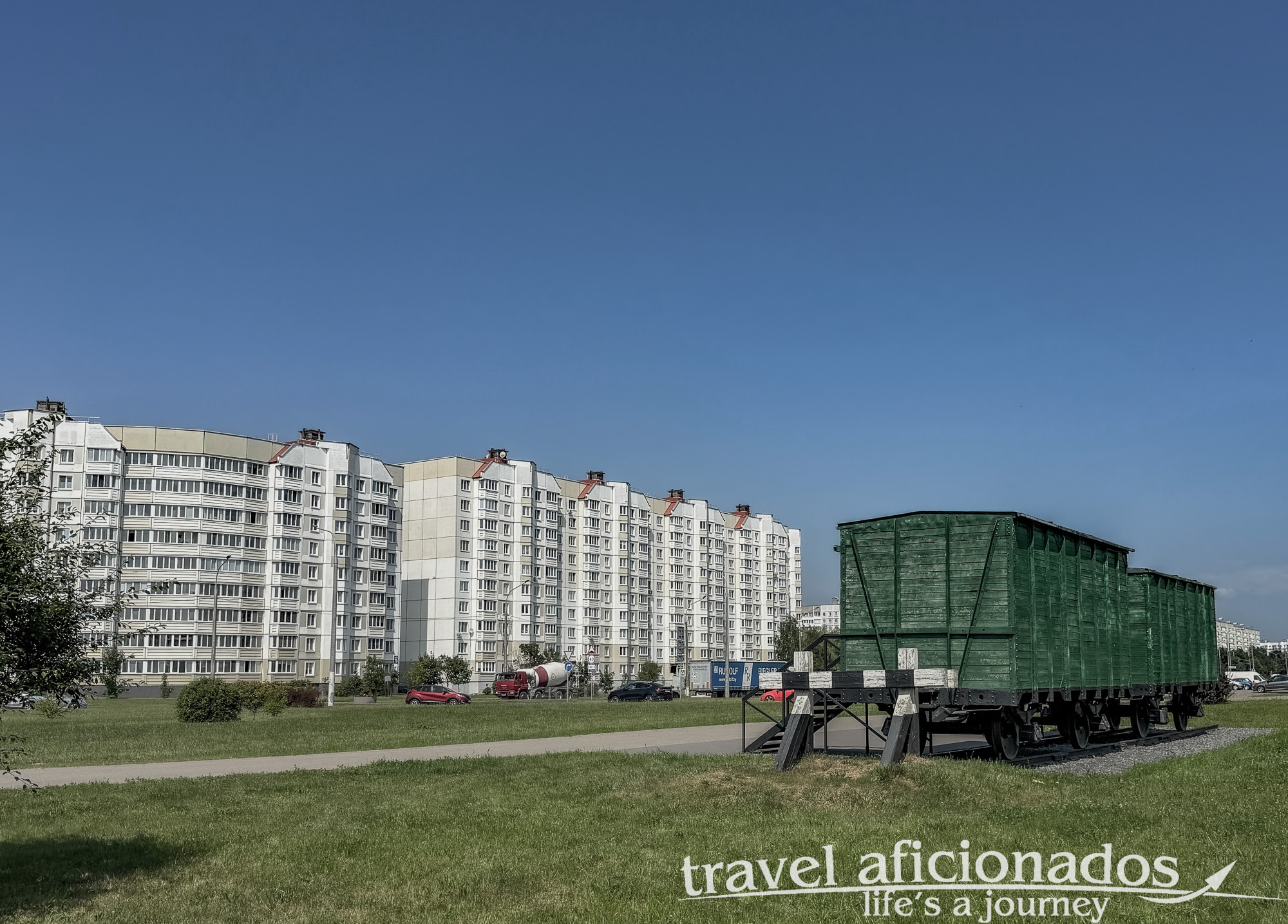 Unlike Auschwitz or Mauthausen, where preserved barracks, photographs, and personal belongings make the atrocities more real, Maly Trostenets has no such infrastructure. The site was built with temporary structures and lacked fixed killing facilities. Today, it consists mostly of a forest and vast grassy fields that mark the former mass graves, with only two reconstructed foundations to show where the barracks once stood.
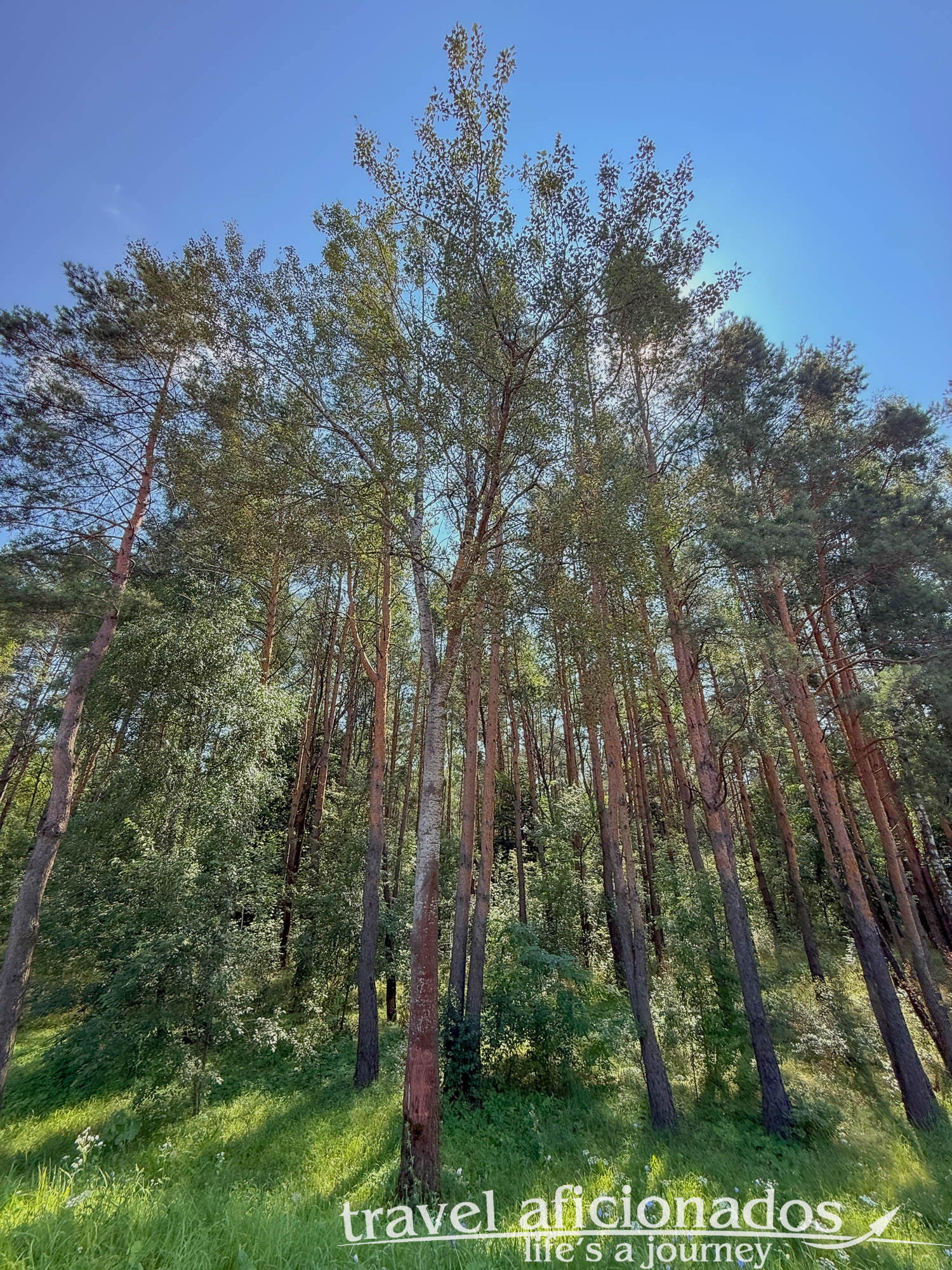
Execution site – Blagowshtchina forest, about one kilometer from the camp
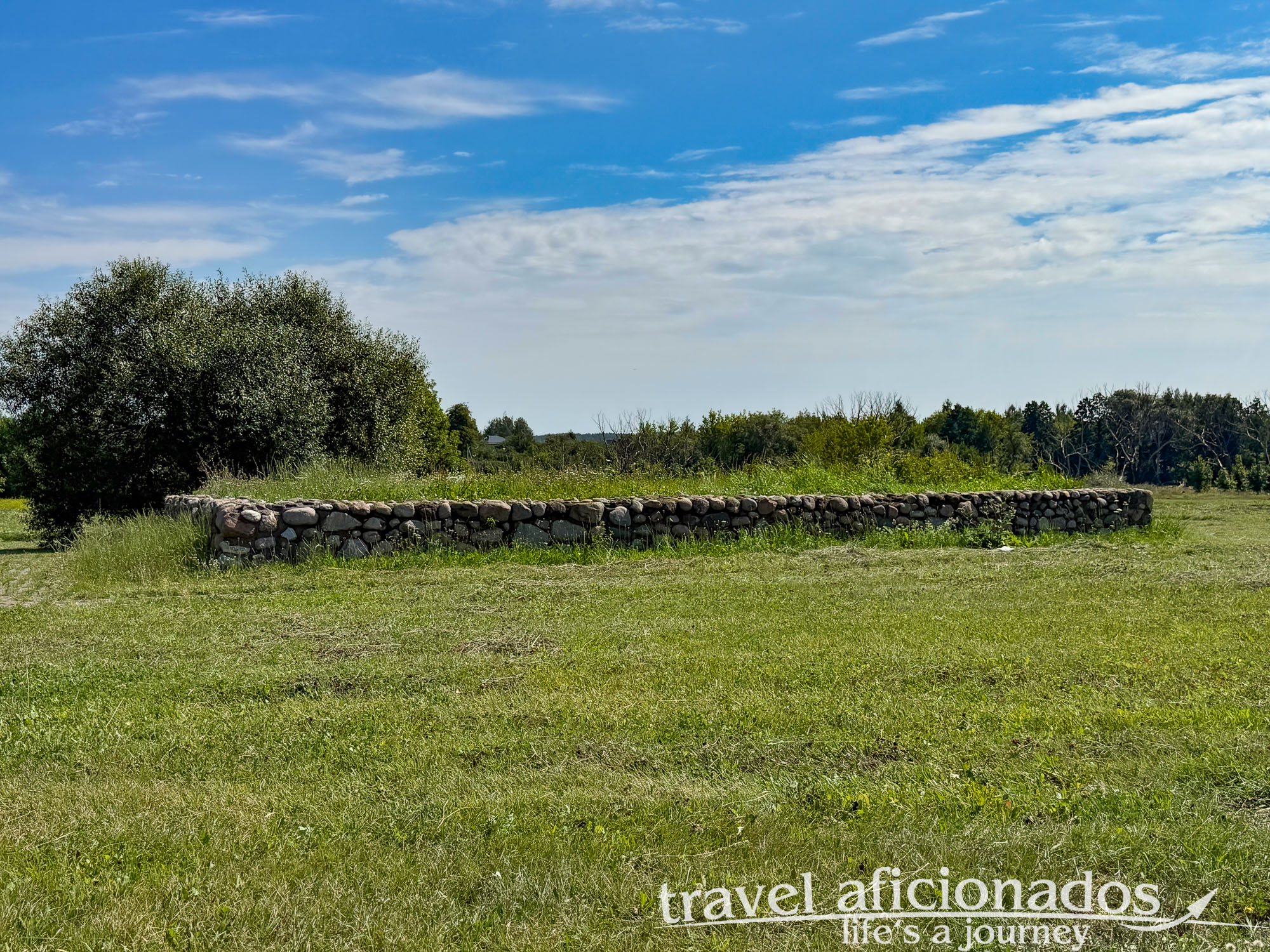
reconstructed foundations of barracks
Deported Jews arrived at the Minsk station in cargo trains, where they were falsely promised to be taken to nearby houses and estates. Believing this, victims surrendered their suitcases, identification cards, money, and valuables in exchange for receipts. While individuals with specialized skills were selected and sent to the Minsk ghetto, the vast majority were loaded directly onto trucks bound for the execution site in the Blagowshtchina forest, located one kilometer from the camp.
At the forest, victims were forced to undress down to their underwear before walking down a path known today as the “road of death.” The main part of Blagovshchina is the memorial cemetery itself: the site of horrific events, where people were shot, trampled into mass graves, later exhumed, and burned, reduced to ashes in an attempt to erase the evidence of crimes… Today, the remains of the murdered rest in large graves, covered with memorial slabs.
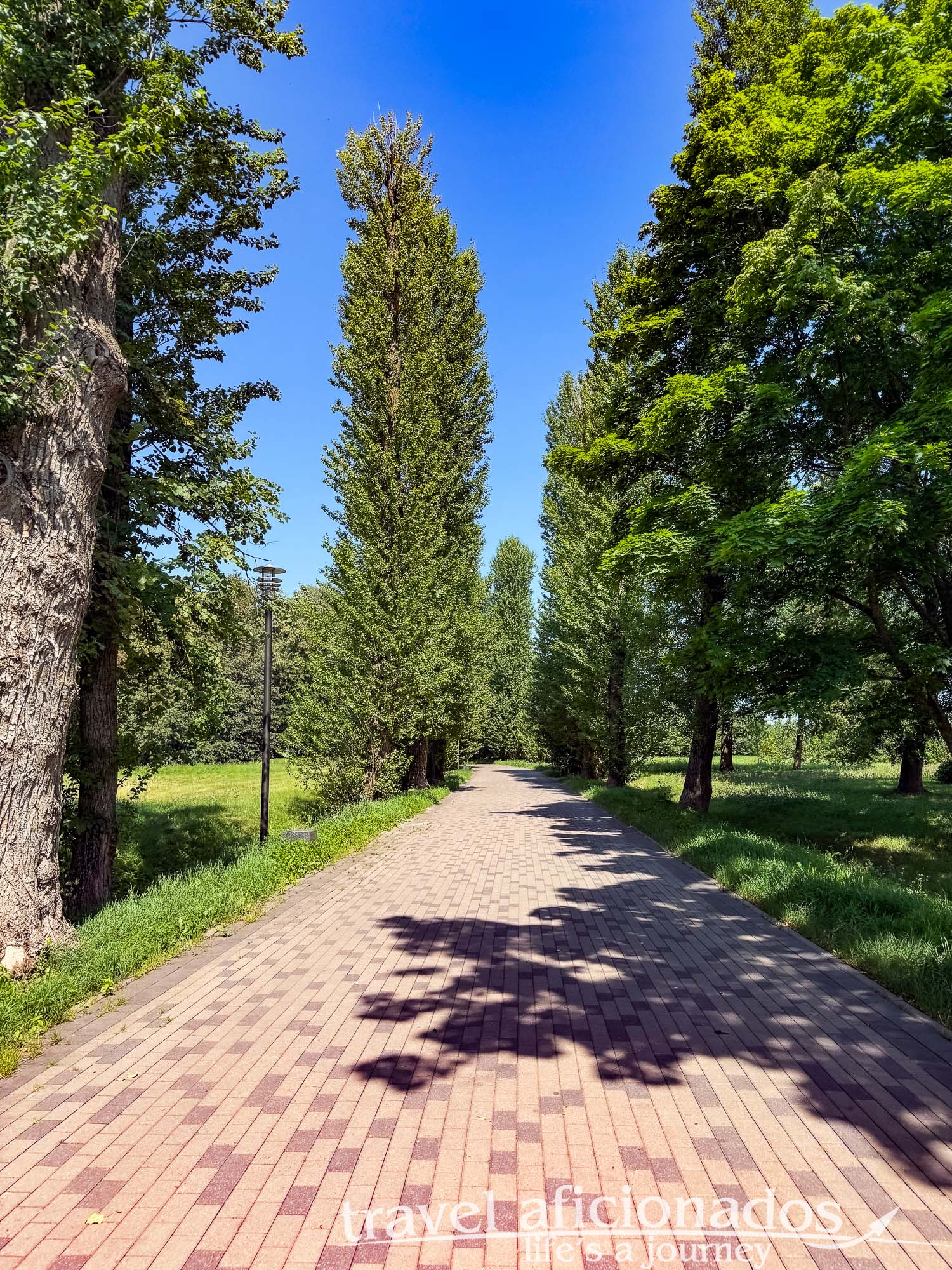
Road to Death
They marched toward pits measuring 60 meters long and 3 meters deep, where firing squads of up to 100 men shot them in the neck. A special group of Russian forced laborers was made to dig these trenches—using dynamite to blast through the frozen ground in winter—and fill them after the massacres, before tractors leveled the earth. Those who were not shot were murdered in gas vans and burned in a crematorium.
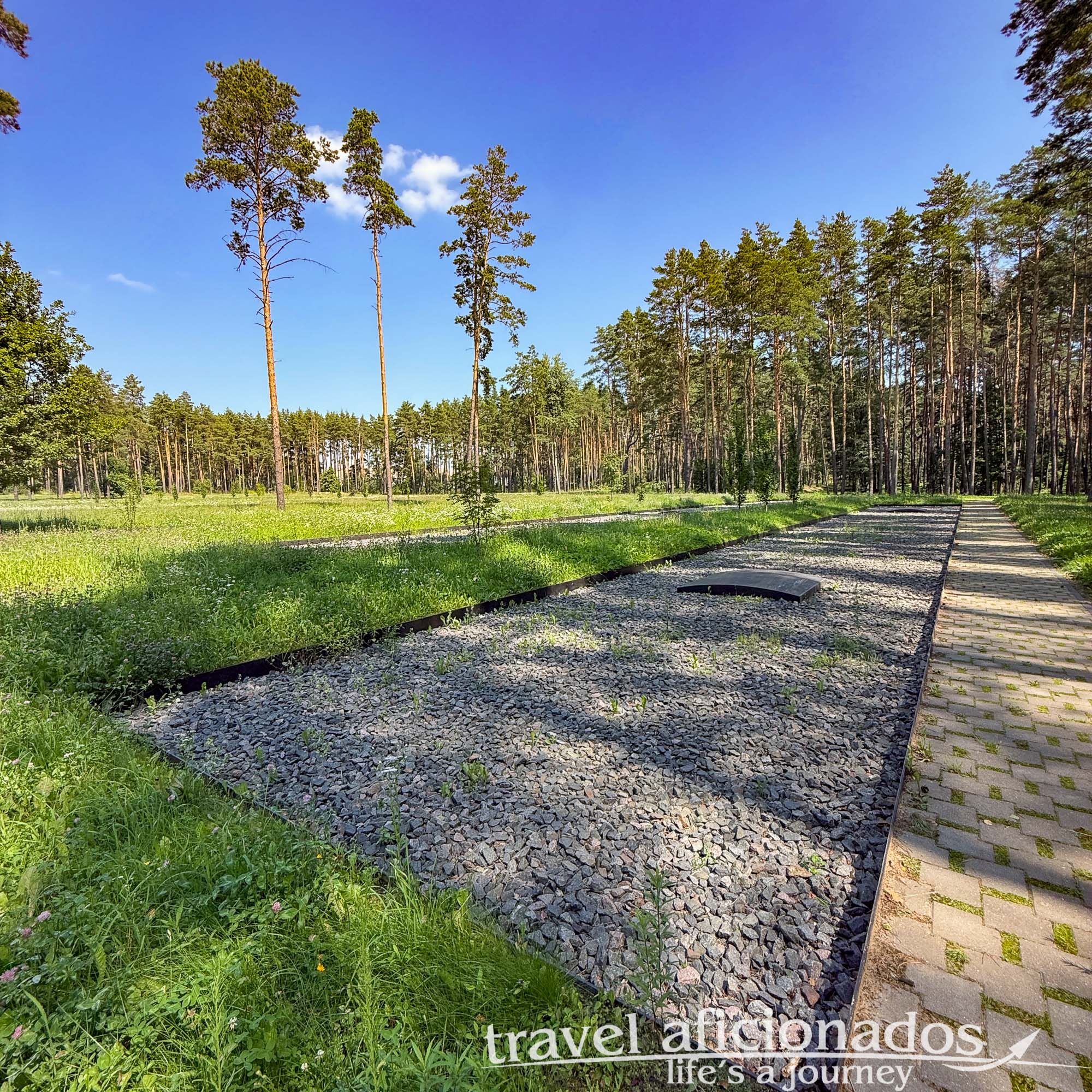
former massgraves
More recent memorials at Maly Trostenets
Until 2016, only two small memorial stones stood to remember the mass killings at Maly Trostnets. Over time, the memorial site expanded. Today, two railway carriages sit in a field at the entrance, and further down, five triangular granite stones represent the regions of modern-day Belarus, each etched with the number of victims who perished there.
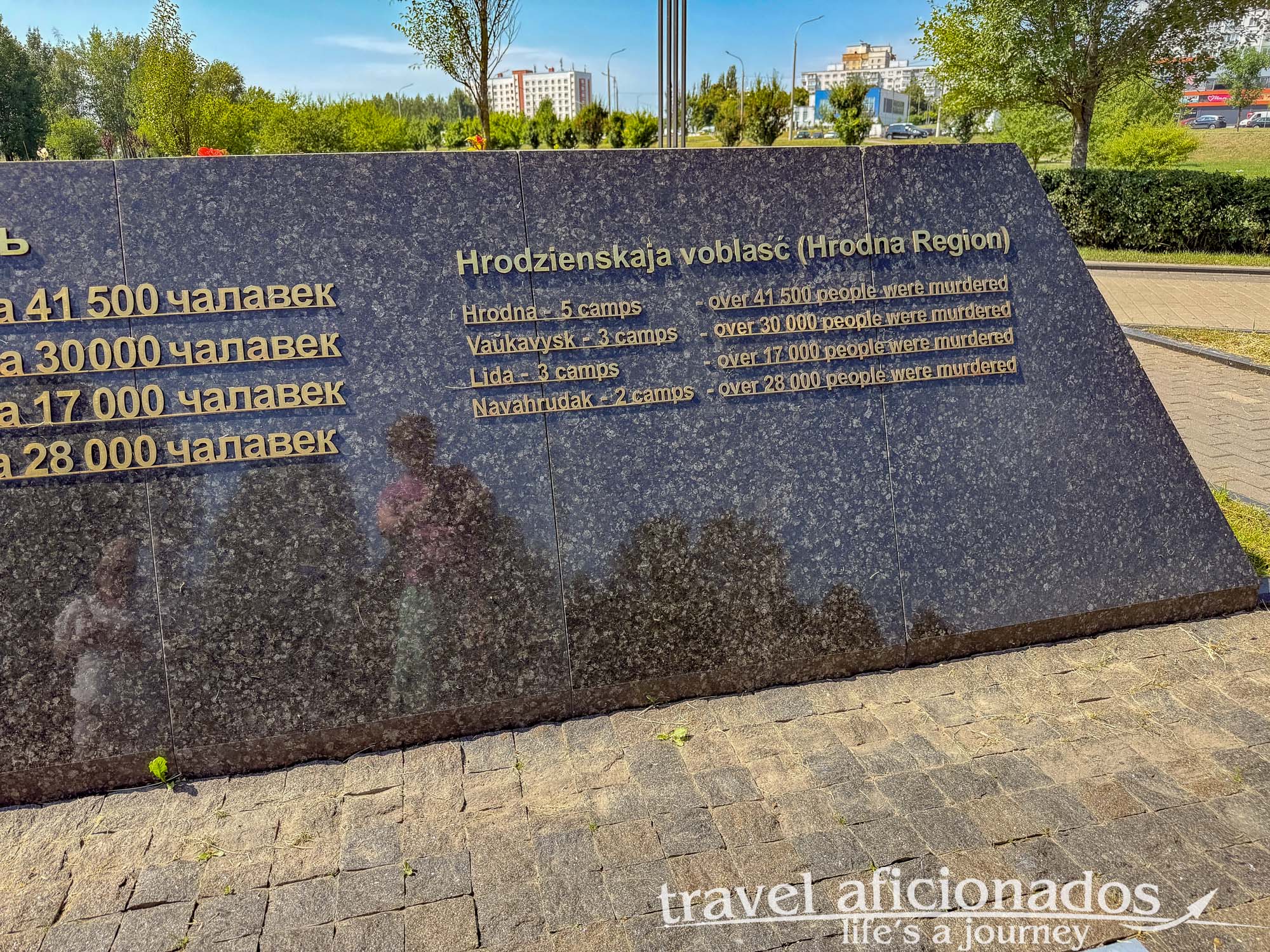
Memorial for the victims of the Hrodna Region
In a forest area a row of granite pillars lines the ground where a large number of mass graves were eventually unearthed.
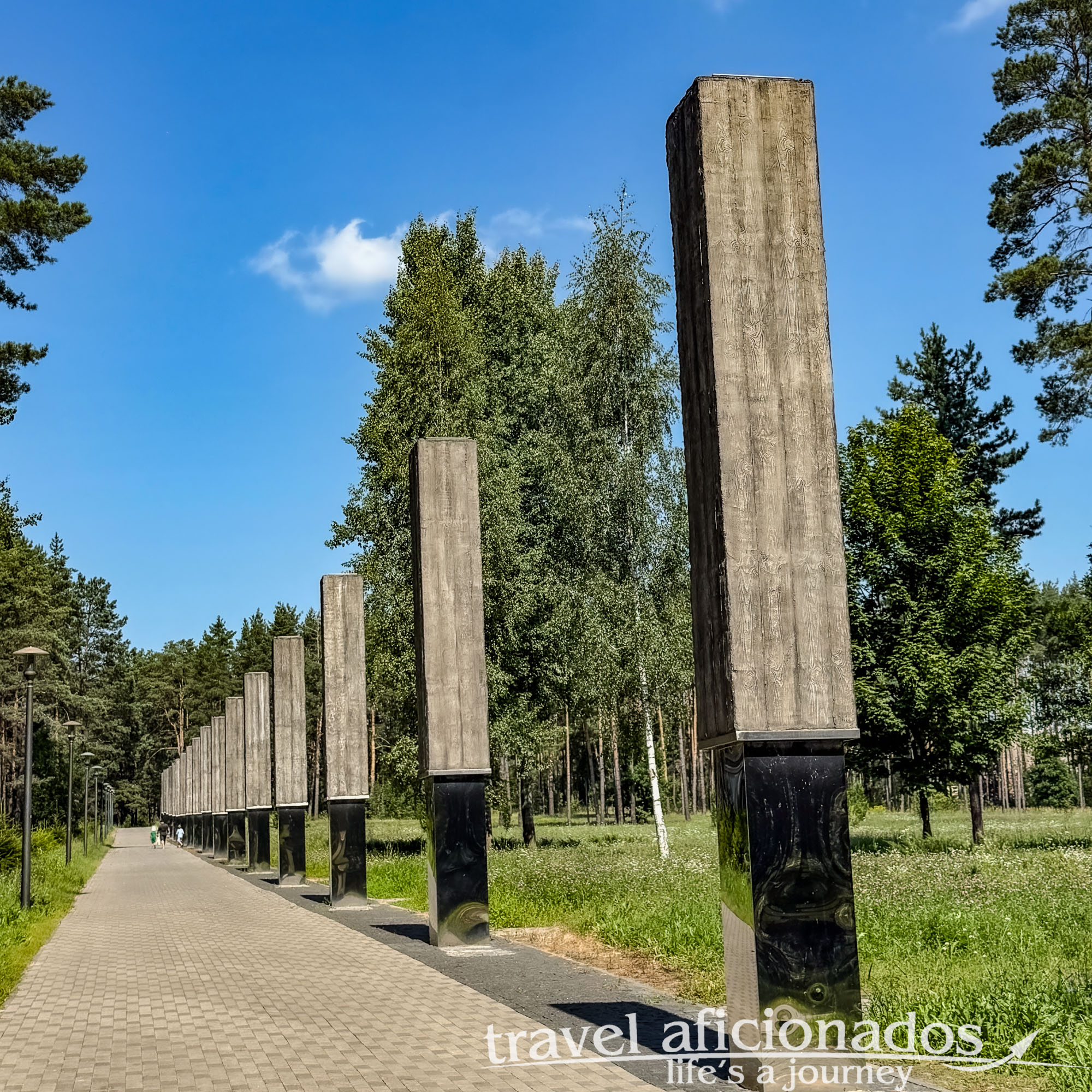
Pillars marking the site of a former mass grave
Yet, this part of the site touched me most. Here, families of the murdered Austrian Jews have tied yellow posters around the tree trunks. Each one bears the name, birth date, hometown, and execution date of a victim, and some even include a photo. Most of these victims came from Vienna, with a few from Lower Austria. In total, 9,757 Austrian Jews were deported to Minsk and Maly Trostnets; tragically, 9,735 of them perished in the Holocaust.
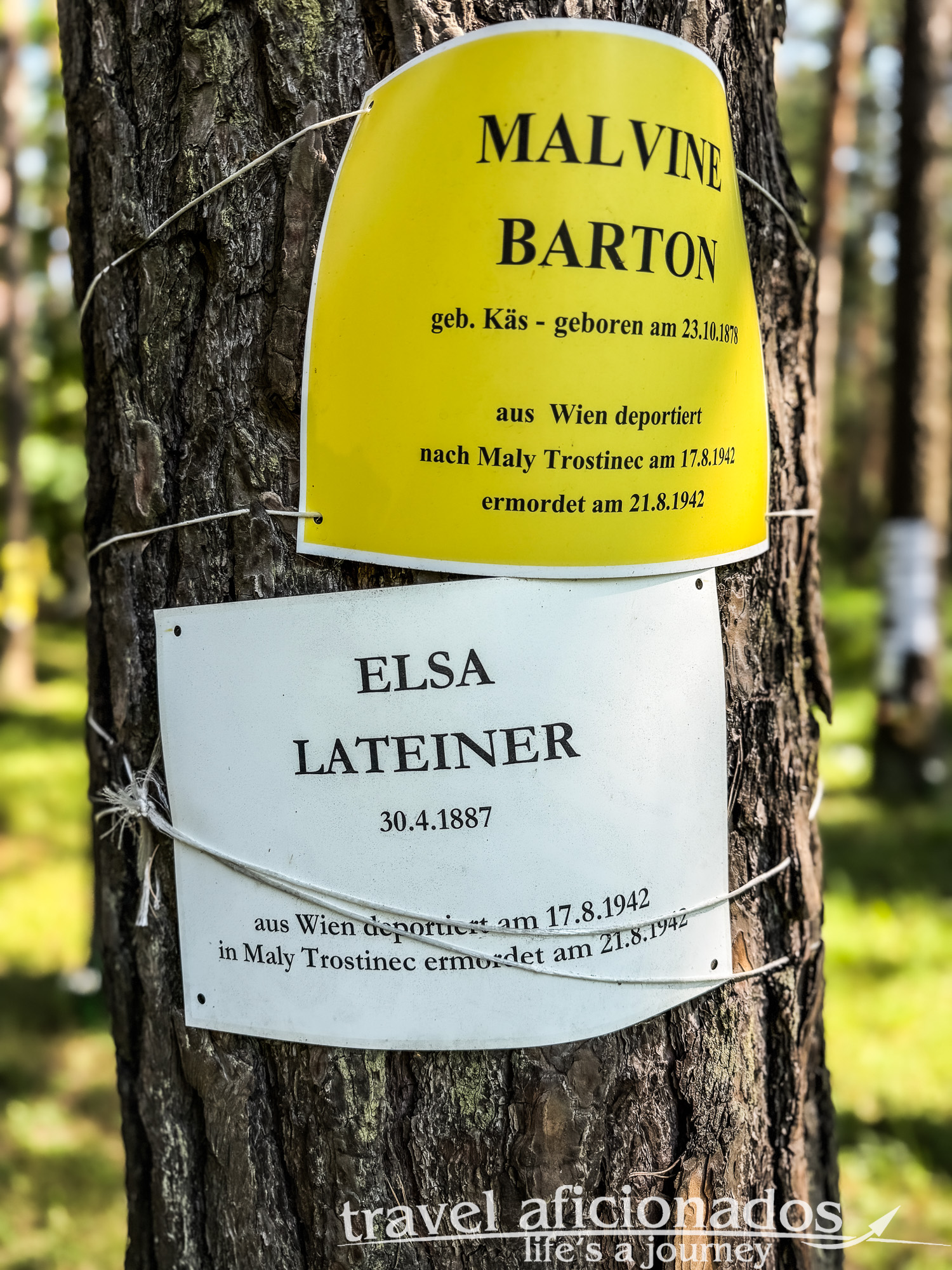 “Massif of Names,” is another a moving memorial consisting entirely of first names, which was dedicated by Austria in 2019. Although the Nazis destroyed the official list of prisoner other files survived. Ironically, these were the meticulous lists recording the valuables stolen from the deportees, who had been falsely told they were simply being resettled.
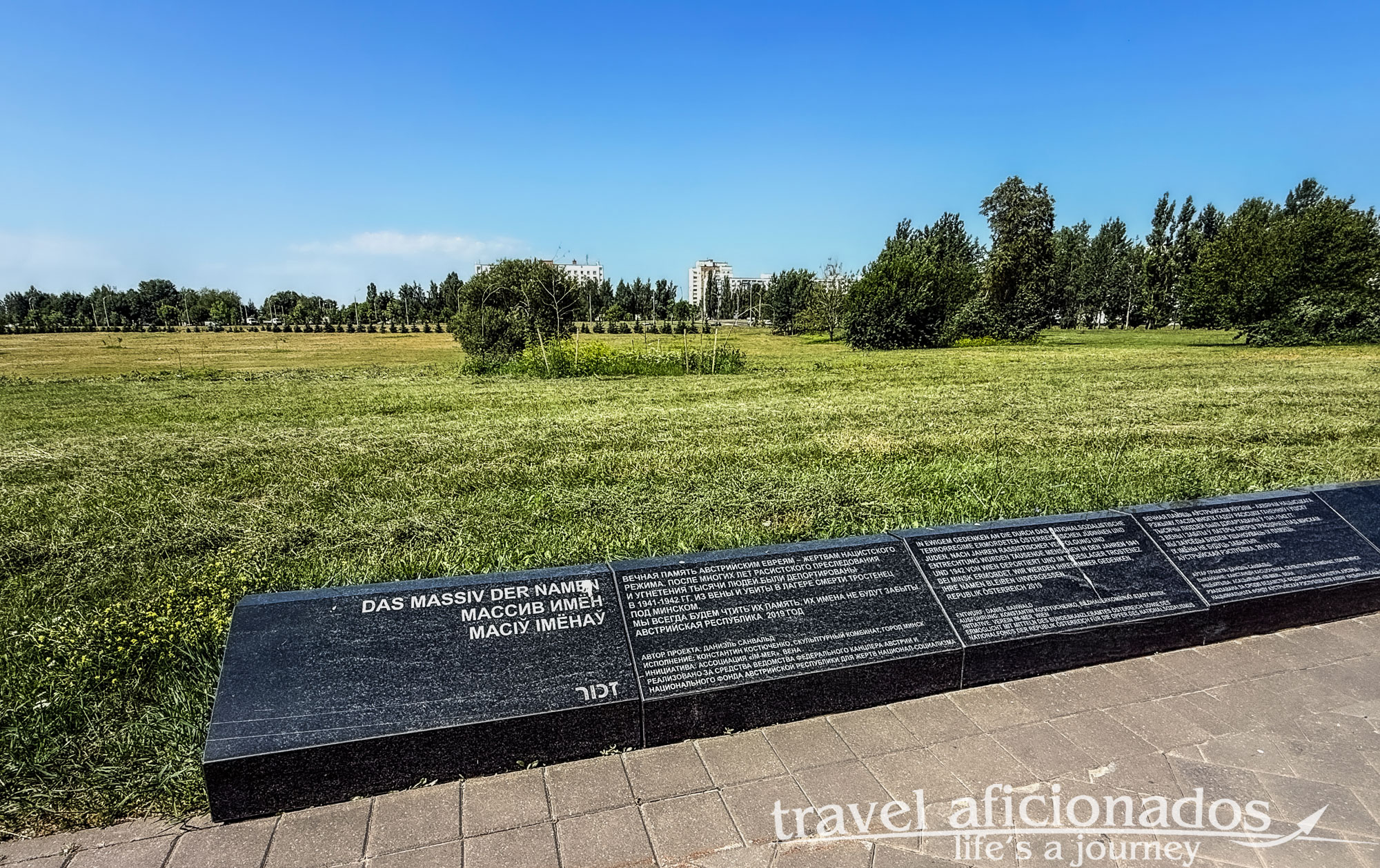
The Austrian memorial to the Jews from Austria murdered in Maly Trostenet, 2019
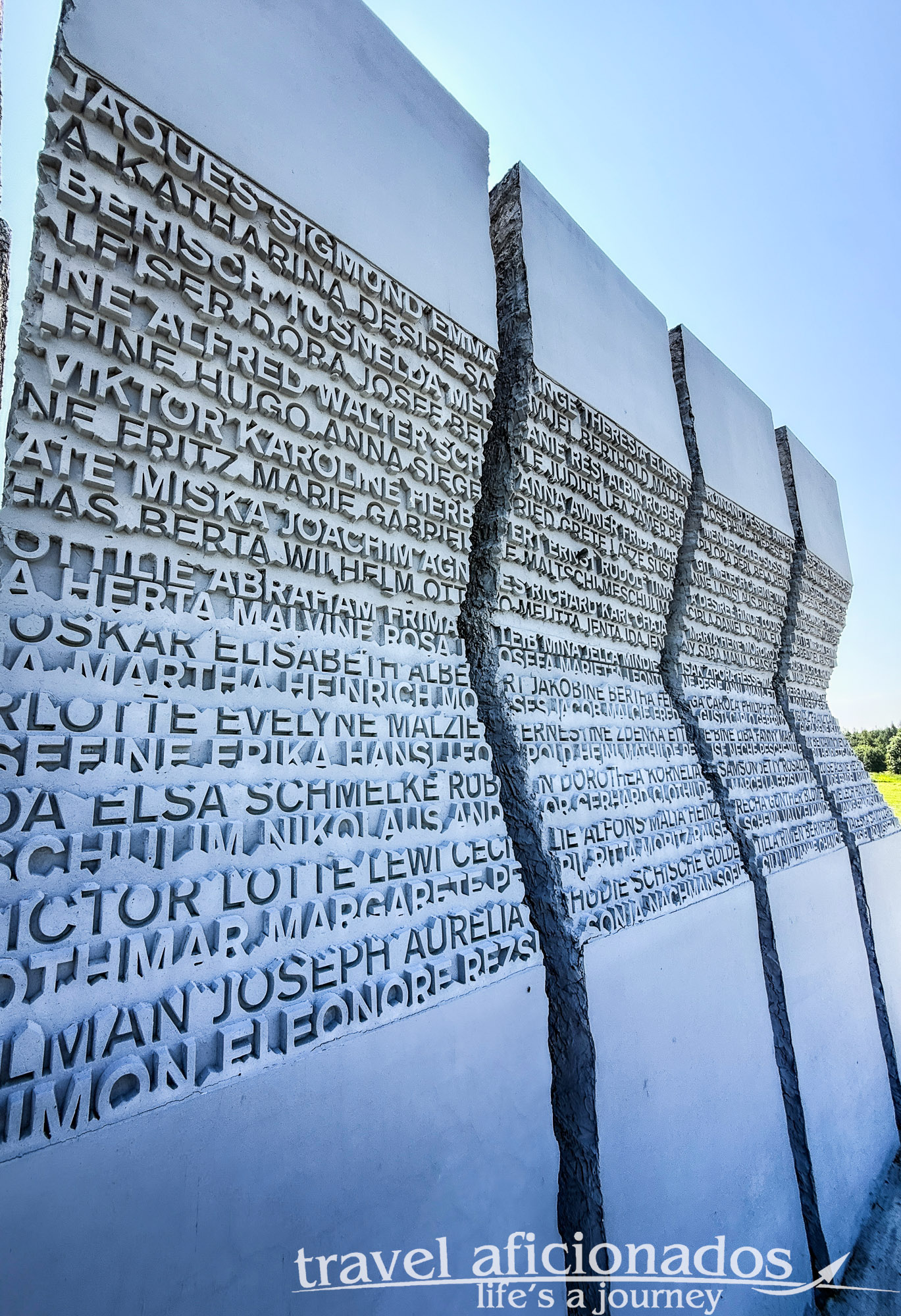
The Austrian memorial “Massif of Names”
The “concrete “train” makes each visitor to seemly walk through the “wagons” in which people were transported to Trostenets to meet their deaths.
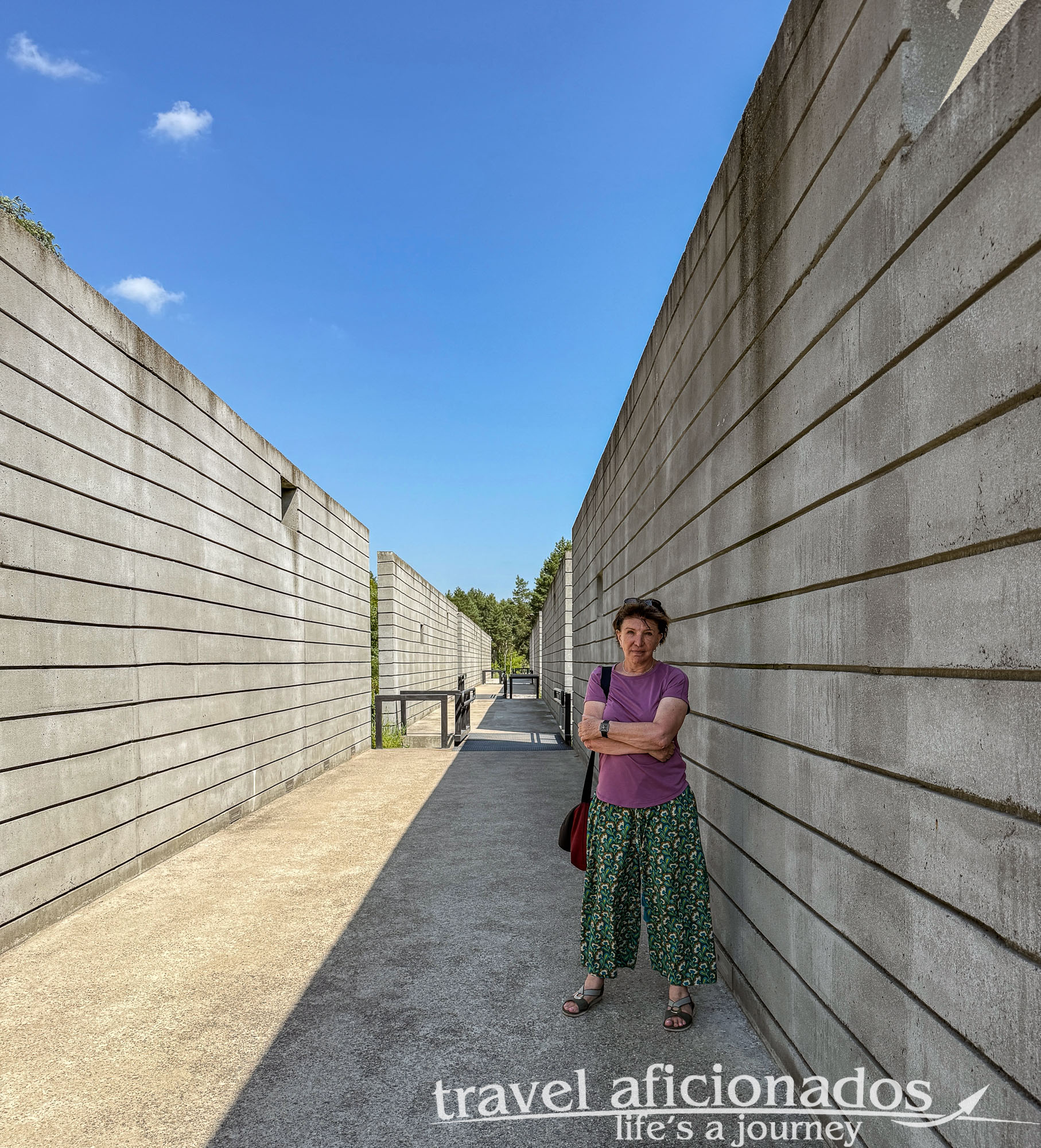
“concrete “train” symbolizing the wagons in which people were transported to their death




Leave a Reply